Mar 4, 10:54 AM
Eurozone Inflation Unexpectedly Rises as Energy Shock Fears Mount
Consumer prices climb to 1.9% in February as Middle East tensions threaten to drive oil and gas costs higher
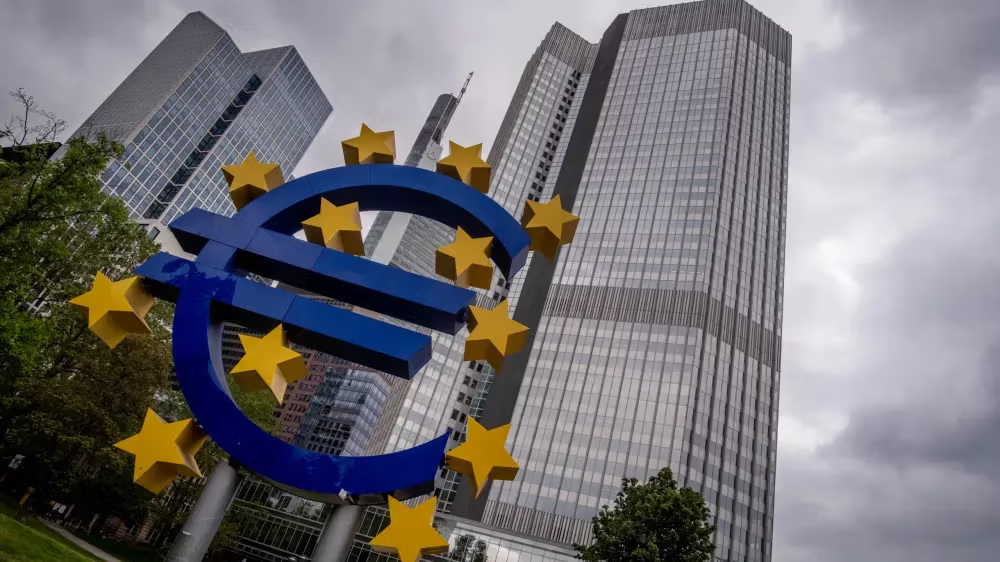
Inflation in the eurozone rose unexpectedly in February, complicating the European Central Bank’s efforts to bring price growth under control just as rising geopolitical tensions threaten a new energy shock.
According to flash estimates released by Eurostat, annual inflation in the euro area reached 1.9% in February 2026, up from 1.7% in January. Economists had expected the figure to remain unchanged. On a monthly basis, consumer prices increased by 0.7%, marking the strongest monthly rise since March 2024.
Core inflation — which excludes volatile energy and food prices — also came in higher than expected. It rose to 2.4% year-on-year from 2.2% in January, suggesting underlying price pressures remain persistent.
Philip Lane, chief economist at the European Central Bank, warned that the unfolding conflict in the Middle East could further complicate the inflation outlook if it leads to sustained increases in energy prices.
Services inflation remained the main driver of price growth, accelerating to 3.4% in February from 3.2% in January. Food, alcohol and tobacco inflation held steady at 2.6%, while non-energy industrial goods prices rose modestly to 0.7%.
Energy prices were still lower compared with a year earlier, declining by about 4%. However, the drop was smaller than in January, suggesting the downward pressure from energy costs is already fading.
Importantly, the February inflation figures were collected before the latest escalation in the Middle East began disrupting global energy markets.
Recent attacks on energy infrastructure and shipping routes in the Gulf — particularly around the Strait of Hormuz — have already pushed oil and gas prices higher. The narrow waterway carries roughly one-fifth of global oil and natural gas flows, making it one of the most critical energy chokepoints in the world.
The renewed tensions have unsettled financial markets across Europe. The Euro STOXX 50 index fell more than 3% during morning trading, while Germany’s DAX 40 dropped to its lowest level since December 2025. France’s CAC 40 and major stock indices in Spain and Italy also recorded sharp losses. At the same time, the euro weakened against the US dollar, slipping about 0.8% to around $1.16.
Economists warn that if disruptions in global energy markets persist, Europe could face renewed inflation pressures similar to those seen during the energy crisis following Russia’s invasion of Ukraine in 2022.
A prolonged interruption to oil and gas shipments — particularly if the Strait of Hormuz were closed — could quickly push inflation back above the ECB’s 2% target and complicate the central bank’s interest-rate strategy in the months ahead.
Written by Christiane Hofreiter