Mar 4, 9:48 AM
European Gas Prices Surge as Iran Conflict Sparks Fears of Energy Shock
Benchmark prices jump above €60/MWh as markets worry about LNG supply disruptions and shipping risks in the Gulf
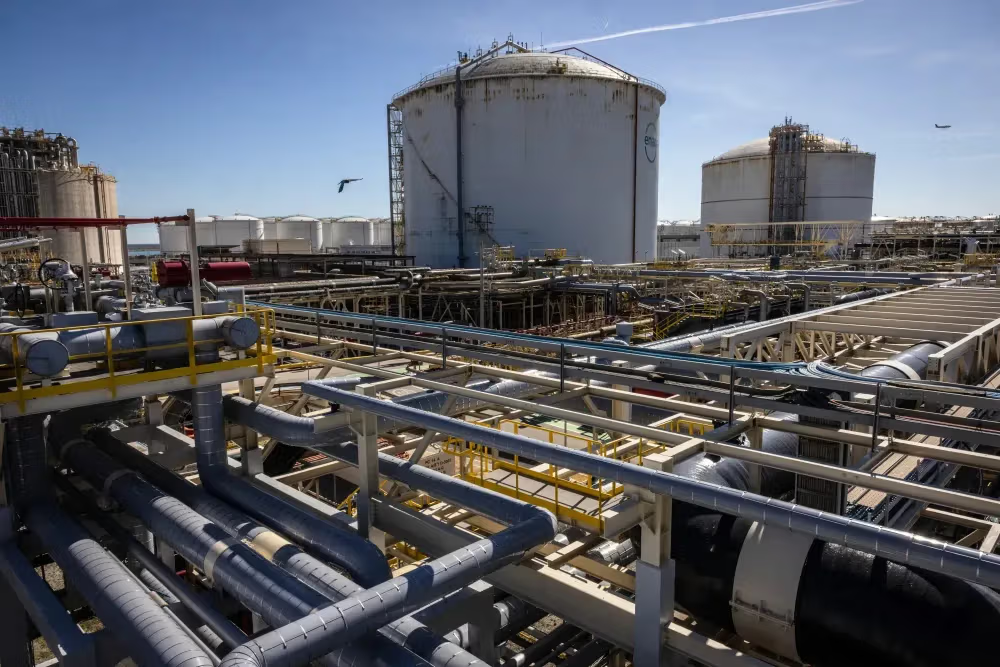
European gas prices surged on Tuesday as escalating tensions in the Middle East rattled global energy markets and raised fears of a new supply shock.
Europe’s benchmark gas contract, the Dutch TTF, climbed above €60 per megawatt hour around midday — nearly double the levels seen just days earlier when prices were in the low €30s.
Analysts say the spike reflects concerns that the conflict involving Iran could disrupt global liquefied natural gas (LNG) flows and shipping routes in the Gulf.
“This has triggered immediate fears of reduced LNG availability to Europe, prompting a rush in spot markets and heightened risk premiums,” said Yousef M. Alshammari, president of the London College of Energy Economics.
Much of the uncertainty centres on the Strait of Hormuz, a key maritime chokepoint through which a large share of global energy supplies passes. Any disruption to tanker traffic could quickly tighten global LNG markets.
While Europe has significantly reduced its reliance on Russian pipeline gas since Russia’s full-scale invasion of Ukraine in 2022, the shift toward seaborne LNG has created new vulnerabilities. The continent now depends more heavily on global shipping routes and spot cargoes, meaning geopolitical tensions can rapidly affect supply and prices.
Qatar alone accounts for roughly 12–14% of Europe’s LNG imports, making developments in the Gulf particularly important for European energy traders.
A report by the Brussels-based think tank Bruegel noted that although Europe is less dependent on Gulf energy than major Asian economies, it would still feel the impact of any disruption.
Even limited supply interruptions could trigger price spikes as European buyers compete with Asian importers for available LNG shipments.
The surge in wholesale prices is also raising concerns about consumer energy bills. Analysts say a prolonged period with prices above €50–60 per megawatt hour could eventually translate into higher electricity and heating costs.
However, many households and small businesses are on fixed or regulated tariffs, meaning any price increases would likely take several months to appear. Europe’s gas storage levels also add to market anxiety. EU inventories are currently around 30% full — lower than at the same point last year — while stocks in countries such as Germany and France are hovering in the low-20% range.
If the conflict continues for weeks or months, economists warn the price shock could ripple through the wider economy.
Energy-intensive industries such as chemicals, steel, fertilisers, glass and paper manufacturing would likely be among the hardest hit, particularly in countries including Germany, Italy and the Netherlands.
Governments may ultimately need to reintroduce targeted support measures to shield vulnerable households and businesses if prices remain elevated.