
Feb 3, 10:23 AM
EU Faces Growing Raw Materials Risk for Green Energy Transition, Auditors Warn
Heavy reliance on foreign suppliers for key minerals leaves Europe exposed as it scales up renewables, according to a new watchdog report.
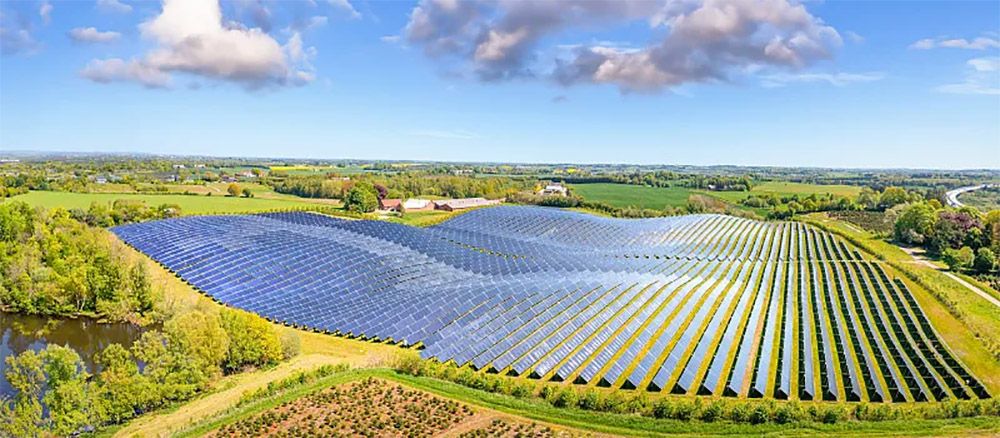
Europe’s push to expand renewable energy could run into serious supply constraints unless it improves how it secures and tracks critical raw materials, according to a new report from the European Court of Auditors (ECA). The watchdog warns that the EU remains heavily dependent on foreign suppliers for the minerals needed to produce batteries, solar panels and other technologies central to its green transition.
The auditors say the bloc currently relies on non-EU countries for a large share of materials considered essential not only for renewable energy, but also for digital technologies, defence and aerospace. Out of 26 raw materials classified as critical, the EU depends on external suppliers for at least 10 that are directly linked to clean-energy technologies.
Some dependencies are particularly concentrated. According to the report, nearly all of the EU’s magnesium — a key input for equipment used to produce hydrogen — comes from China, while Turkey supplies almost all of the boron used in solar panels. The auditors describe this level of concentration as a strategic weakness, especially at a time when geopolitical tensions are increasingly shaping global trade.
The ECA cautions that such reliance could leave Europe exposed if supplier countries restrict exports or use access to materials as a political tool. Recent moves by China to tighten controls on rare-earth exports are cited as an example of how quickly supply chains can become vulnerable.
The findings come as the European Commission seeks to diversify trade relationships and reduce strategic dependencies, particularly as relations with both China and the United States grow more complex. Brussels has already proposed measures to strengthen the bloc’s resilience, including a multi-billion-euro plan to build up mineral reserves, encourage recycling and coordinate investments among member states.
However, the auditors conclude that progress so far has been limited. Policies introduced over recent years — ranging from provisions in trade agreements to new rules on material use — have not significantly reduced Europe’s exposure. Targets set under a raw materials law that entered into force in 2024 are proving difficult to meet, the report says.
One major obstacle is recycling. Many of the minerals used in renewable energy systems are either not recycled at all or only recovered in very small quantities. At the same time, high energy costs are weighing on processing facilities, exploration efforts remain underdeveloped, and new mining projects often take decades to become operational.
The ECA warns that without faster progress across extraction, processing and recycling, Europe risks entering a self-reinforcing cycle of dependency — one that could slow the rollout of renewable energy and undermine the EU’s ambition to act as an independent geopolitical player.
The report frames the challenge as structural rather than short-term, suggesting that securing raw materials may become one of the defining tests of Europe’s green transition in the years ahead.
Latest news