Feb 9, 8:55 AM
Digital Euro Debate Exposes Rift Over Europe’s Financial Future
As the ECB pushes ahead with plans for a digital euro, leading economists clash over sovereignty, privacy, and whether the central bank is solving a problem that may not exist.
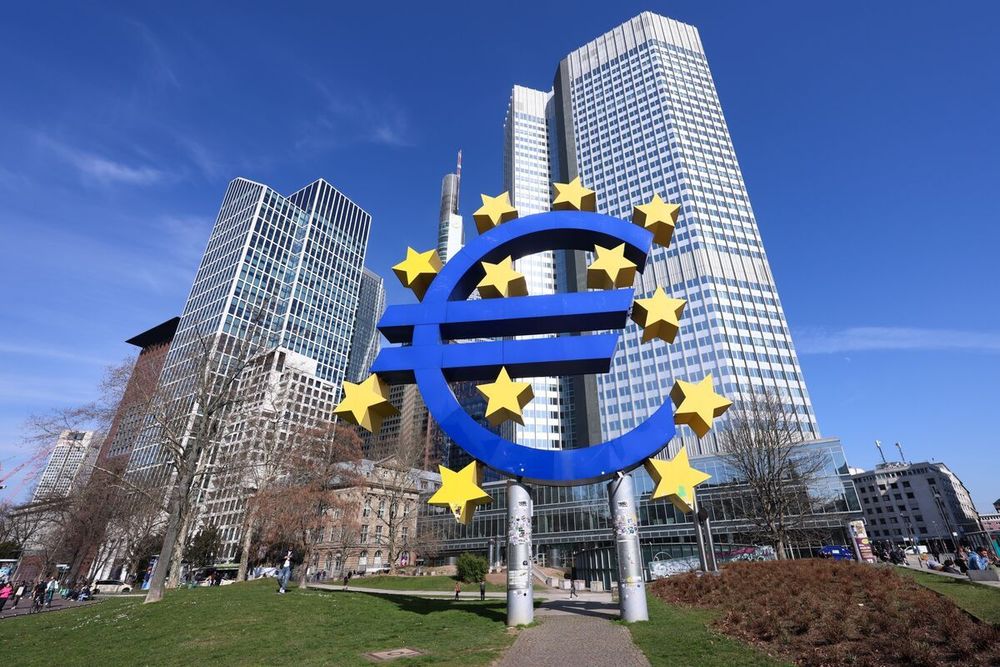
Europe’s plan to introduce a digital version of the euro is steadily moving from technical concept to political reality — and in the process, it is opening up a surprisingly sharp divide among economists over the future of money in the eurozone.
At its core, the proposal backed by the European Central Bank (ECB) would create a digital form of central bank money designed for everyday use by consumers, alongside coins and banknotes. Supporters argue it would strengthen Europe’s strategic autonomy in payments, while critics warn it risks unsettling the banking system without delivering clear benefits to the public.
Today, physical cash remains the only form of legal tender issued directly by the state, valued not least for its anonymity. Digital payments, by contrast, rely on commercial banks and private payment providers, with deposits protected up to €100,000 under existing guarantee schemes. The ECB’s digital euro would blur that long-standing division by offering households direct access to central bank money in digital form.
The project is still several years away from reality. Even under optimistic timelines, a digital euro would not be available before 2029, and only if it clears a political hurdle this spring, when the European Parliament is expected to vote on the necessary legal framework. While the European Commission and EU governments broadly support the initiative, lawmakers have recently signalled a more cautious approach.
The ECB frames the digital euro as a response to Europe’s heavy reliance on non-European payment giants, particularly US-based card networks. From this perspective, the issue is less about replacing cash and more about ensuring that the backbone of digital payments does not sit entirely outside European control. Advocates say a publicly backed alternative could curb market concentration and offer merchants lower fees.
Sceptics, however, question whether the ECB needs to issue a new form of money to achieve that goal. Some argue that building payment infrastructure is one thing, but creating digital central bank money for the public is quite another. In their view, the central bank risks competing directly with commercial banks, potentially drawing deposits away from them and weakening a system that already functions smoothly for most consumers.
There are also concerns about incentives. Deposits at commercial banks are already considered safe within existing limits, and critics say the digital euro offers no obvious advantage over current accounts, cards, or mobile payment apps. To prevent large-scale shifts of money into central bank wallets, the ECB is considering caps — currently discussed at around €3,000 per person — which would limit its usefulness as a store of value.
Privacy is another fault line. While the ECB insists that the digital euro would not be used to monitor citizens or accelerate the disappearance of cash, public scepticism remains. In political debates, the project has increasingly been portrayed — sometimes without evidence — as a step toward greater state control over personal finances. Even supporters acknowledge that this perception poses a significant political risk.
The ECB has also committed to ensuring that cash remains widely available, including by working with governments and banks to maintain access to ATMs. It argues that a digital euro would complement, not replace, physical money. Still, critics note that once a new payment option exists, market forces — not official assurances — tend to shape what survives.
For now, the debate reflects a deeper question about Europe’s approach to innovation: whether public institutions should step in where private solutions exist but remain fragmented, or whether the market should be given more time to deliver cross-border payment systems without central bank money entering the mix.
As lawmakers prepare to weigh in, the digital euro has become more than a technical project. It is a test of how much trust Europeans place in their institutions — and how boldly those institutions are willing to reshape something as fundamental as money itself.