Jan 20, 9:51 AM
Valentino Garavani, Architect of Red-Carpet Glamour, Dies at 93
The Italian designer whose name became synonymous with high drama and timeless elegance leaves behind a fashion legacy shaped outside the era of corporate luxury.
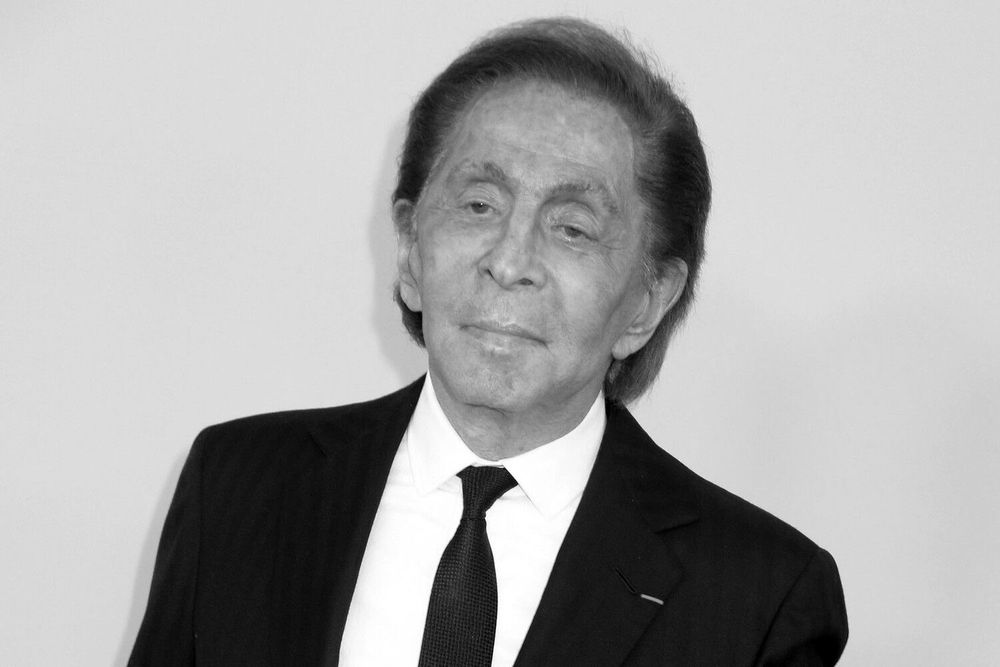
Valentino Garavani, one of the last fashion designers to define an era through personal vision rather than corporate strategy, has died in Rome at the age of 93, his foundation confirmed on Sunday. With his death, the fashion world loses a figure who embodied the grandeur, discipline and theatricality of 20th-century haute couture.
Valentino was never a designer for everyday wear. His creations were conceived for ceremony, spectacle and permanence — garments intended to command attention on grand staircases, gala evenings and red carpets. Velvet, silk, chiffon and lace were layered with embroidery, pearls, feathers and sequins to produce dresses that favoured opulence over understatement. Though often described as “simple,” his work was defined by unapologetic glamour rooted in classical ideals of beauty.
His most enduring signature was colour. The deep, saturated shade that became known globally as “Valentino red” transcended fashion trends and turned into a visual shorthand for elegance itself. Alongside this iconic hue, Valentino frequently returned to stark contrasts of black and white, favouring silhouettes that amplified drama through restraint. One such gown, worn by Julia Roberts at the 2001 Academy Awards, became a defining moment in modern fashion history. The dress, already nearly two decades old at the time, demonstrated the lasting relevance of his designs — and coincided with Roberts winning the Oscar, a moment that reinforced Valentino’s mastery of cultural timing.
From early in his career, Valentino understood the power of image and association. His work was worn by some of the most recognisable women of the 20th century, including Audrey Hepburn, Elizabeth Taylor, Jacqueline Kennedy, Liza Minnelli and later figures such as Gwyneth Paltrow and Madonna. Kennedy chose a Valentino dress for her marriage to Aristotle Onassis in 1968, while Elizabeth Taylor had earlier brought international attention to one of his designs with a yellow gown trimmed with feathers. These moments helped elevate Valentino from couturier to cultural symbol.
Born in 1932 in Voghera, northern Italy, Valentino was drawn to drama from the start — even his name was inherited from his mother’s admiration for silent-film star Rudolph Valentino. At 17, he moved to Paris, studying at the École des Beaux-Arts and the Chambre Syndicale de la Couture Parisienne before working in the ateliers of Jean Dessès and Guy Laroche. He returned to Italy in the late 1950s and founded his own fashion house in Rome in 1959.
His international breakthrough came in 1962 with a critically acclaimed couture show in Florence’s Palazzo Pitti. From there, Valentino established himself as the leading figure of Italian haute couture, expanding into prêt-à-porter, menswear and fragrance during the 1970s as his brand grew into a global name.
Much of that success was shaped by his long-time partner, both in life and business, Giancarlo Giammetti. Together for more than five decades, the pair cultivated not only a fashion empire but also an extravagant lifestyle that became part of Valentino’s myth. Their residences across Italy, France and Switzerland, filled with art and accompanied by a large entourage, reinforced the image of a designer who lived his vision as completely as he dressed it.
By the early 2000s, the fashion world had shifted decisively toward conglomerate ownership. Valentino’s company changed hands twice before being sold to the Marzotto Group, with the designer remaining as creative director. In 2007, he announced his retirement, choosing to step away before what he feared would be an inevitable erosion of prestige. His final major runway show in 2008 was a global event, followed by a travelling retrospective and a documentary titled The Last Emperor — a label that captured both his stature and his sense of finality.
Even in retirement, Valentino remained sceptical of modern fashion. He publicly criticised the industry’s growing obsession with numbers and uniformity, arguing that creativity and individuality had been sacrificed to commercial logic. These views placed him increasingly at odds with the system that had replaced the world he helped build.
After stepping back, Valentino rarely returned to design, except for highly personal commissions, including wedding dresses for Princess Madeleine of Sweden and actress Anne Hathaway. His fashion house continued under new creative leadership, while ownership passed in 2012 to Qatar’s royal family.
Until the end, Valentino Garavani remained associated with one idea above all others: the power of fashion as spectacle. In an industry now dominated by scale, speed and corporate control, his career stands as a reminder of a time when a single designer’s vision could define beauty for generations.