
Jan 28, 2:21 PM
Italian Alpine Valley Moves to Curb Access to Instagram-Famous Church
Local authorities in Val di Funes introduce traffic controls after residents complain of overcrowding and short-stay tourism
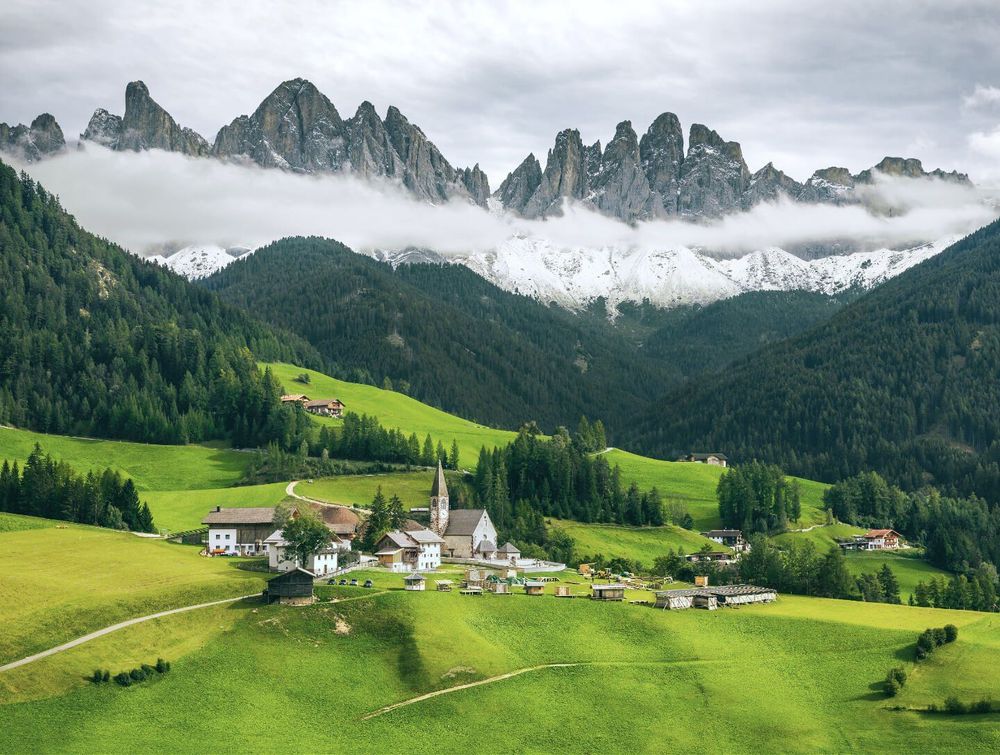
The alpine valley of Val di Funes is tightening access to one of its most photographed landmarks as local authorities respond to growing frustration over congestion, parking chaos and trespassing linked to social-media tourism.
The municipality of Funes has announced new restrictions on vehicle access to the road leading to the small church of Santa Maddalena, a hillside site that has become a magnet for daytrippers seeking postcard-perfect images of the Dolomites. The measures will apply from May to November, the peak visitor season.
Mayor Peter Pernthaler said the decision followed repeated complaints from residents about traffic jams, cars blocking limited parking spaces and visitors crossing private land to reach popular viewpoints. He described the situation as unsustainable for a small community with narrow roads and limited infrastructure.
Under the new rules, a barrier will restrict access to residents and hotel guests only. Visitors arriving by car will be required to park in designated areas lower in the valley. Once those fill up, drivers will be redirected to alternative parking further away and encouraged to continue on foot.
The council has ruled out introducing a booking system for parking but plans to raise the daily fee, currently set at €4. Local officials say the existing charge does little to discourage quick photo stops that bring heavy traffic but limited economic benefit.
The municipality is also in talks with the nearby town of Chiusa to establish a shuttle bus service, aimed at reducing the number of private vehicles climbing the narrow road to the church.
Pernthaler has stressed that the move is not intended to shut out visitors. Instead, he said, it is designed to restore order and improve safety for both residents and tourists. The goal is to encourage people to reach the church on foot, rather than driving directly to the viewpoint.
On busy days, the area can attract up to 600 visitors — a significant number for a village of its size. While residents are accustomed to tourism, officials say the recent surge in short, social-media-driven visits has tipped the balance.
Val di Funes’ global visibility is often traced back to the mid-2000s, when images of the Santa Maddalena church reportedly appeared on SIM cards distributed by a Chinese mobile operator, sparking widespread interest. Since then, platforms like Instagram have amplified its appeal, turning a once-quiet hiking destination into a must-stop photo location.
The pressures facing Val di Funes reflect a wider challenge across the Dolomites, where communities are grappling with overtourism and its impact on daily life. Local leaders warn that visitor numbers could rise further as the region prepares for the upcoming Winter Olympics.
For now, officials say the new access controls are a necessary step to protect both the landscape and the quality of life in one of northern Italy’s most celebrated valleys.