Mar 11, 6:08 AM
Eurovision host broadcaster chief resigns amid harassment allegations
ORF director general Roland Weissmann steps down as controversy surrounding Israel’s participation in the 2026 Eurovision Song Contest continues to grow
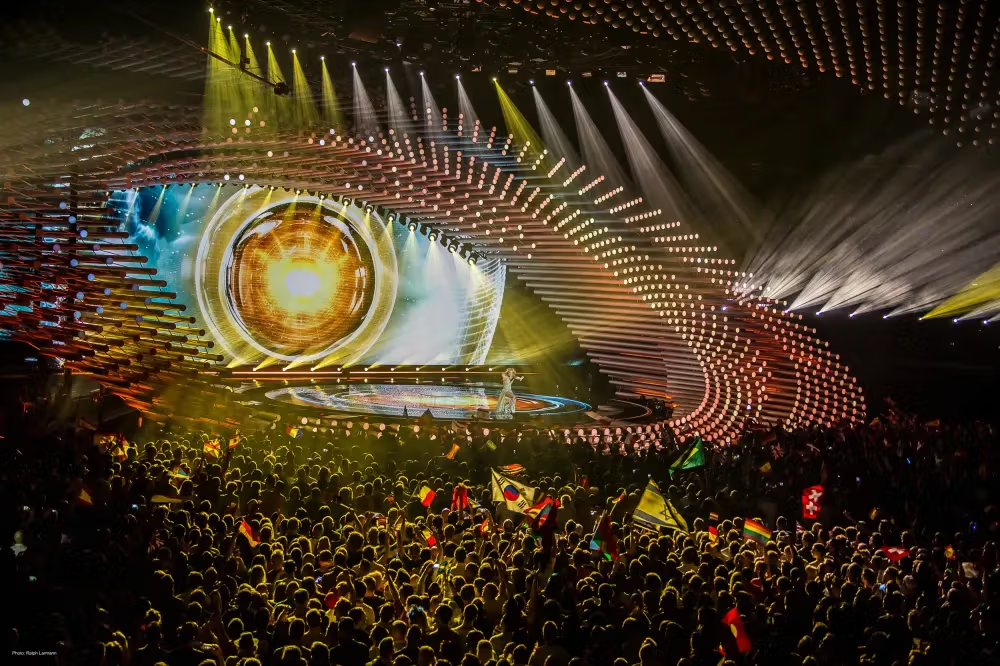
The upcoming 2026 Eurovision Song Contest has been hit by a new controversy after the head of Austria’s national broadcaster resigned over sexual harassment allegations, just months before the country is set to host the competition.
Roland Weissmann, the Director General of ORF, stepped down from his position with immediate effect after an employee accused him of sexual harassment. The broadcaster confirmed the resignation in a statement, noting that Weissmann denies the allegations.
“In recent days, an ORF employee has made sexual harassment allegations against the Director General. Roland Weissmann denies these allegations,” the broadcaster said, adding that the claims would need to be investigated quickly and transparently.
Weissmann, 57, had worked at ORF for around three decades. The organisation thanked him for his long service in its announcement, despite the circumstances surrounding his departure.
His lawyer, Oliver Scherbaum, said Weissmann had not yet received full details of the accusations and decided to step down in order to protect the broadcaster from further damage during the investigation.
According to the statement, Weissmann resigned “to avoid harm to the company.”
Following his departure, Ingrid Thurnher, the head of ORF radio, will take over the role of Director General on an interim basis.
The resignation comes at a sensitive time for the broadcaster, which is preparing to host the 70th edition of the Eurovision Song Contest in Vienna. The competition is scheduled to take place in May 2026, with semi-finals on 12 and 14 May and the final on 16 May.
Even before the leadership crisis at ORF, the upcoming contest was already surrounded by political tension.
A total of 35 countries are expected to take part in the competition. However, several nations — including Spain, Ireland, the Netherlands, Slovenia and Iceland — have announced they will not participate this year.
Those countries withdrew in protest against the continued participation of Israel, arguing that allowing the country to compete would be “unconscionable” given the high number of civilian casualties in Gaza during Israel’s military response following the 7 October 2023 attack by Hamas.
The issue has triggered widespread debate among broadcasters and fans of the contest, overshadowing preparations for the event.
Despite the growing political tensions, ORF has stated that it intends to uphold Eurovision’s slogan “United by Music.” The broadcaster has also confirmed that it will not ban the Palestinian flag from the audience and will not attempt to silence any crowd reactions, including booing directed at Israel’s performance.
Still, with boycotts by several participating countries and the sudden resignation of the host broadcaster’s chief, the build-up to the anniversary edition of the contest is already proving unusually turbulent.
As Vienna prepares to welcome Eurovision fans from across Europe, the political and organisational challenges surrounding the event continue to cast a long shadow over what is normally billed as the world’s largest live televised music competition.
Written by Sandy van Dongen