Jan 6, 2:16 PM
From Coup to Cart: How Maduro’s Tracksuit Turned a Crisis Into a Viral Fashion Moment
A single image of Venezuela’s deposed leader in a grey Nike tracksuit has triggered memes, sell-outs and a debate over how branding thrives even amid geopolitical shock.
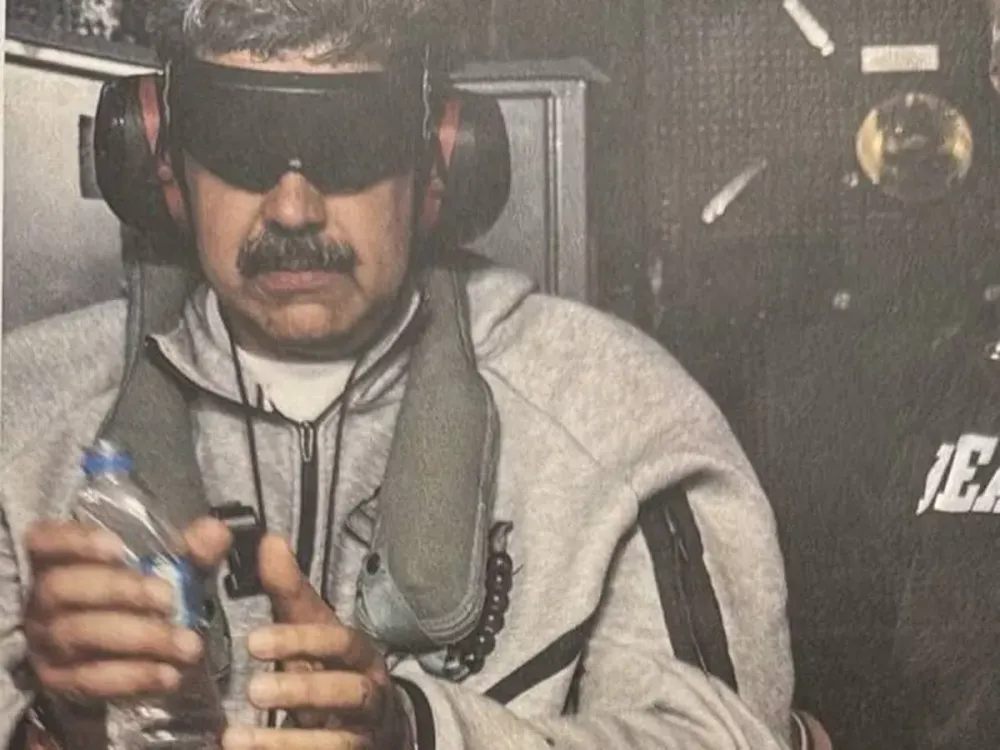
When images surfaced of Venezuela’s deposed president Nicolás Maduro being transferred under US military custody, the world reacted in sharply different ways. For some, the photograph symbolised the dramatic fall of a long-entrenched leader and raised urgent questions about international law. For others, however, attention shifted almost instantly to something far less expected: Maduro’s outfit.
Posted online by US President Donald Trump, the image showed the handcuffed former leader aboard the USS Iwo Jima, dressed not in a suit or uniform, but in what appeared to be a grey Nike Tech Fleece tracksuit. Within hours, the garment had taken on a life of its own — and Maduro, improbably, became one of the most talked-about fashion “influencers” of early 2026.
Social media users quickly coined slogans like “Just Coup It,” remixing Nike’s iconic tagline into memes that spread across platforms. “Steal the look” posts followed, itemising the tracksuit’s retail price and colourway, while others questioned whether this was the most surreal case of product placement in recent memory.
Data suggests the viral moment had immediate commercial consequences. According to Google Trends, searches for “Nike Tech” surged dramatically, peaking on 4 January. Analytics firm PeakMetrics reported that mentions of “Nike Tech” on X jumped from an average of around 325 posts per day in late 2025 to more than 5,000 daily posts between 3 and 5 January.
The result was predictable in the attention economy: sell-outs. Grey Nike Tech jackets — quickly nicknamed “Maduro grey” online — disappeared from Nike’s US website in most sizes within days. Nike itself has remained silent, offering no comment on whether the spike was welcomed, awkward or simply unavoidable.
The episode has reignited a familiar debate about the collision of consumer culture and global politics. Critics argue it is a bleak reminder of how easily serious events are flattened into lifestyle trends, where even the violent end of a regime can morph into a shopping frenzy. Others see it as proof that branding now operates independently of intent, driven by algorithms, memes and the speed of online attention rather than traditional marketing campaigns.
What remains clear is that in the digital age, symbolism no longer belongs solely to politics or history. Sometimes, it belongs to streetwear — and even a moment of global crisis can turn into an unexpected runway.