A Faster Route to Machu Picchu Raises Fears for Peru’s Fragile Heritage
A long-delayed airport near the Sacred Valley could dramatically increase visitor numbers to Machu Picchu—raising economic hopes while intensifying concerns over heritage, water, and overcrowding.
Peru’s most iconic archaeological site, Machu Picchu, is on the verge of becoming significantly more accessible, a development that is reigniting a long-running debate over how much tourism the ancient citadel—and its surroundings—can reasonably absorb. A new airport planned near the Sacred Valley is expected to sharply reduce travel times to the 15th-century Inca site and could begin operating later this decade, according to Peruvian authorities.
Machu Picchu already draws more than 1.5 million visitors annually, making it the country’s leading tourist attraction. Reaching it, however, remains a logistical challenge. Most travelers arrive via Lima, continue on a domestic flight to Cusco, then travel by train or bus to the town of Aguas Calientes before making the final ascent to the ruins. Others opt for a multi-day trek through the Andes. The journey is long, sometimes punishing, and for many visitors deeply memorable—an approach that mirrors the citadel’s original purpose as a secluded high-altitude settlement hidden within a cloud forest.
That relative isolation may soon be a thing of the past. The proposed Chinchero International Airport, located near the historic Andean town of Chinchero, would allow travelers to bypass both Lima and Cusco, cutting hours from the trip. After decades marked by delays, funding problems, and corruption scandals, officials now say construction is slated for completion in late 2027. The airport is designed to handle up to eight million passengers a year, and some projections reported by the BBC suggest the number of visitors to the area could increase by as much as 200 percent. These figures are estimates rather than confirmed outcomes, but they underpin both the optimism and the alarm surrounding the project.
Supporters argue that the airport would bring long-awaited economic benefits to an underdeveloped region, from construction jobs to growth in hotels, transport services, and tourism-related businesses. For a country where tourism plays a central economic role, faster access to its most famous site is seen by proponents as an obvious advantage.
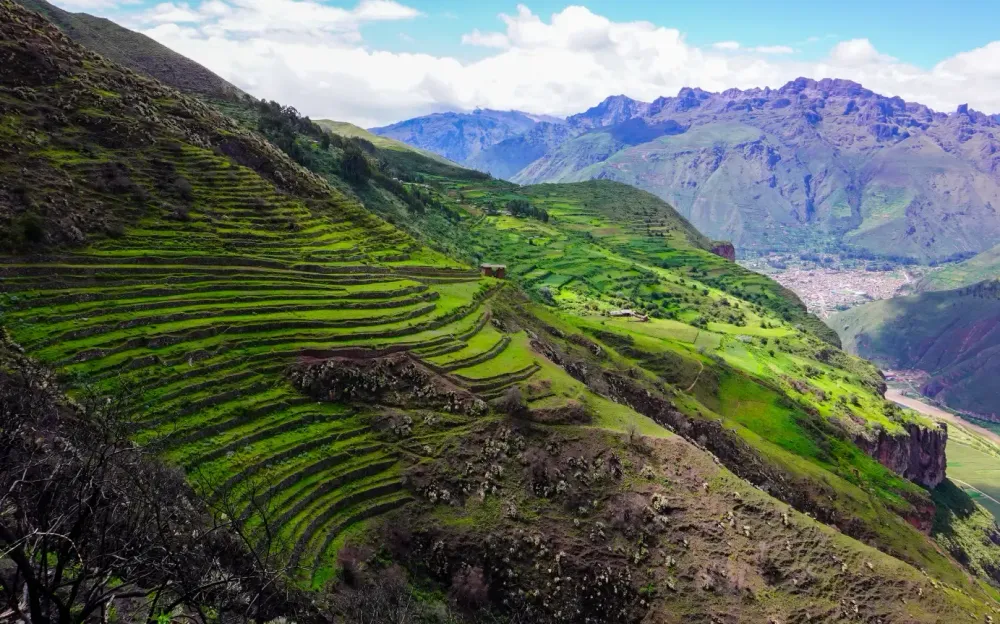
Opposition, however, has been vocal and persistent. Indigenous communities, archaeologists, and conservationists warn that Machu Picchu is already operating at its limits. Strict daily visitor caps and a tightly controlled booking system are in place to manage overcrowding, reflecting concerns about erosion and structural stress on the ruins. Critics say a sharp increase in arrivals would place immense pressure on the site and on the wider Sacred Valley, a landscape dense with Inca roads, agricultural terraces, irrigation systems, and archaeological remains that form what experts describe as a continuous, built environment.
There are also concerns about the airport’s physical footprint and flight paths. Opponents argue that aircraft would pass low over nearby archaeological areas, including Ollantaytambo, potentially causing irreversible damage. Clearing land for runways and related infrastructure could directly affect Inca-era features that remain embedded in the terrain. Environmental groups add that increased air and road traffic would fundamentally alter the character of the region, replacing agricultural traditions with hotels and transport corridors.
Water is another flashpoint. Conservationists fear that airport construction and the development it would attract could strain already limited resources by drawing from the watershed that feeds Lake Piuray, which supplies nearly half of Cusco’s water. Waste management presents a parallel challenge: existing systems are reportedly stretched, and recycling infrastructure in the region is minimal.
For now, the airport remains unfinished, and its future impact uncertain. Supporters see a gateway to prosperity; opponents see a slow erosion of cultural and environmental heritage. As has happened repeatedly over the past several decades, the project’s fate may hinge less on ambition than on whether it can overcome the political, logistical, and social obstacles that have so far kept Machu Picchu just out of easy reach.