Italy’s ‘Lovers’ Arch’ Lost to the Sea After Valentine’s Day Storms
A powerful mix of heavy rain, rough seas and coastal erosion brings down one of southern Italy’s most iconic natural landmarks.
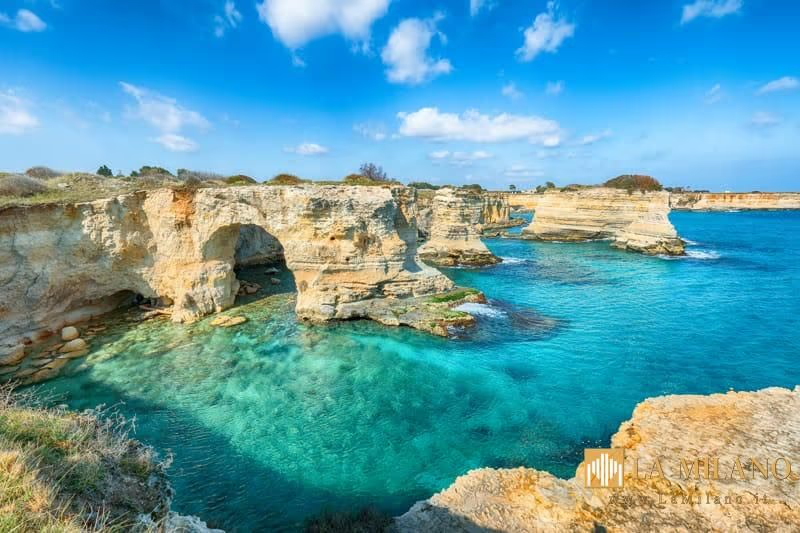
One of southern Italy’s most recognisable coastal landmarks collapsed into the sea on Valentine’s Day, after days of intense storms battered the Adriatic shoreline. The natural rock formation known as the “Lovers’ Arch,” near the seaside hamlet of Sant’Andrea in Melendugno, gave way under the combined force of heavy rainfall, strong winds and powerful waves.
The arch, part of a dramatic group of sea stacks sculpted by centuries of erosion, had become an emblem of the Salento peninsula. Its silhouette framed countless wedding proposals, holiday photographs and postcards, turning it into a visual shorthand for romance along Italy’s southeastern coast.
Local officials said the collapse followed a gradual weakening of the rock structure during recent storms, culminating in its sudden fall on Saturday. Authorities described it as the most serious episode of coastal erosion to affect the Salento landscape in decades.
Mayor Maurizio Cisternino said the loss went beyond geology or tourism. He described the collapse as a blow to the area’s identity, noting that parts of the coastline familiar to residents just a generation ago have already vanished. Tourism councillor Francesco Stella echoed the sentiment, likening the moment to a collective mourning for a place deeply woven into local memory.
Scientists point to a broader pattern behind the event. Southern Italy has been repeatedly struck in recent years by so-called “medicanes” — Mediterranean cyclones that combine tropical-like characteristics with regional weather systems. These storms, fuelled by unusually warm sea temperatures, have brought stronger winds, heavier rain and increasingly destructive waves to coastlines that were never designed to withstand such intensity.
Climatologists say the Mediterranean is experiencing some of its warmest conditions on record, amplifying atmospheric instability. Waves generated by recent storms reportedly reached heights capable of undercutting cliffs and rock arches, accelerating natural erosion processes that would otherwise unfold over much longer timescales.
The collapse of the Lovers’ Arch follows a series of destructive weather events across southern Italy this winter. In January, torrential rain triggered a major landslide in Sicily, carving a deep chasm through part of the town of Niscemi and destroying roads and vehicles. Ports, homes and coastal infrastructure elsewhere have also suffered extensive damage.
For Melendugno, the focus now turns to how — or whether — the coastline can be protected. Local leaders say long-term planning and investment will be needed to adapt to an environment that is changing faster than many communities can respond.
What remains of the Lovers’ Arch now lies scattered beneath the waters of the Adriatic Sea, a stark reminder that even the most iconic landscapes are not immune to a shifting climate and an increasingly volatile sea.