
Oct 14, 4:01 PM
Stars for Sale in Adelaide
South Australia bypasses federal bureaucracy and uses public funds to secure the nation's first Michelin stars.
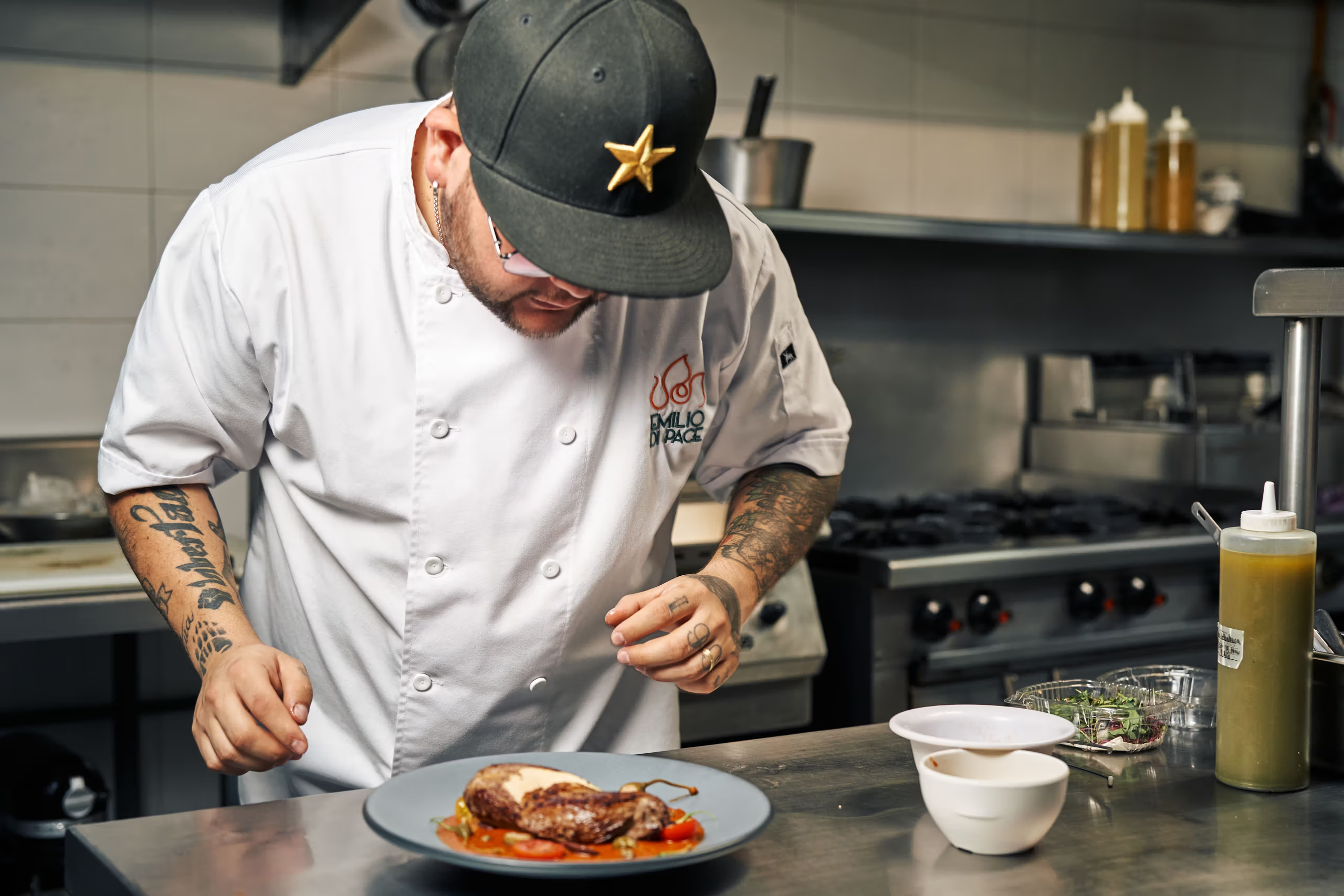
It turns out culinary prestige can be bought after all, provided a regional government is willing to pick up the tab. For more than a century, the French tire maker’s famous guide ignored Australia entirely. That ended when South Australia decided to bypass sluggish national tourism authorities and purchase its own spot on the global gastronomic map, securing eleven Michelin stars for local dining establishments.
The state government paid an undisclosed sum of public money to bring incognito inspectors down under, leaving the rest of the country completely unrecognised. While federal tourism officials repeatedly failed to strike a deal with Michelin over the years, Adelaide took a direct, state-funded shortcut. Tourism Minister Emily Bourke defended the commercial investment to national broadcaster ABC, asserting that it is enabling us to create a tourism destination and put us on the world map.
Whether subsidising fine-dining reviews represents a sound expenditure of public funds remains an open question, but the immediate results are undeniable. Magill Estate Restaurant in Rosslyn Park claimed the nation's highest honour as the sole two-star venue, officially judged worth a detour. Ten other establishments earned single stars, including Arkhé in Norwood with its open-fire cooking, and Aptos in Stirling, which offers tasting menus focused on native Australian ingredients. Over 70 other regional venues feature in the broader guide, with several receiving Bib Gourmand status for quality food at moderate prices.
This transactional route to global branding follows a pattern set earlier this year. New Zealand became the first destination in Oceania to enter the guide after agreeing to pay 6.3 million New Zealand dollars over three years. What began in France in 1900 as a marketing scheme by brothers André and Édouard Michelin to encourage motoring and boost tire sales has matured into an expensive government PR vehicle. Almost a century after three-tiered stars were introduced in 1926 to rank roadside eateries, South Australia demonstrated that international prestige is readily available to those willing to underwrite the inspection bill.
Written by Andreas Hofer andreas.hofer@alpineweekly.com


