Sep 22, 2:02 PM
Pacific Warming Sets New Record Ahead of Peak Season
As ocean temperatures breach historic thresholds, trade routes and agricultural markets prepare for global disruptions.

When ocean surface temperatures in the central-eastern Pacific breached 3.05 degrees Celsius above historical averages on September 19, a familiar pattern of statistical alarm was triggered. The previous benchmark, set during the severe climate episode of 2015 at 3.02 degrees, has been quietly displaced. What makes this uptick noteworthy to meteorologists is timing: the phenomenon has not even reached its customary seasonal crescendo, which is slated for later this year.
The diagnostic machinery behind weather forecasting offers competing metrics for this thermal surge. Under the standard Oceanic Niño Index, which tracks pure surface warmth against long-term historical baseline figures, the record is officially broken. Meteorologists in the United States and Australia, however, often lean toward the Relative Oceanic Niño Index. This alternative framework measures warmth relative to broader tropical ocean trends, effectively filtering out baseline global temperature shifts. By that secondary standard, the current surge remains just shy of a historical peak, though forecasters expect that distinction to evaporate shortly.
Regardless of which index one prefers, the immediate physical realities are asserting themselves across global markets and agricultural hubs. Tropical atmospheric wind shifts have already produced bizarre anomalies. In India, data from the India Meteorological Department indicates that the southwest monsoon delivered 15 percent less rainfall than average through late September. Conversely, the Atlantic hurricane corridor has experienced an unprecedented lull, marking the latest date without a single formed hurricane since satellite tracking began.
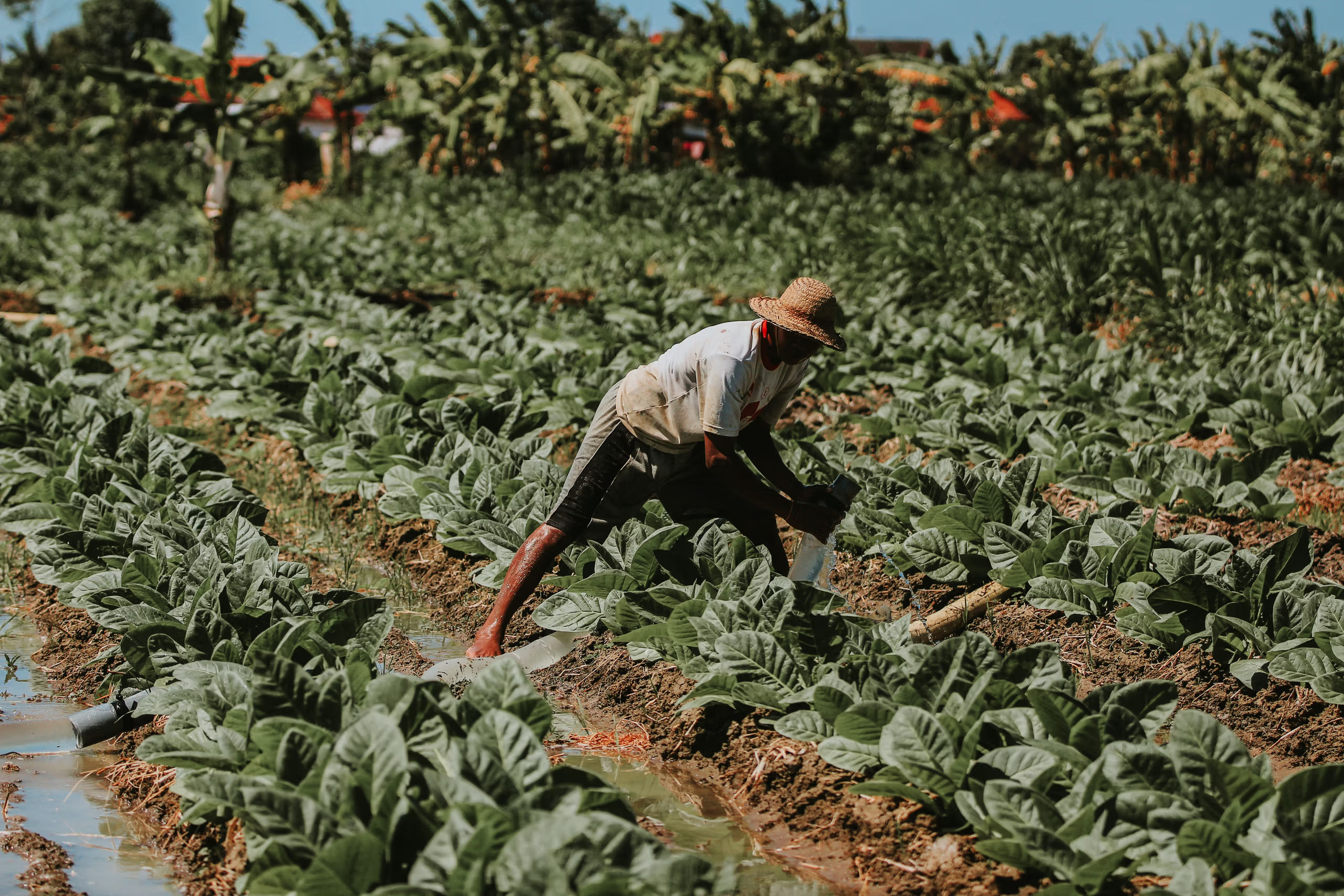
The economic fallout of these shifts rarely stays localized. As drought conditions threaten key commodity producers in Brazil, Australia, and Indonesia, coastal regions in Peru, Ecuador, and the southern United States face heightened flood exposure. When weather volatility disrupts harvest expectations, agricultural supply chains and global food prices inevitably absorb the shock.
Far away from the equatorial Pacific, European nations are attempting to map out their own exposure. British forecasters at the Met Office have flagged an increased probability of autumn storms and heavy rainfall leading into November and December. Historical precedents offer cold comfort to market planners: while the major El Niño of 2015 ushered in historic flooding across northwest Europe, the 2009 event coincided with severe freezing temperatures, and the 2006 iteration brought unseasonable warmth. The only consistency in these atmospheric disruptions is their capacity to inject profound uncertainty into trade and infrastructure planning.
Written by Christiane Hofreiter christiane.hofreiter@alpineweekly.com