Oct 8, 12:01 PM
Buy Now, Pay Never: Germany’s Silent Accumulation of Micro-Debt
Small installment loans are masking a growing financial strain across German households, with tens of thousands juggling dozens of credits at once.
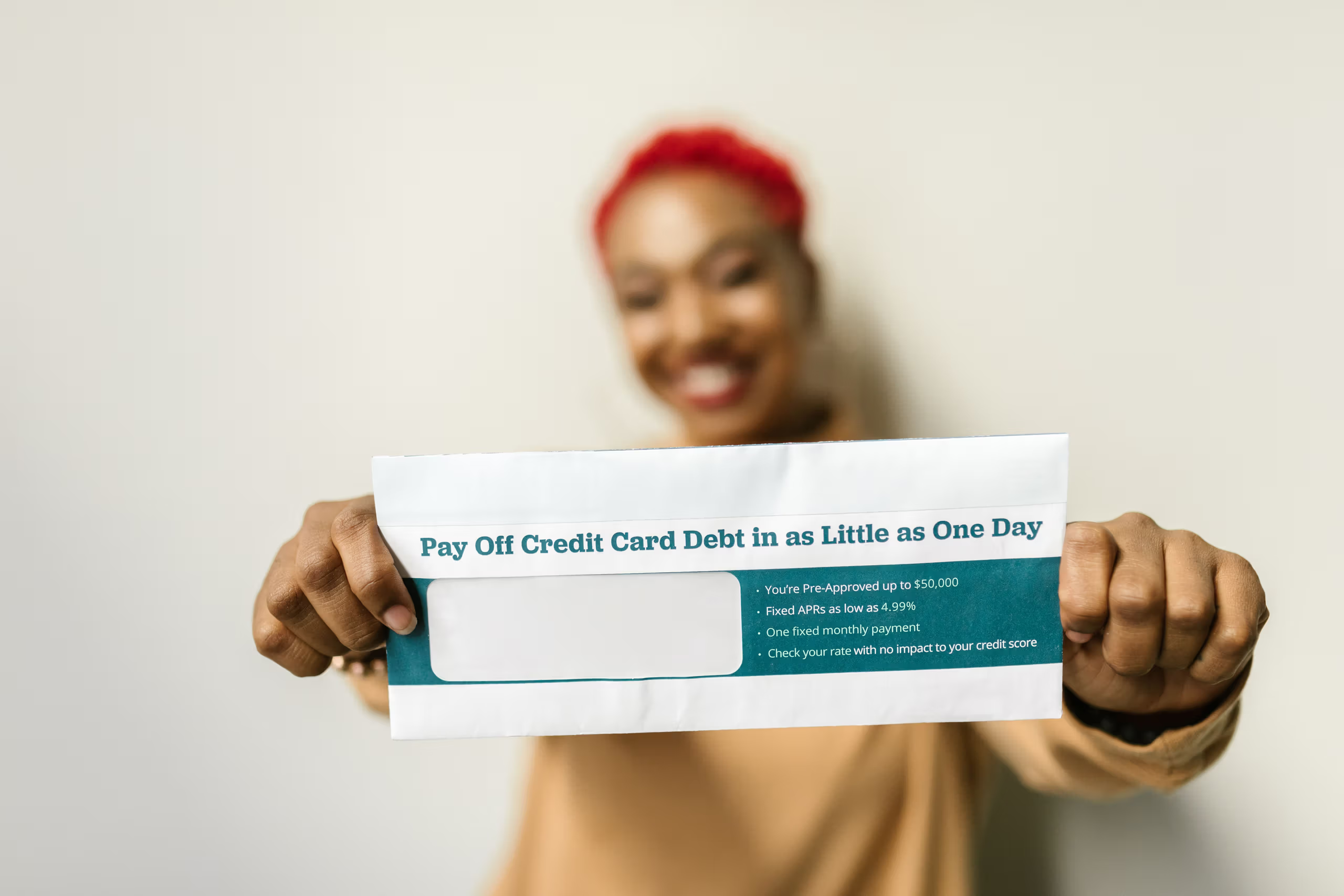
When citizens resort to financing routine purchases in micro-installments, economic health becomes a matter of arithmetic rather than political narrative. The latest Risk and Credit Compass from Germany’s primary credit agency, Schufa, presents a sober picture of consumer solvency. By the end of 2025, the proportion of adults carrying at least one negative credit entry crept up to 8.1 percent, compared to 7.9 percent a year earlier. Behind this seemingly modest shift lies a far more telling structural trend: the normalization of perpetual micro-debt.
All recent growth in the installment loan market is concentrated in credit agreements under 1,000 Euros. These low-threshold arrangements—often embedded seamlessly into digital checkout counters as deferred payment or split-rate offers—reached 7.5 million contracts in 2025, an 11 percent jump in a single year. What is pitched as modern convenience frequently turns into a slow trap. A staggering 74,000 individuals are currently servicing more than ten separate installment loans at the same time. Five years ago, that number was 28 times lower.
The head of Schufa, Tanja Birkholz, offered a cautious assessment, remarking that there can be no talk of a wave of bankruptcies among Germans, while acknowledging that financial burdens are becoming firmly entrenched for an expanding segment of the population. Birkholz observed that while small loans serve as practical financing options initially, difficulties emerge when borrowers lose oversight or take on obligations beyond their long-term capacity.
The broader numbers reinforce this quiet tightening. Last year, approximately 88,000 individuals filed for private insolvency—the highest annual figure recorded since 2021. Yet, the burden is distributed anything but evenly across the republic. A look at Germany's 400 districts reveals a dramatic geography of distress. In Duisburg, nearly one in five adults—19.9 percent—has a negative credit entry, closely followed by Gelsenkirchen at 19.4 percent. At the opposite end of the spectrum sits the Upper Bavarian district of Eichstätt, where the rate drops to just 3.6 percent.
When tens of thousands of citizens require multiple micro-loans to manage basic consumption, the quiet erosion of household buffers is plain to see. Splitting small payments into endless future installments does not create wealth; it merely postpones the reckoning.
Written by Thomas Nussbaumer thomas.nussbaumer@alpineweekly.com