China Reclaims Top Spot as Germany’s Largest Trading Partner
Exports to the US decline sharply as Berlin’s trade deficit with Beijing reaches record levels
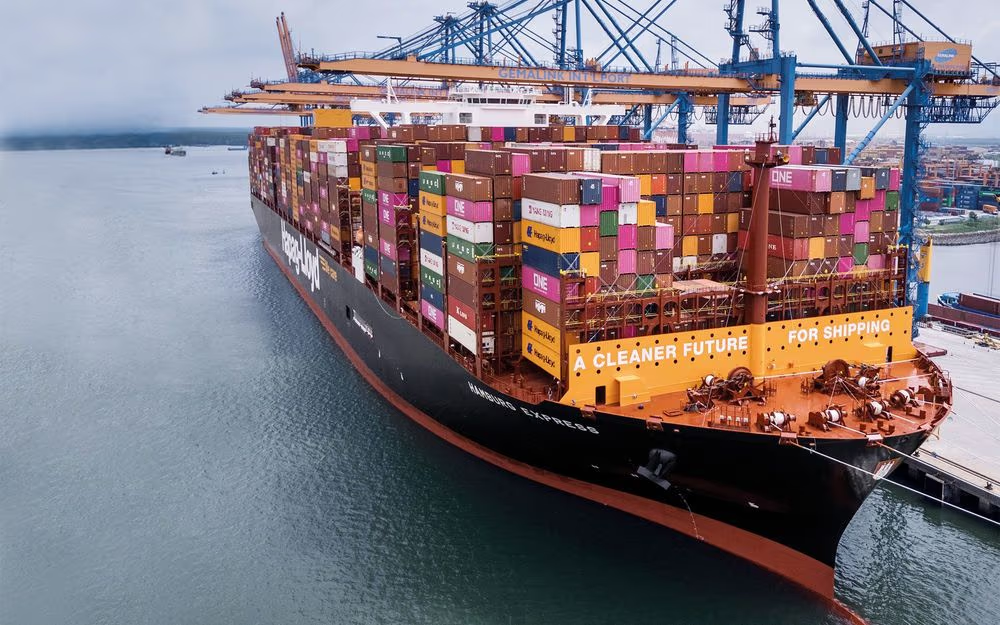
China has once again become Germany’s largest trading partner, overtaking the United States after a year marked by shifting export patterns and widening imbalances.
According to newly released figures from the German Federal Statistical Office, total trade between Germany and China reached €251.8 billion last year. Chinese exports to Germany rose by 8.8%, restoring Beijing’s position at the top after the US briefly claimed the lead in 2024.
However, the trade relationship remains heavily tilted. Germany’s exports to China fell by 9.7% over the same period, while Chinese shipments to Germany were worth more than twice the value of German goods sent in the opposite direction. As a result, Germany’s trade deficit with China expanded to a record €89.3 billion ($105 billion).
The data underscores the depth of economic ties between Europe’s largest economy and Asia’s manufacturing powerhouse. China has been Germany’s largest supplier of goods since 2015, reflecting German industry’s dependence on imported components and finished products.
At the same time, trade with the United States has cooled. German exports to the US — still the biggest single buyer of German goods — dropped by 9.4% in 2025. That decline narrowed Germany’s trade surplus with Washington from €69.6 billion to €51.9 billion.
Overall, Germany’s export performance was subdued. Total exports increased by less than 1% last year, while imports rose by 4.3%. Despite the widening gap in some bilateral relationships, the country maintained a positive trade balance of €200.5 billion.
The latest figures arrive as Germany continues to navigate a prolonged period of economic strain. The country’s industrial base, long reliant on affordable energy imports, was significantly affected after Berlin joined Western sanctions on Moscow following the escalation of the Ukraine conflict in 2022. Prior to that shift, Russia had supplied approximately 55% of Germany’s natural gas.
The loss of relatively low-cost Russian energy has been cited by German officials and domestic media as a key factor behind rising production costs and slower economic growth. In January, the German Chamber of Commerce and Industry linked high energy prices to what it described as an unusually elevated number of corporate bankruptcies.
Earlier this month, the German Economic Institute estimated that Germany had lost more than $1 trillion in GDP output across successive crises, including the Covid-19 pandemic and the fallout from the Ukraine war.
Against this backdrop, the renewed prominence of China in Germany’s trade statistics reflects both opportunity and vulnerability. On one hand, robust trade flows signal continued demand and supply chain integration. On the other, the widening deficit highlights growing asymmetry in the relationship.
For policymakers in Berlin, the challenge lies in balancing diversification with pragmatism. As exports to the United States weaken and energy costs remain elevated, Germany’s economic engine is adjusting to a new global landscape — one in which trade dynamics are shifting as quickly as geopolitical alignments.