Aug 2, 8:01 PM
The Karakoram Collects Its Debts: Seven Dead in Broad Peak Avalanche
The death of celebrity mountaineer Nirmal Purja exposes the brutal reality behind the modern, highly commercialised alpine industry.
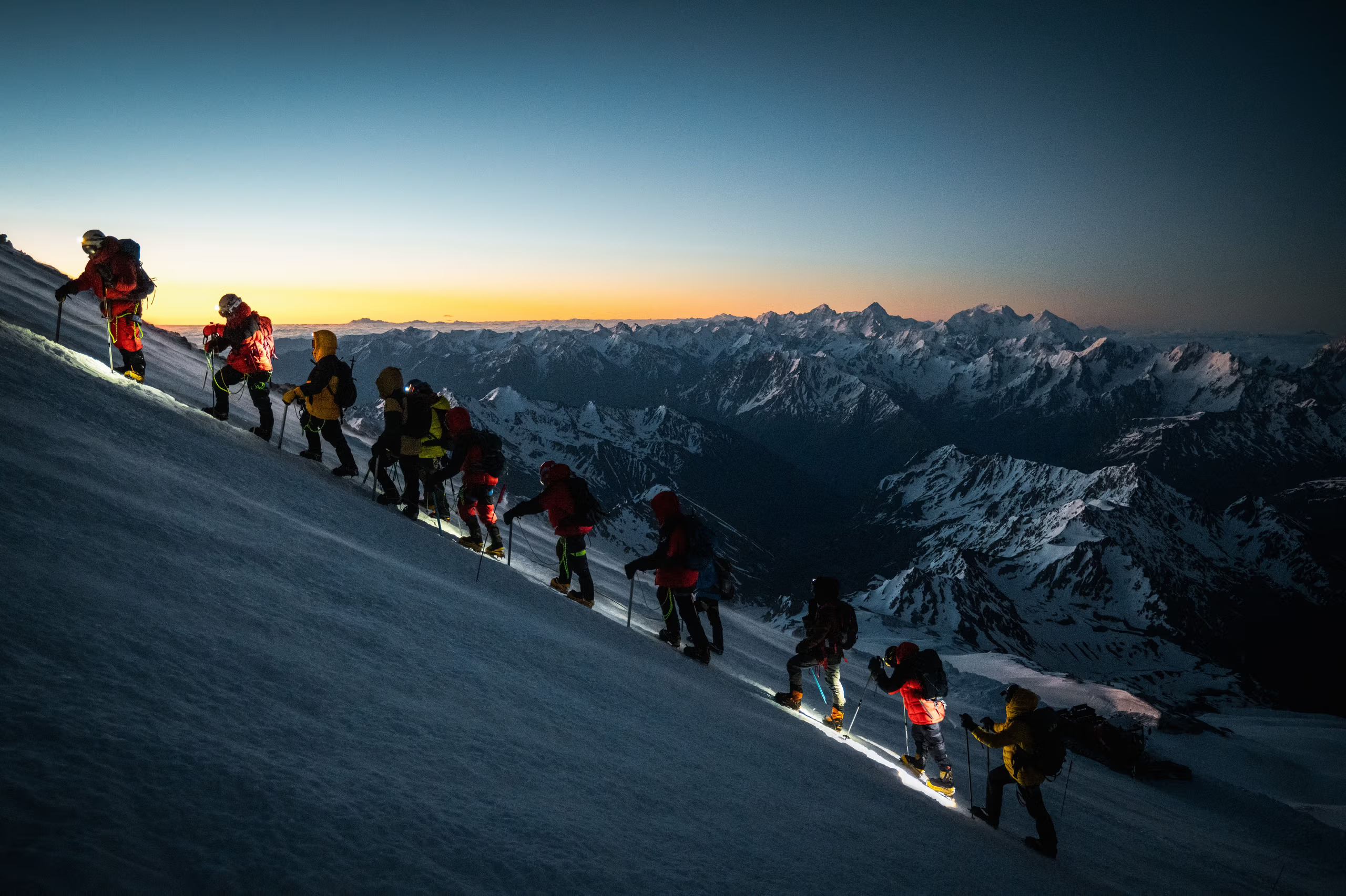
The Karakoram range does not care about Netflix documentaries or global celebrity. The recovery of seven bodies from Broad Peak, including that of the highly publicised Nepali-British climber Nirmal Purja, delivers a brutal reassertion of nature's absolute veto over human ambition.
On a Thursday midday, an avalanche swept down the 8,051-metre peak, erasing a ten-member international expedition. By Sunday, rescue teams navigating the treacherous Pakistani terrain had recovered seven victims. Three climbers remain missing on the world's twelfth-highest mountain, trapped in an environment that heavily penalises the slightest miscalculation or stroke of bad luck.
Among the dead is Purja, a 43-year-old former Gurkha and British special forces soldier who transformed high-altitude mountaineering into a high-speed, highly commercialised spectacle. His 2019 campaign to summit all fourteen 8,000-metre peaks in a mere 189 days—a record later surpassed in 2023—fundamentally altered the alpine economy. Two years later, he cemented his status by participating in the first winter ascent of K2 alongside an all-Nepali team. Yet, on Broad Peak, he was simply one of ten victims caught in the snow.
The mountain claimed a decidedly international cohort representing five nations. Search crews retrieved the bodies of American climber Mallory Geis, Omani mountaineer Nadhira Al Harthy, Chinese climber Wang Zhong, and three Nepali climbers: Pur Bahadur Gurung, Nima Sherpa, and Kili Pemba Sherpa.
The rescue operation itself highlights the severe logistical disparities in modern mountaineering. While neighbouring Nepal has developed a sophisticated, albeit heavily monetised, long-line helicopter rescue infrastructure, Pakistan’s capabilities remain comparatively limited. Bad weather grounded flights on Friday after four bodies were initially located, forcing searchers to retreat after bringing down only three. A ground team eventually reached Purja and three others by Sunday. Three individuals are still unaccounted for, including Sohail Sakhi, a Pakistani guide and photographer who had reportedly intended to retire from expedition work following this very ascent.
The loss has triggered predictable waves of official mourning. Nepal’s Prime Minister Balendra Shah issued a statement declaring that the climbers' courage, dedication and contributions would remain an inspiration, even though their physical journey had ended. Purja’s own company, Elite Exped, characterised him as a leader who had inspired millions through his courage and humility. In Nepal’s Chitwan district, students at the Small Heaven School, where Purja boarded before his military career, held a vigil with candles and flowers.
Ultimately, the tragedy on Broad Peak strips away the polished veneer of modern expedition climbing. It exposes the raw transaction at the heart of the sport: human endurance wagered against an environment that routinely, and indifferently, collects its debts.
Written by Christiane Hofreiter christiane.hofreiter@alpineweekly.com