Aug 1, 12:02 PM
Podium by Default: How a Sinking Nation Leveraged a Sporting Loophole
Tarona Taafaki secured Tuvalu's first Commonwealth Games medal without winning a single bout, transforming a bureaucratic absurdity into a desperate geopolitical plea.
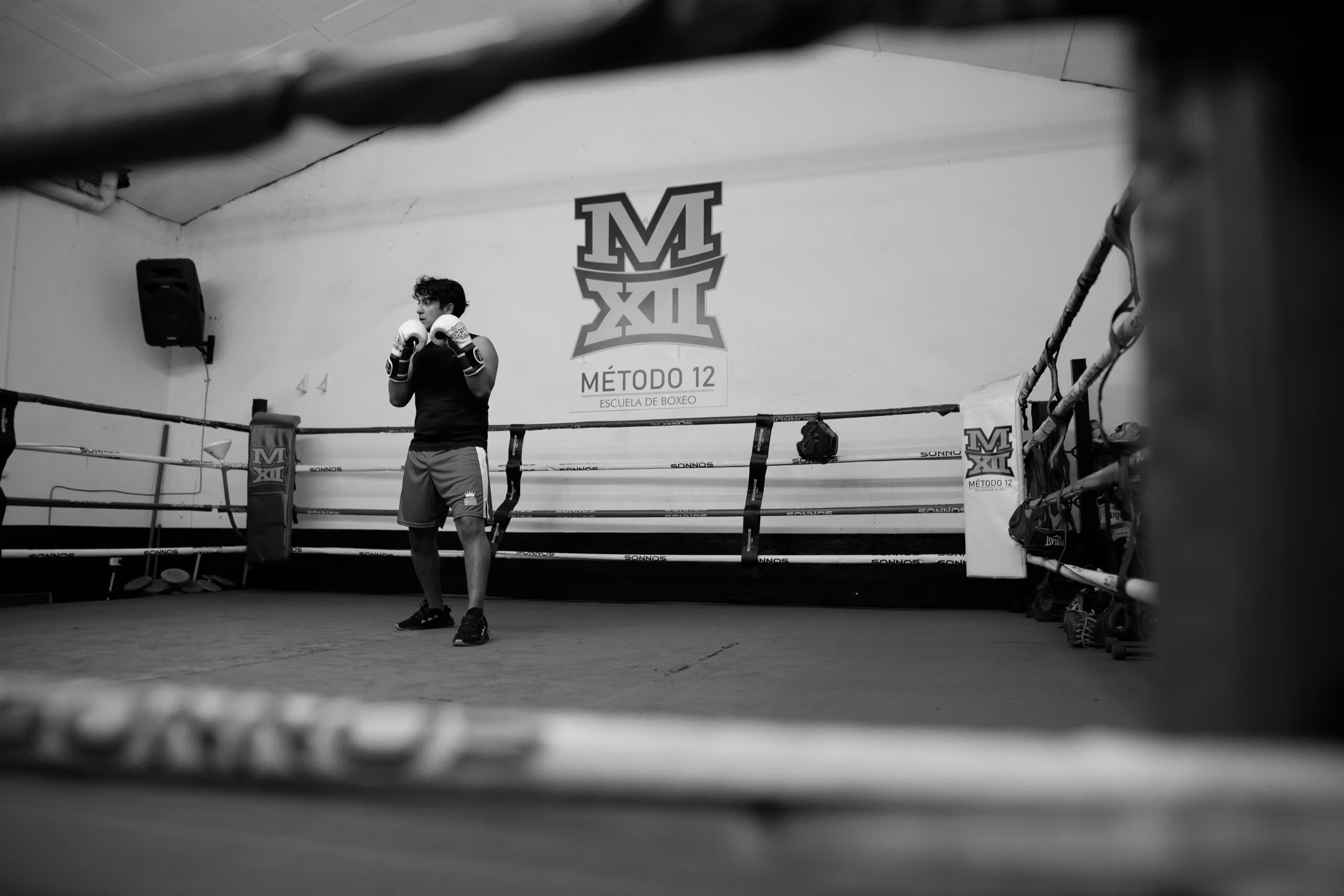
In the rigidly structured world of international athletics, glory usually requires victory. Occasionally, however, it merely requires a favorable draw and a quirk in the rulebook. Tarona Taafaki has secured the first-ever Commonwealth Games medal for the Pacific island nation of Tuvalu, departing Glasgow with a bronze in the women’s 75-kilogram boxing category. The twenty-year-old achieved this historic milestone without winning a single bout.
The mathematics of her triumph perfectly illustrate the peculiar administrative mechanics of the Commonwealth Games. With only five competitors entered in her weight class, Taafaki received an automatic bye into the semi-finals. There, she faced India’s Lovlina Borgohain and was defeated by a unanimous points decision. Because tournament regulations mandate that all semi-finalists receive a bronze medal regardless of the outcome, the Tuvaluan fighter stepped onto the podium. This is not an unprecedented anomaly; Australian flyweight Taylah Robertson benefited from the exact same structural loophole at the 2018 Gold Coast games after losing her opening match to England's Lisa Whiteside.
Yet, dismissing the medal as a mere bureaucratic artifact ignores the stark reality of the nation it represents. Tuvalu, a ten-square-mile archipelago with a population of just 10,000, sent a grand total of eight athletes to Scotland. The logistical hurdles of producing any international competitor in such an environment are staggering. Taafaki’s father and coach, Badi Taafaki, has openly described the island's severe lack of rudimentary sporting infrastructure. Historically, local fighters resorted to bare-knuckle sparring against sand-filled bags. Even today, the most stable stretch of land available for athletic training is the national airport runway in the capital, Funafuti, where athletes must routinely clear the tarmac to accommodate incoming aircraft.
Recognizing these limitations, the Taafaki family has since relocated their training camp to New Zealand. Both Tarona and her brother Pasoni, who also competed in the Glasgow boxing tournament, now benefit from standard facilities far removed from the Pacific airstrip. This pragmatic migration highlights the vast disparity in resources among Commonwealth nations, a gap that athletes from micro-states must bridge just to participate at an elite level.
The significance of this bronze medal extends far beyond the boxing ring. For the Tuvaluan delegation, the podium finish operates primarily as a geopolitical megaphone. Climate models project that half of Funafuti could be entirely submerged by 2050 due to rising sea levels, with coastal erosion already allowing storm surges to wash directly through residential homes. Badi Taafaki views his daughter's default victory as a highly effective mechanism to force a global audience to acknowledge his country's existential crisis. In a sporting event that often struggles for modern relevance, a tiny nation has successfully leveraged an administrative loophole to broadcast a desperate geographical reality.
Written by Sandy van Dongen sandy.vandongen@alpineweekly.com