
Oct 10, 4:01 PM
Surviving the Needle: Tennessee’s Unprecedented Execution Failure
After two failed lethal injections, a convicted murderer returns to her prison cell, leaving state prosecutors without a clear path forward.
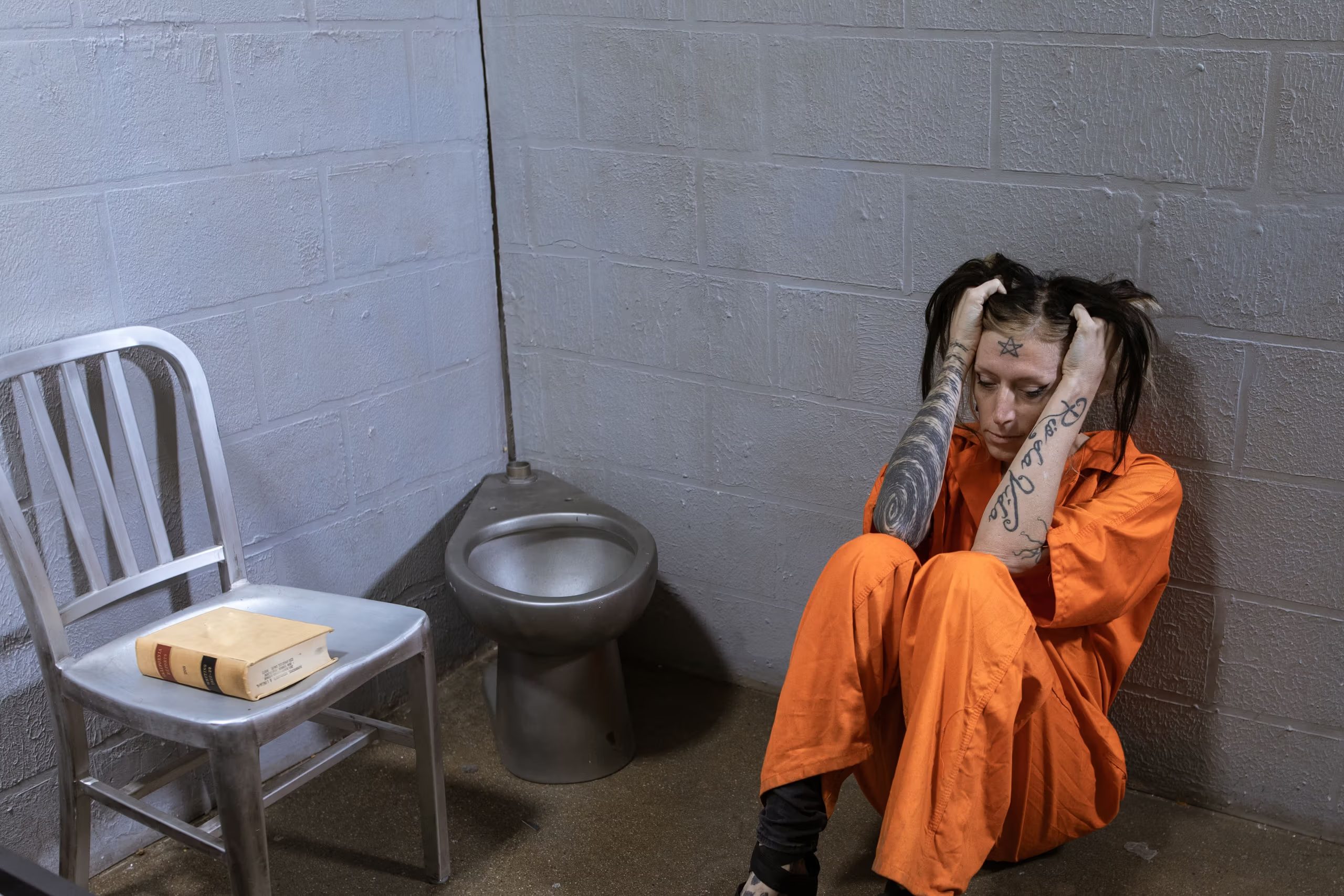
When a state attempts to execute a prisoner, the administrative assumption is that the outcome is definitive. Tennessee has recently managed to turn that basic procedural expectation into a legal and medical conundrum. Christa Pike, a 50-year-old convicted murderer who has spent the last three decades behind bars, is back in her cell following a failed attempt to end her life by lethal injection.
The sequence of events presents an unsettling administrative anomaly. On 30 September, state officials administered two lethal injections of the drug pentobarbital to Pike. Instead of a concluded sentence, the procedure left her in critical condition at a hospital. Days later, however, the inmate regained consciousness and began to speak, an outcome that caught medical personnel, legal observers, and her own counsel off guard.
By Saturday, according to a statement from her legal representatives, Pike had been formally discharged from the hospital and returned to the prison facility where she has spent thirty years. She remains under ongoing medical care inside the institution. In their statement, her legal team noted that she is grateful to the first responders and her medical team for their care in these extraordinary circumstances.
The survival of a lethal injection attempt places the penal system in uncharted territory. Pike is believed to be the only individual ever to survive an execution attempt carried out via lethal injection. Her survival creates an awkward institutional predicament: what happens when the state fails to carry out its ultimate punishment?
For now, state officials appear to have no immediate answer. At a court hearing on Wednesday, Tennessee Assistant Attorney General Will Ayers told the judge that he does not know whether the state intends to reschedule the execution. Having failed to administer the lethal penalty, the state finds itself providing ongoing medical treatment to the survivor of its own botched procedure, while prosecutors deliberate whether to mount a second attempt.
Written by Martina Kirchner martina.kirchner@alpineweekly.com


