
Sep 11, 2:01 PM
Salt Water, Empty Pharmacies: The Silent Collapse of Sundarbans Medicine
As salinity surges through the world's largest mangrove forest, informal healthcare networks are dissolving alongside the ecosystem.
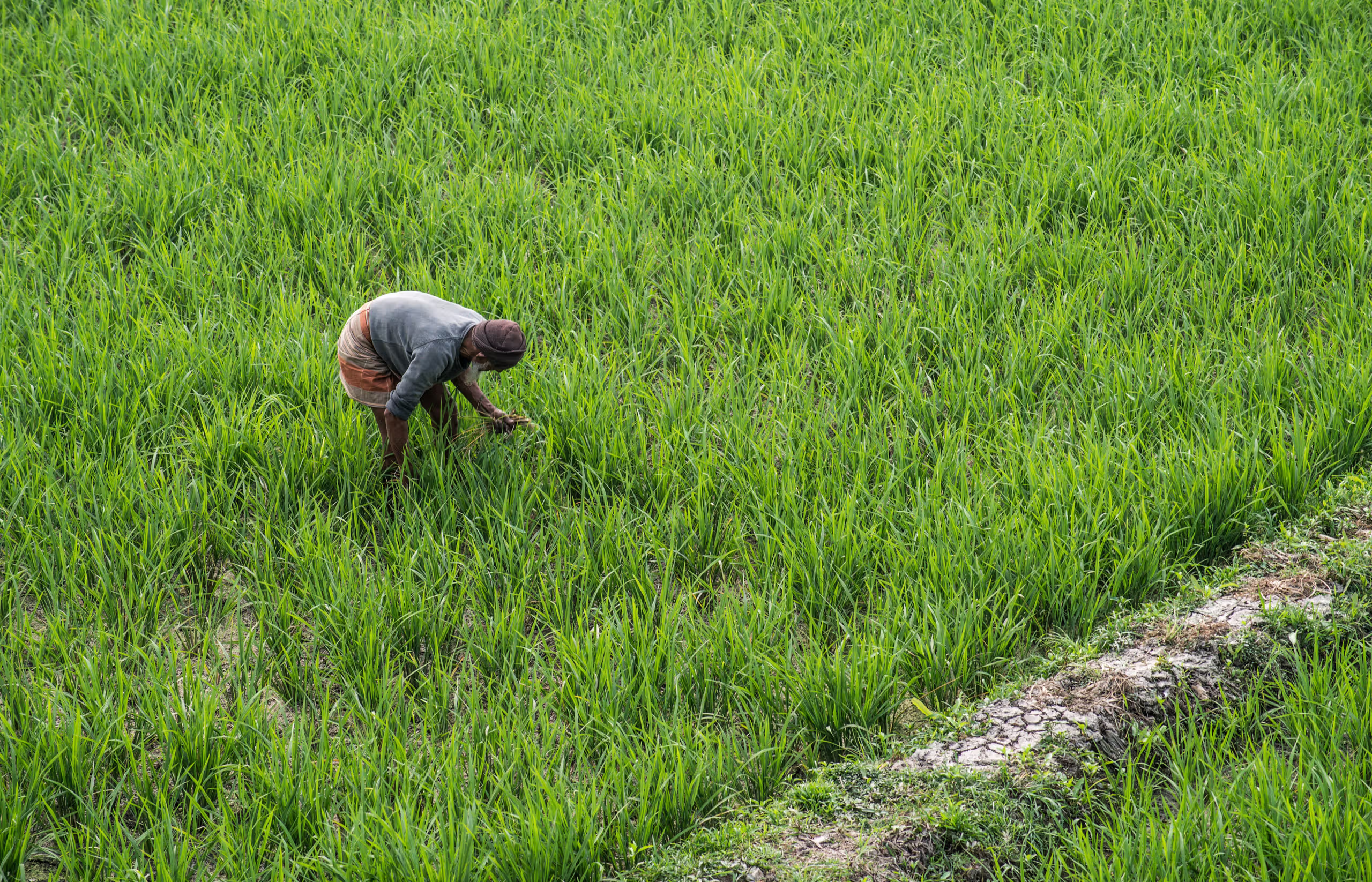
When nature decides to recalibrate its chemical baseline, human tradition rarely gets a vote. Across the 10,000 square kilometres of mangrove swamps spanning Bangladesh and India, a quiet environmental restructuring is underway. Nearly 2.7 million people in Bangladesh's coastal districts have long depended on the Sundarbans as both a marketplace and a pharmacy, relying on informal healers known as kabiraj to fill the void left by absent or costly formal healthcare.
That informal medical network is now failing, not from a lack of demand or expertise, but due to basic environmental degradation. Between 2017 and 2021 alone, tidal water salinity in the region jumped from 21 to 33 parts per thousand during the pre-monsoon season, while soil salinity surged by 31 percent. Mangroves are notoriously resilient, but every plant species has its threshold. The iconic Sundari tree is in noticeable decline, while the Bain tree has stopped blooming in several areas, wiping out seasonal honey harvests and starving local gatherers of income.
For rural households, the consequences are immediate. A 2011 study in Barisal Division indicated that nearly one-third of the coastal population sought medical treatment from traditional healers. These practitioners rely on careful, sustainable harvesting techniques—cutting bark without injuring the underlying growth layer and harvesting vines selectively to ensure regeneration. Yet even the most disciplined resource management offers zero protection against systemic saltwater intrusion. When saltwater flooded gardens following Cyclone Aila in 2009, domestic cultivation of key botanical species was wiped out instantly.
Essential medicinal flora such as neem, ashwagandha, haritaki, and Typha—locally known as hogla—are becoming virtually impossible to locate in areas like Koyra. As healers find their shelves empty, they are forced to turn away patients empty-handed. Describing this ecological turnover, Professor Md Abdur Rahim, chairman of the Department of Genetics and Plant Breeding at Sher-e-Bangla Agricultural University, observed that rising salinity is steadily rewriting the forest's composition, allowing salt-tolerant species to flourish while delicate medicinal plants quietly disappear.
The shift exposes a fundamental vulnerability in off-grid self-reliance. As salt-hardy species replace delicate medicinal plants, the region's primary line of basic healthcare is quietly being erased. Formal medical infrastructure remains largely out of reach for these coastal communities, leaving them stranded between a modern health system they cannot afford and a traditional one that is rapidly dissolving in salt.
Written by Freya Stensrud freya.stensrud@alpineweekly.com


