Jul 22, 6:00 AM
Japan gives a name to the heat, and the heat promptly ignores it
With temperatures above 40C now common enough to merit a new label, Japan is scrambling to protect workers, crops and school sport from summers that no longer behave like summers.
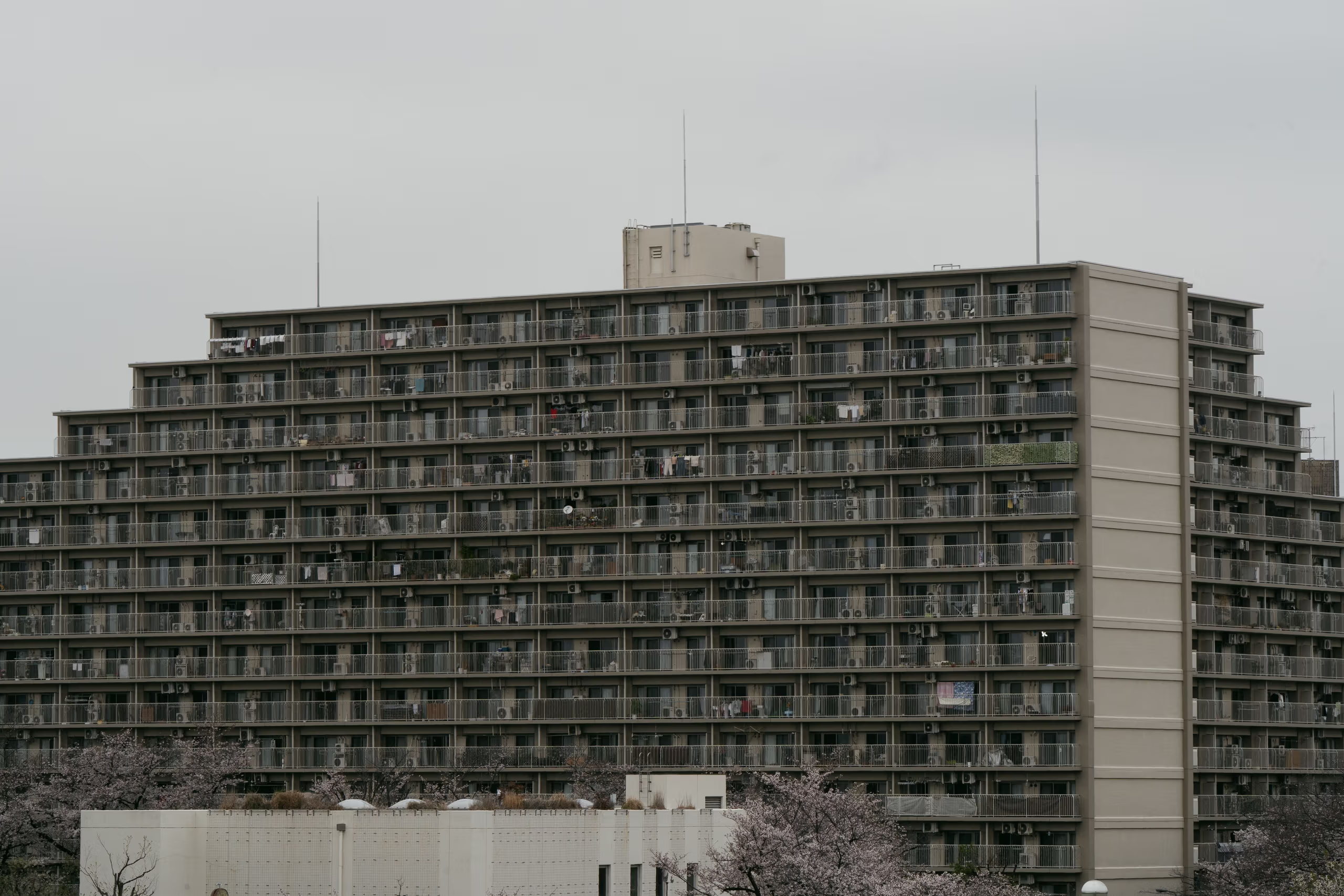
Japan has now done what bureaucracies do best when reality becomes awkward: it has named the problem. On Tuesday, the country recorded its first official kokushobi, or “cruelly hot day,” after the Japan Meteorological Agency introduced the term in April for days when temperatures rise above 40C. The label is new. The heat, naturally, is not.
Central Japan took the brunt of it. Gujo and Tajimi in Gifu prefecture, together with Toyota in Aichi prefecture, all reached 40C. Gujo’s 40C and Toyota’s 40.1C were the highest temperatures ever recorded at those weather stations. Across the country, 278 of 914 stations logged more than 35C, the level previously known as moshobi, or “extremely hot day”. Japan already had a vocabulary for summer misery; it has simply had to expand it.
The human cost is harder to dress up in administrative language. On Monday, a man in his 40s was found dead on a street in Sanjo in Niigata prefecture, while another man in his 70s died in Kanagawa, southwest of Tokyo. Both are believed to have died from the heat. Heatstroke deaths passed 2,000 for the first time in 2024, and more than 100,000 people were taken to hospital last year between early May and late September, according to the fire and disaster management agency. Those are not abstract figures; they are the bill for a climate that keeps collecting interest.
The damage is spreading well beyond emergency rooms. Rice yields and quality are being affected, which is awkward for a country where rice is not a luxury item but a staple. Farmers are turning to more heat-tolerant varieties, and some are even switching to crops such as avocado, which until recently had no serious place in Japanese fields. Sport is also adapting, sometimes reluctantly. The koshien national high school baseball tournament, one of the country’s great summer rituals, has split its games into morning and evening sessions since 2024 to reduce the risk of heatstroke for players and spectators.
Workplaces, too, are being asked to loosen up. As part of the long-running Cool Biz campaign, office staff are now being encouraged to wear shorts on hot summer days, along with polo shirts, T-shirts and trainers where appropriate. Tokyo governor Yuriko Koike announced the latest clothing advice against the backdrop of expected high temperatures and what officials delicately call a challenging outlook for electricity supply. The message is clear enough: if the air-conditioning grid groans, the tie must go.
Behind the improvisation sits a more uncomfortable arithmetic. Average summer temperatures in Japan have risen by about 1.3C over the past century, according to the Japan Meteorological Agency. A 2025 study by the National Institute for Environmental Studies and Waseda University warned that without drastic cuts in greenhouse gas emissions, outdoor school sport could become unplayable by the 2060s. Japan has already seen both 2023 and 2024 become the hottest years on record, only for 2025 to go further still. In Isesaki, Gunma, north of Tokyo, the mercury reached 41.8C on 5 August, a new national high. If that is the future, then kokushobi may prove less a warning than a modest act of self-respect.
Written by Sandy van Dongen sandy.vandongen@alpineweekly.com