Mar 17, 10:31 AM
Austrian glaciers breaking apart as warming accelerates Alpine ice loss
Researchers warn that rising temperatures are not only shrinking glaciers but causing structural collapse across the Austrian Alps.
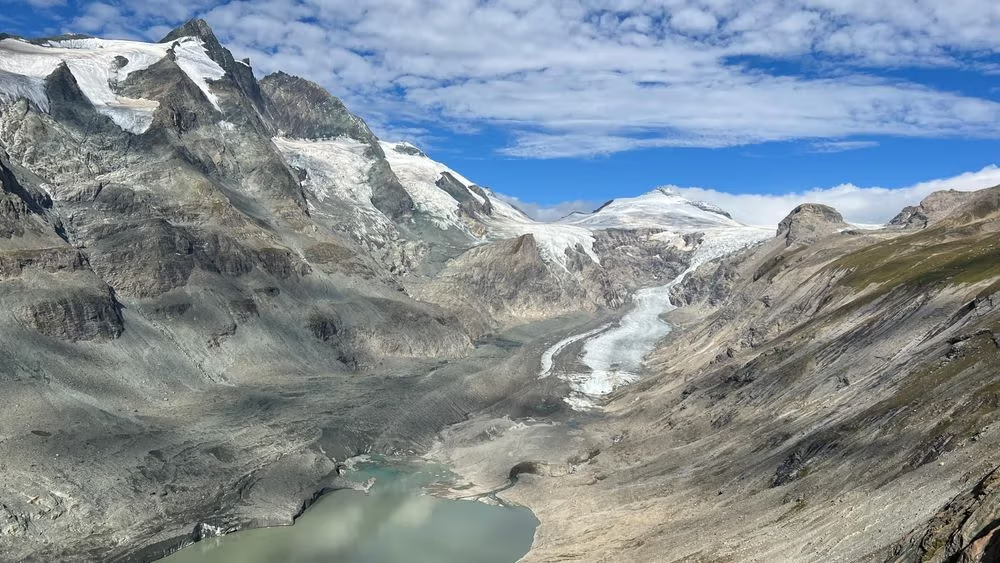
Glaciers scattered across the Austrian Alps aren’t just slipping away quietly anymore, now, experts are sounding the alarm that many have begun to fall apart altogether as rising temperatures turbocharge ice loss throughout the region. The latest yearly review from the Austrian Alpine Club paints a sobering picture: glaciers here are shrinking at a breakneck pace, not only in length, but also in mass and overall size. Scientists tracking these icy giants say the changes unfolding now are more dramatic than anything they’ve previously recorded, with some glaciers hitting what they’re calling a phase of structural collapse. If you look around the Alpine terrain, it’s becoming commonplace to spot bare patches of rock where ice once clung, tumbling tongues of ice, and whole sections peeling off entirely. The numbers tell their own story,out of 96 glaciers checked last year in Austria, 94 lost ground.
That’s staggering. Some spots were hit especially hard: take Alpeiner Ferner over in Tyrol, it saw its most drastic retreat on record, losing more than 114 meters in length. Stubacher Sonnblickkees up in Salzburg. Nearly 104 meters vanished there too during this same stretch of time. Even Pasterze,the country’s biggest glacier nestled down in Carinthia, is still wasting away year by year.
There’s real concern among monitoring scientists that its lower section could eventually break loose altogether (splitting what was once one continuous body into two separate slabs). It sounds dramatic because it is. So what’s behind all this upheaval. Researchers point straight at sustained warmer conditions dogging recent years,no sugarcoating it. Their latest assessment describes a winter starved for snowfall followed by an early summer that broke heat records left and right; June clocked in almost five degrees Celsius above average for the season.
High-altitude weather stations echoed this trend too, logging readings roughly two degrees higher than long-term norms. Here’s where things get even trickier: according to those keeping watch on these changes, such relentless warmth has become especially punishing for Alpine glaciers specifically. At this point, even brief cool spells barely make a dent,the process seems to barrel ahead regardless. Why does it matter so much here. Well, this corner of Europe is uniquely vulnerable when climate patterns shift like this; warming doesn’t just erase centuries-old ice sheets, but also ramps up wild weather swings and introduces fresh environmental hazards into the mix..
As each glacier pulls back further into itself or breaks apart outright, you see, not just metaphorically but quite literally,the very shape of these mountains changing underfoot. And there’s another layer: researchers caution that as high-elevation infrastructure ends up exposed or undermined by unstable terrain left behind by melting ice, new risks will keep cropping up for communities relying on those spaces..
Written by Andreas Hofer