Aug 28, 10:01 AM
Atmospheric Chaos Exposes the Limits of State Preparedness
From Japanese deluges to tornadoes in southern France, violent weather tests fragile infrastructure.
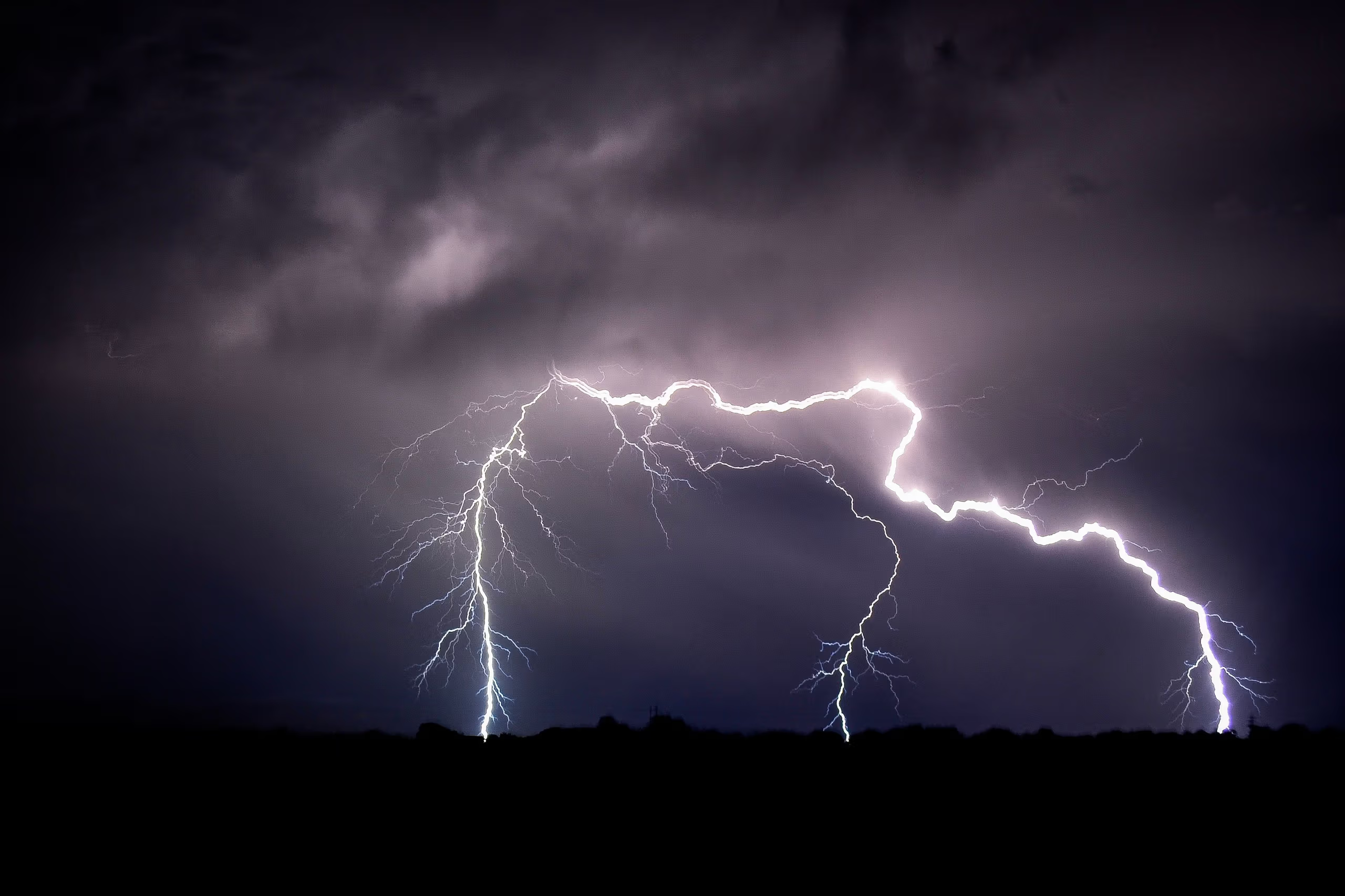
When atmospheric physics decides to break routine, the modern state’s meticulously drafted disaster plans quickly reveal themselves as exercises in institutional hubris. From the prefectures of East Asia to the Mediterranean coastlines of Southern Europe, recent weather patterns have laid bare a stark reality: public infrastructure remains remarkably ill-equipped when nature refuses to abide by seasonal averages.
In Japan, where administrative precision is normally considered an art form, the sheer volume of water arriving from the Sea of Japan proved overwhelming. Following mid-August's unprecedented deluge in Chiba, the prefectures of Ishikawa and Toyama faced severe inundation as relentless moisture poured over the terrain. In the city of Himi, located within Toyama, weather stations recorded 361.5 millimetres of rain within a single twenty-four-hour window—an amount equivalent to roughly half the annual rainfall of major European capitals like London or Paris.
The resulting swollen rivers swiftly burst their banks, triggering flash floods and mudslides that battered residential structures and prompted the Japan Meteorological Agency to issue its highest emergency warning level for rain and landslides. As hundreds of thousands were forced to evacuate, weather models indicated that an additional 200 millimetres could fall just south of the affected zone. This onslaught came on the heels of Typhoon Saudel, which swept through Kagoshima and Okinawa with winds reaching 100 miles per hour, dropping 230 millimetres of rain on the Amami region before tracking west toward China.
The catalyst behind East Asia’s relentless storm track lies in fundamental atmospheric mechanics. The developing El Niño pattern has altered regional dynamics, shifting the North Pacific High ridge northward rather than westward, as typically seen during La Niña phases. This displacement opens a clear corridor for tropical storms to recurve directly toward the Japanese archipelago, while simultaneously allowing frontal systems to sweep through with unyielding frequency.
Across the hemisphere, Western Europe offered its own display of physical vulnerability. A low-pressure system pushing along the Atlantic coastline combined with high convective instability and vertical wind shear to unleash severe storms across Spain, France, and the Alpine zones of Italy. In Catalonia, atmospheric turbulence produced hailstones measuring up to 10 centimetres in diameter, while the French village of Pomas in the south-west was struck by a tornado that left residential houses destroyed.
Whether confronting tornadic destruction in rural France or catastrophic downpours in Central Japan, the underlying question remains unchanged. How long can administrative authorities rely on emergency warnings and forced evacuations to cover for the physical inadequacy of state infrastructure against predictable meteorological volatility?
Written by Christiane Hofreiter christiane.hofreiter@alpineweekly.com