Sep 2, 6:00 AM
A Long-Overdue Speed Check on Japan’s Backstreets
By halving speed limits on narrow urban roads, Tokyo finally aligns traffic law with basic physics.
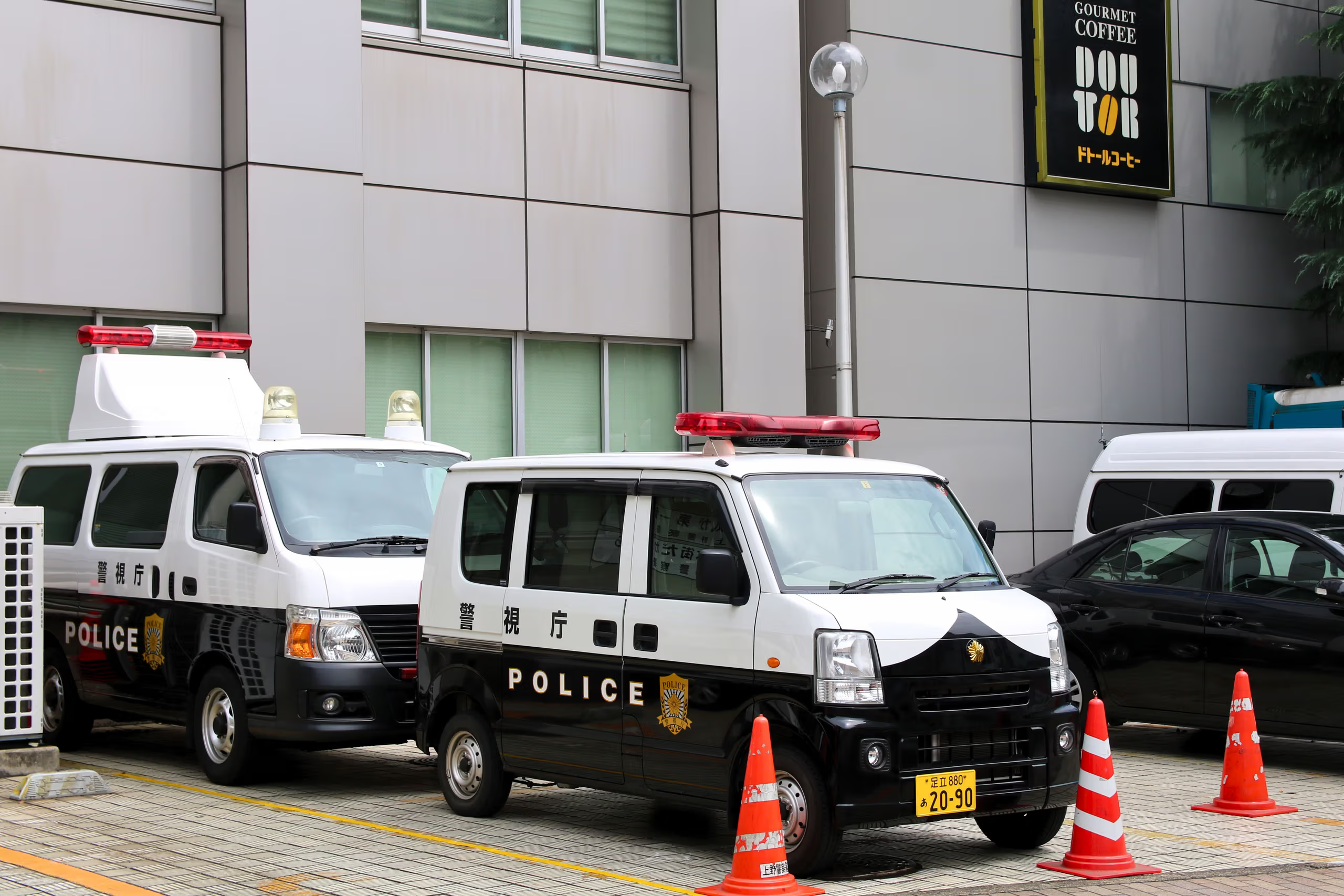
For decades, Japanese traffic regulations maintained a curious fiction: that driving at 60 kilometers per hour down a five-meter-wide alley without sidewalks was a perfectly reasonable proposition. Reality, predictably, disagreed. Japan has officially halved the speed limit to 30 km/h on narrow residential roads across the country, finally aligning state regulation with basic physical common sense.
The new rule targets the nation's vast network of backstreets—specifically roads under 5.5 meters wide that lack center lines or median strips. This is no minor regulatory tweak. According to data published by the Mainichi Shimbun, the mandate covers approximately 870,000 kilometers of road, representing roughly 70 percent of Japan's total general road network. In hyper-dense urban landscapes where pedestrians, cyclists, and delivery vans routinely negotiate the same strip of asphalt, the change addresses a glaring structural hazard.
While state officials frequently highlight total traffic fatalities dropping to a record low of 2,457 last year, that broader success masked a grim stagnation in neighborhood back alleys. Deaths and serious injuries involving children and elderly pedestrians on residential streets have hovered at roughly 300 annually since 2021, even ticking upward in 2025. Highways got safer; residential areas remained stuck in place.
The empirical case for slowing down is stark. National police agency metrics reveal that pedestrian fatality rates stay below one percent when a striking vehicle travels at 30 km/h or less. Between 30 and 40 km/h, that rate jumps to 2.7 percent. At speeds between 50 and 60 km/h, the mortality rate skyrockets to 17.4 percent. The math was tested back in 2011 with localized "Zone 30" pilot projects, which promptly delivered a 30 percent decline in fatalities and severe injuries along designated school routes. It merely took fifteen years to scale those findings nationwide.
Addressing the shift, police agency commissioner general Yoshinobu Kusunoki urged motorists to adapt, stating: “We ask drivers to recognise that they need to take particular care on roads shared by vehicles, pedestrians and cyclists.” Whether signposts alone will curb ingrained driving habits across 870,000 kilometers of asphalt remains open to debate, but forcing drivers to ease off the accelerator is at least a pragmatic concession to reality.
Written by Andreas Hofer andreas.hofer@alpineweekly.com