
Sep 16, 8:01 PM
The Veto Trap: Why Antonio Guterres Cannot Fix the UN Security Council
The Secretary-General admits major powers are paralyzing global diplomacy, even as he demands new international consensus on artificial intelligence.
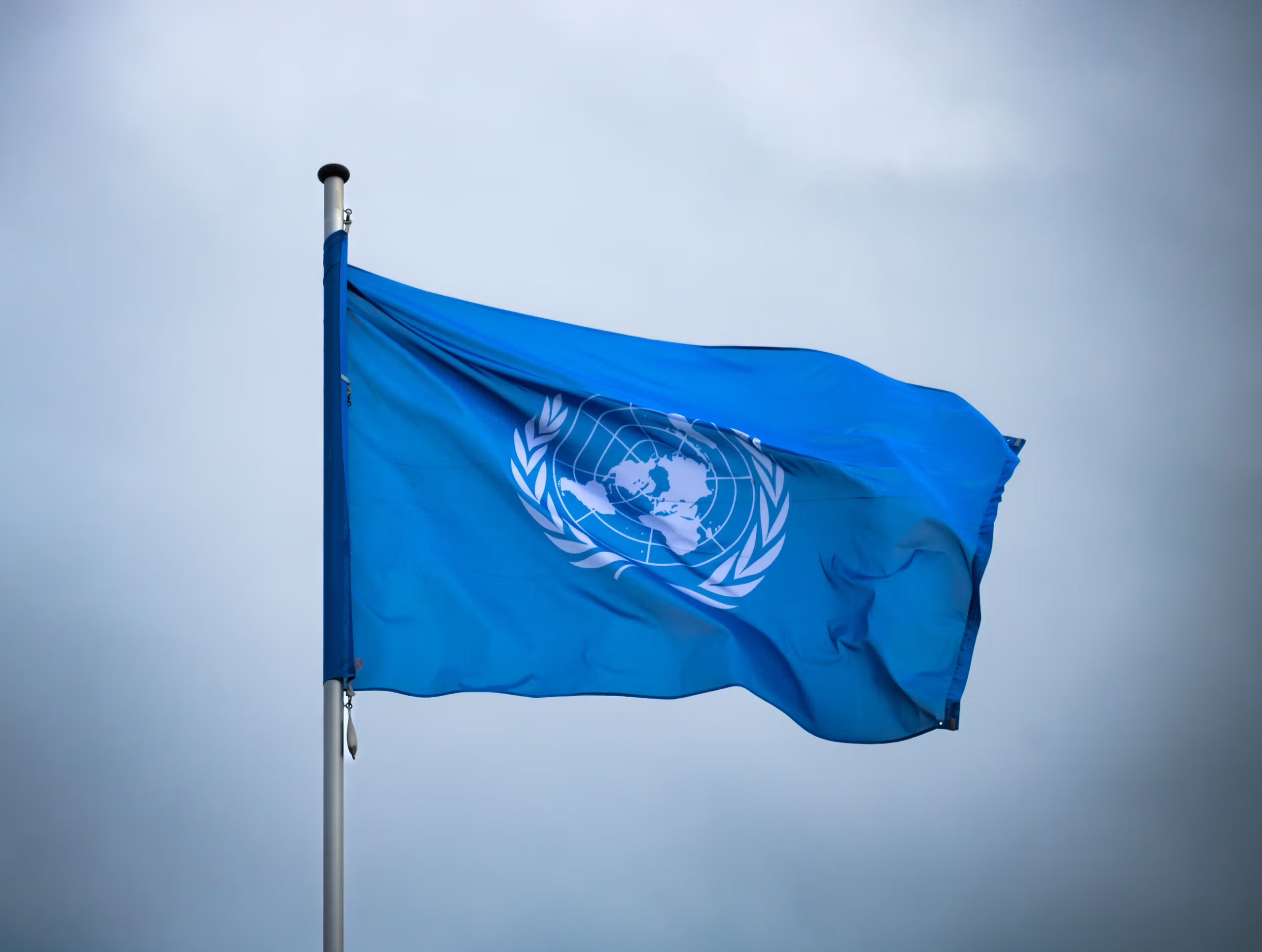
When the administrative head of an international organization publicly acknowledges that his executive body is crippled because its key members routinely break the rules, one might ask what purpose the institution still fulfills. United Nations Secretary-General Antonio Guterres delivered just such an assessment during a news conference on Wednesday, insisting that reform of the Security Council must be an absolute priority.
The diagnosis is direct enough: deep geopolitical rifts among major powers have induced total paralysis within the UN's primary security organ. Guterres noted that several powers holding seats on the Security Council are actively violating international law, shielding themselves while preventing collective enforcement. The current allocation of seats and veto power, in his view, reflects an outdated historical settlement rather than contemporary economic and geopolitical realities.
This paralysis leaves critical conflicts managed with little institutional leverage. Addressing the Middle East, Guterres warned that stability remains impossible without resolving the Israeli-Palestinian crisis through a two-state solution. He criticized the impunity surrounding operations in Gaza and pointed to gradual annexation in the West Bank, where violations by settlers occur with the backing of Israeli security forces.
The Security Council's deadlocks extend equally to Eastern Europe. Regarding the war in Ukraine, Guterres underlined the global economic damage caused by the prolonged hostilities. He expressed willingness to host trilateral peace talks at the UN General Assembly if the key parties agree to meet, stressing that securing a ceasefire and establishing terms for a just peace are essential to halting wider economic disruption.
While struggling with traditional conflicts, the United Nations is simultaneously attempting to expand its remit to emerging technological threats. Guterres called for a coordinated global framework to manage runaway artificial intelligence, aligning his warnings with industry figures such as Anthropic CEO Dario Amodei, who recently advocated for slowing technological advancement to establish necessary safety guardrails.
Guterres framed unregulated artificial intelligence alongside climate change and deepening inequality as existential threats that demand international coordination. Yet there is a striking irony in expecting major powers—the very actors currently disregarding UN resolutions on conventional warfare—to voluntarily yield sovereignty over strategic technologies. If the Security Council cannot enforce compliance on traditional borders and treaties, expecting consensus on artificial intelligence appears less like a policy strategy and more like wishful thinking.
Written by Andreas Hofer andreas.hofer@alpineweekly.com


