Oct 12, 6:01 AM
The Urge to Block: Washington’s Execution Stream and Canberra’s Censorship Reflex
A planned US military livestream tests the limits of Australia's online safety laws and political appetite for content filtering.
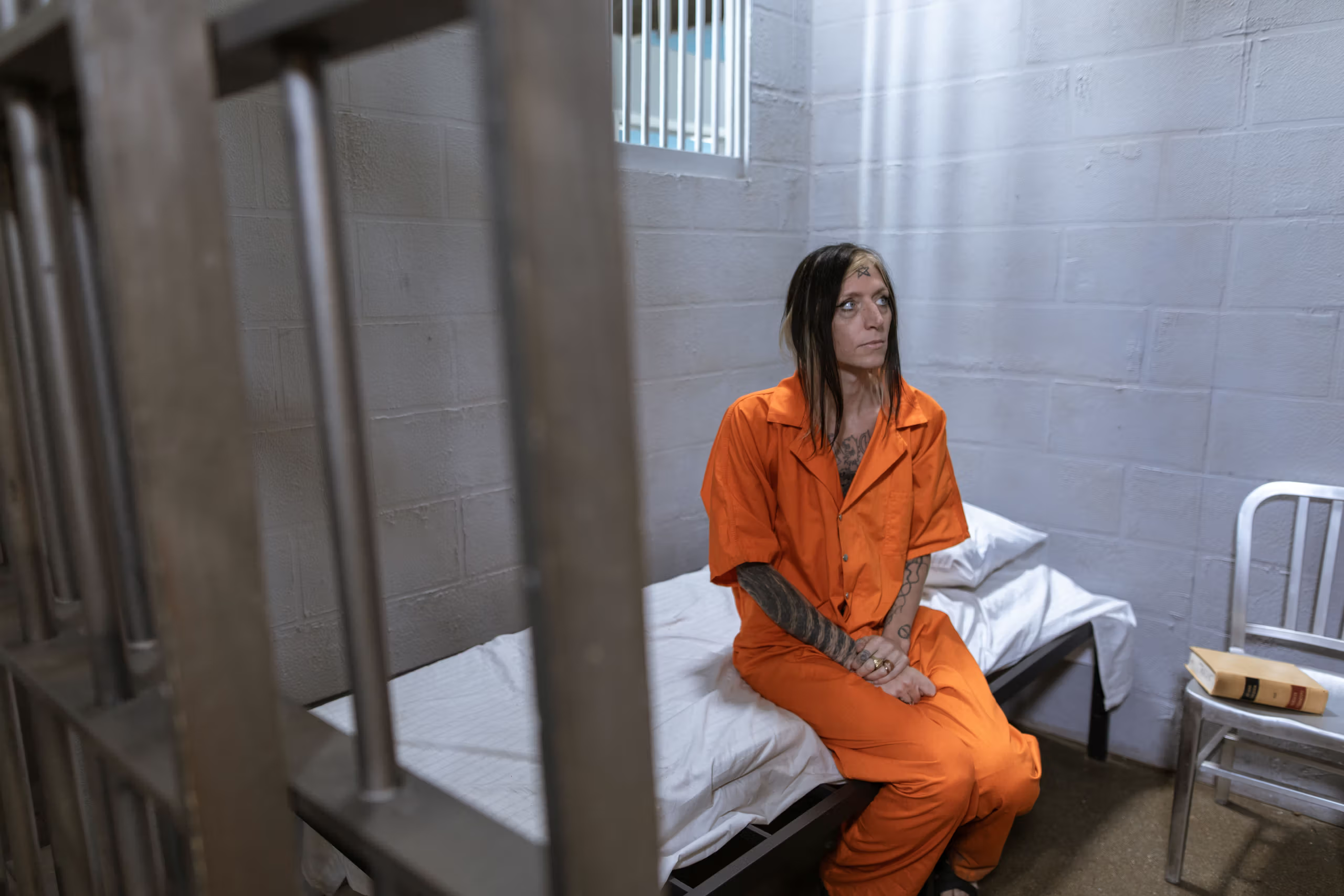
Washington’s announcement that it will livestream the execution of Fort Hood shooter Nidal Malik Hasan has produced an entirely predictable reflex in Canberra. Faced with the prospect of a US military firing squad broadcast online on December 3, Australian politicians are once again reaching for their favorite tool: the digital ban.
Greens senator Sarah Hanson-Young led the charge, demanding that the federal government and the eSafety Commission take pre-emptive action. In letters to Communications Minister Anika Wells, Hanson-Young called for major platforms like Meta, YouTube, and TikTok to be instructed to block the broadcast in Australia, describing the planned stream as abhorrent and barbaric. The sentiment crossed party lines, with One Nation MP Barnaby Joyce likening the public execution to a Roman amphitheatre. Yet shadow treasurer Tim Wilson pointed to the underlying dilemma, asking how the government could construct mechanisms to block such content without creating an infrastructure for online censorship.
Hasan, a former army psychiatrist, was convicted in 2013 for the 2009 mass shooting in Texas that left 13 dead and 32 injured. While international figures and the UN office of the high commissioner for human rights have condemned the livestreaming plan as a violation of international standards, Canberra faces a complex regulatory puzzle.
Australian authorities possess significant powers under the Online Safety Act to order platforms to restrict material that meets the threshold of refused classification. However, applying these rules to a legal execution conducted by an ally presents distinct challenges compared to blocking footage of illegal violent crimes. The eSafety Commission’s previous enforcement attempts, including high-profile disputes with X over geoblocking violent video footage, highlight the friction between national regulatory ambitions and global tech platforms.
With Minister Wells finalizing legislation for a digital duty of care this week, the controversy illustrates the growing appetite among lawmakers to regulate what citizens may view. Whether blocking an ally's judicial proceeding sets a precedent for broader digital control remains the quiet concern behind Canberra's moral outrage.
Written by Martina Kirchner martina.kirchner@alpineweekly.com