
Aug 5, 4:02 AM
Sequencing the Peace: Netanyahu Rejects Trump's Phased Gaza Withdrawal
Jerusalem insists on total Hamas disarmament before relinquishing territory, putting it at odds with Washington's diplomatic blueprint.
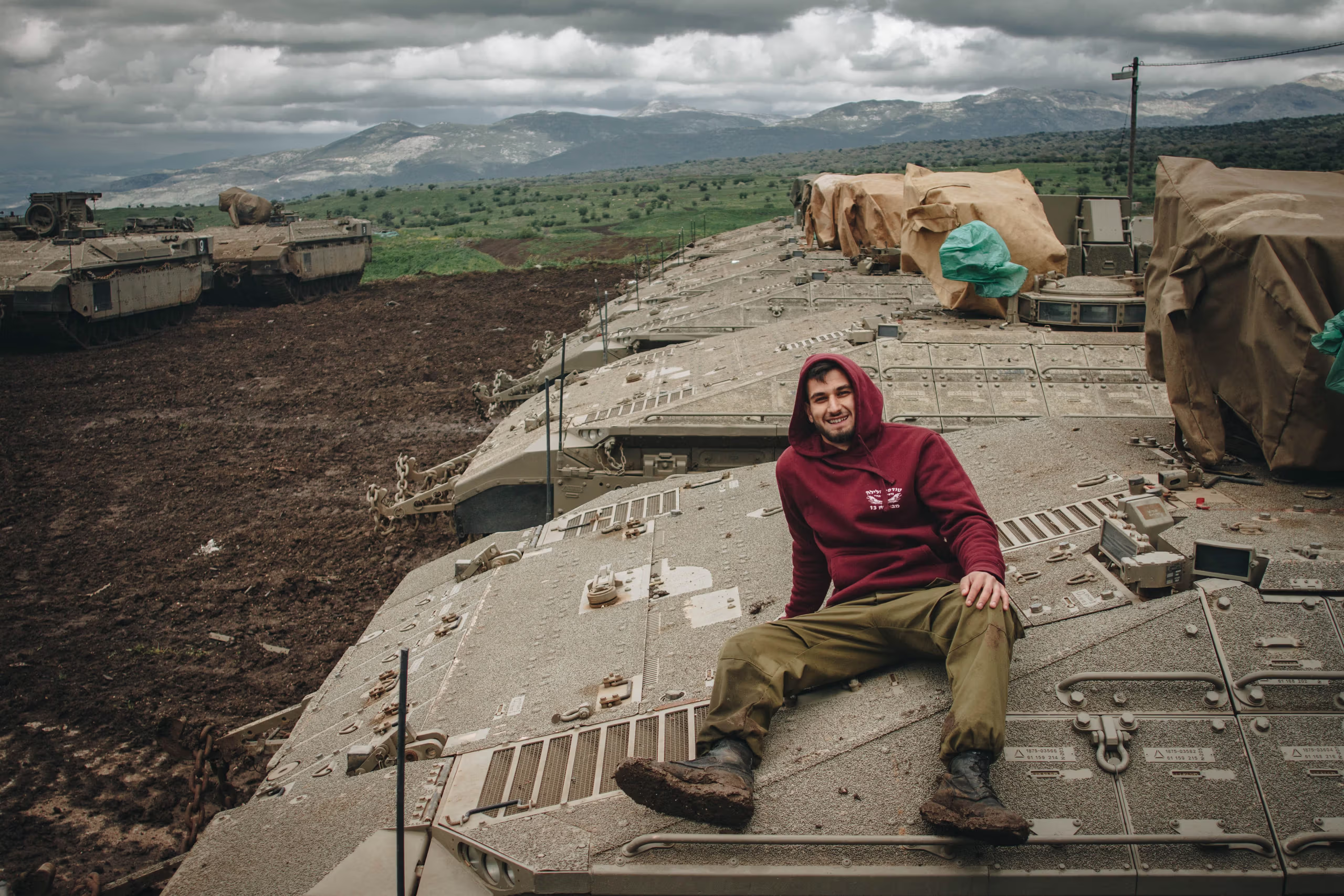
Diplomacy often founders on the rocks of sequencing. For the Trump administration, the path to ending the conflict in Gaza involves a choreographed, simultaneous de-escalation. For Israeli Prime Minister Benjamin Netanyahu, security guarantees cannot be phased. In a rare public display of friction between Jerusalem and Washington, Netanyahu has openly rejected a recent ceasefire draft proposed by US President Donald Trump. The Israeli leader insists his forces will not yield their current positions until Hamas is entirely stripped of its arsenal.
The American proposal envisioned a reciprocal process. Under this framework, Hamas would commence disarmament while Israel simultaneously halted its military strikes and initiated a withdrawal from the roughly sixty percent of the Gaza Strip it currently occupies. Netanyahu has firmly inverted this logic, establishing total disarmament as an absolute precondition for any Israeli retreat. In a recent social media address, the prime minister noted that while the US administration believes it can achieve the demilitarization of Gaza, Jerusalem fundamentally disagrees with the drafted American blueprint and has already submitted its counter-proposals.
This uncompromising stance is tightly bound to the domestic political calendar. Facing a formidable reelection battle this coming October, Netanyahu can ill afford to project weakness or concede territory without a definitive end to the militant threat. He emphasized that the military would continue to take all necessary measures to protect Israeli territory and its citizens. Such political pressure reinforces his government's position that any withdrawal before Hamas is fully disarmed would merely invite a rapid reconstitution of the militant group's operational capabilities.
The current diplomatic impasse builds upon a ceasefire agreement reached last October. That initial truce successfully halted major military operations and secured the release of the remaining hostages held in the coastal enclave, but progress has since ossified. The broader US-backed vision includes the deployment of an International Stabilization Force and the establishment of an independent Palestinian administration to manage governance and reconstruction. These ambitious plans for post-war Gaza remain suspended in a vacuum of trust.
At present, the situation on the ground reflects a classic standoff. Israeli officials maintain that any forward movement is contingent upon Hamas relinquishing its weaponry. Conversely, Hamas insists that Israel must first terminate all strikes and begin pulling its forces out of the territory. With both factions routinely accusing the other of violating the parameters of the October truce, the Trump administration's blueprint for a phased resolution appears structurally incompatible with the immediate security calculations in Jerusalem.
Written by Thomas Nussbaumer thomas.nussbaumer@alpineweekly.com


