Sep 18, 4:01 AM
Rome Bypasses Brussels to Secure the Red Sea
Facing Houthi expansion and European inertia, Italy sends warships to defend vital shipping corridors.
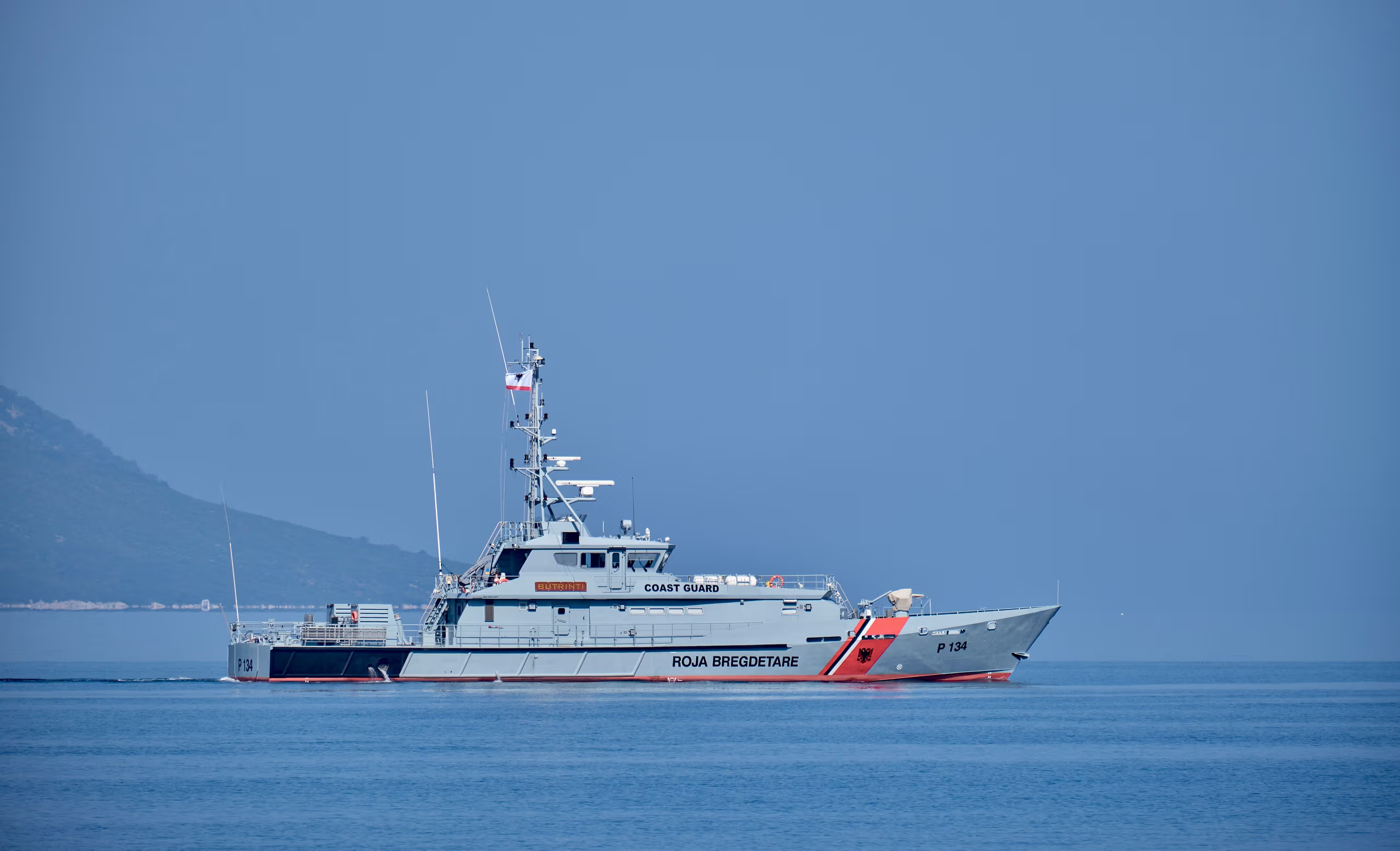
When vital sea lanes are threatened, economic reality tends to ruin administrative timelines. Italian Defence Minister Guido Crosetto has made it clear that Rome will not wait for the European Union to navigate its own bureaucratic machinery before taking action. Italy is deploying warships independently to protect its merchant vessels traversing the precarious Bab al-Mandeb strait.
The timing is hardly coincidental. The choke point, measuring barely thirty kilometers across at its narrowest stretch between Yemen and the Horn of Africa, has turned into an operational flashpoint. A recent offensive by the Iran-backed Houthi movement secured full control over Yemen's western Red Sea coastline and its strategic offshore islands. With unrestricted access to the waterway, the group poses an immediate danger to international shipping, particularly given its history of targeting vessels linked to the United States and regional allies.
This narrow corridor normally accounts for twelve to fifteen percent of global maritime trade, serving as the essential gateway connecting Europe and Asia through the Suez Canal. However, its strategic value spiked drastically after Iran effectively seized control of the Strait of Hormuz during its conflict with Israel and the US. With Hormuz choked off, energy producers like Saudi Arabia turned to land pipelines and Red Sea transit to keep oil flowing to world markets. Bab al-Mandeb became one of the few remaining arteries capable of sustaining global energy logistics.
Naval assets from both the United States and the European Union have previously operated in the region to shield commercial traffic. Yet these multilateral missions have struggled to maintain security as conflict in Yemen intensified. For a nation whose commercial interests rely heavily on maritime stability, waiting for Brussels to coordinate a joint response carries unacceptable financial risks.
Crosetto noted that Rome must not allow bureaucratic delays in decision-making to exacerbate an already complex situation, warning that an impassable strait would trigger severe economic consequences. In an international system where collective security apparatuses routinely drown in consensus-building, Rome’s decision reveals a pragmatic truth: when trade routes bleed, direct national action speaks louder than European committee meetings.
Written by Andreas Hofer andreas.hofer@alpineweekly.com