Oct 11, 4:01 PM
Canberra’s Dangerous Experiment With Demographic Reverse Gear
Slashing migration to fix housing promises cheap political points at the expense of economic sanity.
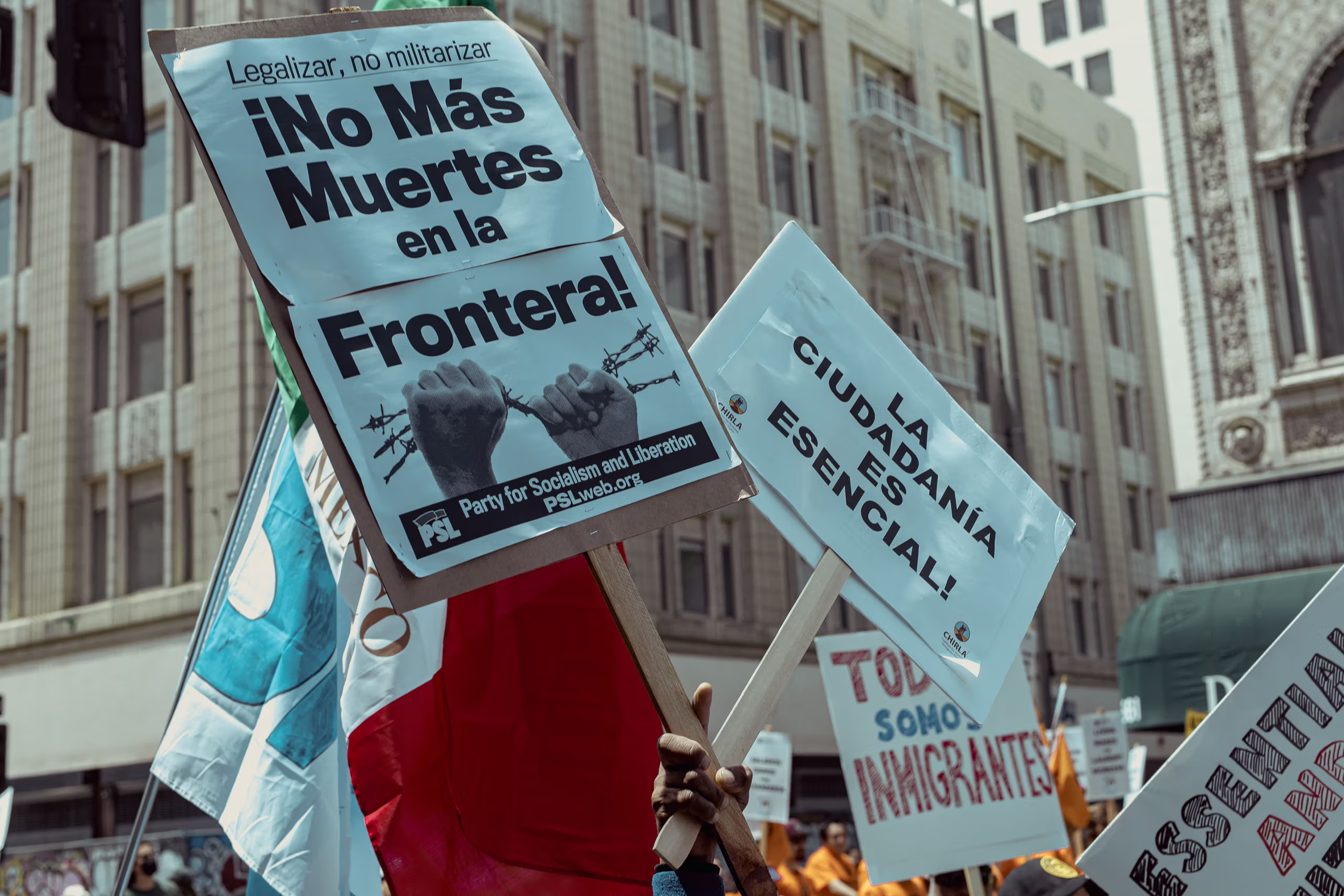
Politicians in Canberra have hit upon a deceptively simple target for Australia’s structural headaches: foreign arrivals. Facing voter frustration over unaffordable housing, opposition leaders are engaged in a competitive auction of economic isolationism, promising migration cuts unseen in the nation's history. Yet using border controls as a blunt instrument to fix regulatory failures elsewhere is a prescription with severe side effects.
The policy proposals on offer range from drastic to unprecedented. Opposition leader Angus Taylor has pledged to restrict net overseas migration to 100,000 a year during the Coalition's first term in office—a sharp drop from the Albanese government's target of 225,000 and recent peaks near 300,000. Pauline Hanson’s One Nation goes further, floating a plan to reduce temporary migrants by 766,000 over three years. That move would intentionally drive net migration into negative territory, a condition historically experienced only during severe shocks like the Great Depression of the 1930s or world wars.
Proponents point to immediate relief for tenants, with modelling suggesting a 6.5% fall in rental inflation that could save households $54 a week over three years. But focusing exclusively on the housing ledger ignores the broader balance sheet. Economists like Peter Tulip from the Centre for Independent Studies point out that such radical contractions would hit university export revenues and drain tax receipts. Economist Mark Cully warns that sustained negative migration over several years would almost certainly drag the country into a prolonged economic slump.
This political bidding war obscures the genuine defect in Australia’s immigration system. While the permanent intake has remained capped at 185,000 annually, the unregulated temporary visa system has exploded. Excluding New Zealanders and short-term visitors, temporary visa holders grew from 2.9% of the population in 2011 to 6.6%, with the total temporary presence exceeding 10% when tourists and New Zealand citizens are included. Essential sectors like healthcare, aged care, and agriculture have built their business models on this flexible labor pool, creating a fragile reliance born of state mismanagement.
Rather than applying a precise scalpel to fix temporary visa regulations, politicians prefer the blunt instrument of grand targets. Alan Gamlen of the Australian National University notes that political theater, rather than sound economic logic, is driving the current debate. Squeezing migrant numbers to capture votes might provide an attractive headline, but engineering an artificial economic contraction remains a remarkably costly way to mask past policy failures.
Written by Andreas Hofer andreas.hofer@alpineweekly.com