
Sep 10, 10:01 AM
Brussels’ Favorite Magic Trick: Spending Other People's Money
Facing a funding gap in Kyiv, MEPs propose a new legal shield to seize immobilised Russian assets.
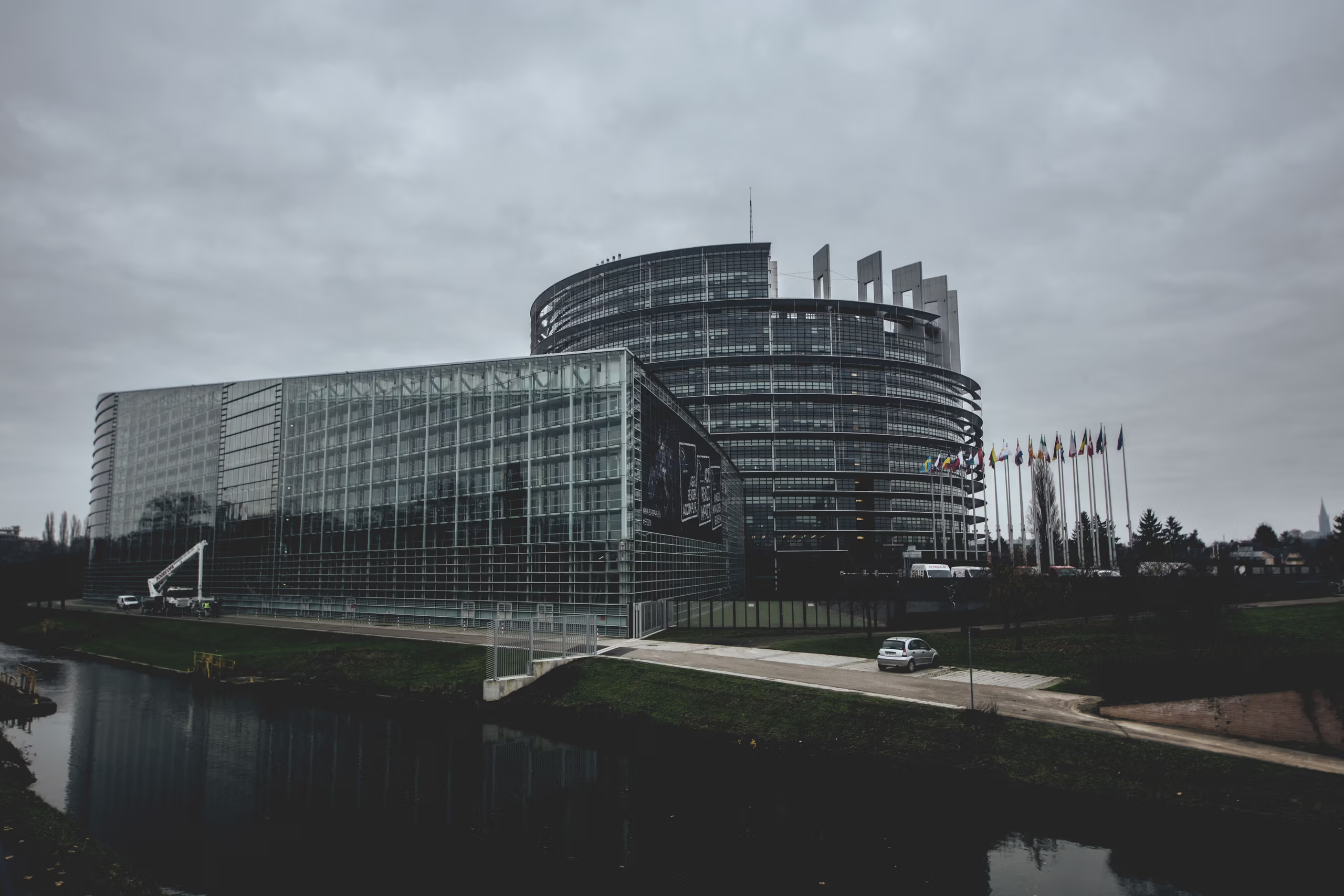
When national capitals refuse to dig deeper into their own budgets, the European Parliament predictably opts for institutional creativity: spending money that belongs to someone else. More than one hundred lawmakers across six political groups have dispatched a letter to top officials in Brussels, demanding that the European Commission resurrect its stalled initiative to tap frozen Russian assets.
The timing is far from coincidental. Authorities in Kyiv report a €23 billion gap in defence funding, while EU member states remain distinctly unenthusiastic about filling the void with national funds. Conveniently, European financial institutions host more than €200 billion in immobilised Russian state assets—the overwhelming majority parked with the Belgian clearinghouse Euroclear.
Turning those assets into cash has proven to be an administrative and legal nightmare. Last December, the Commission floated a plan to convert the funds into a zero-interest loan to finance Ukraine's defence. That proposal disintegrated at a Brussels summit when member states confronted the terrifying prospect of actual legal consequences.
The resistance was led by Belgium, where Prime Minister Bart De Wever’s government bristled at the thought of leaving Euroclear exposed to retaliatory lawsuits from Russia's central bank. Other capitals, including Rome and Sofia, quietly joined the opposition. In the risk-averse corridors of European governance, fear of financial litigation easily trumped broad geopolitical declarations.
The solution cooked up by MEPs—led by liberal figures Karin Karlsbro, Nathalie Loiseau, and Petras Auštrevičius—is classic Brussels logic. Rather than addressing the underlying legal fragility, the signatories propose building a brand-new EU vehicle to absorb the legal obligations to Moscow. The letter, sent to Ursula von der Leyen, Kaja Kallas, Valdis Dombrovskis, António Costa, and Micheál Martin, essentially asks the executive to construct an institutional shield so national governments can evade accountability if things go sideways in court.
Whether this bureaucratic maneuver will convince reluctant national capitals remains doubtful. The EU recently approved a €90 billion support loan for Kyiv, but signatories of the letter argue that figure falls vastly short, pointing to Ukrainian estimates putting war destruction at over €600 billion. The underlying reality, however, is clear enough: Brussels would rather invent new legal structures than ask European taxpayers to write another cheque.
Written by Christiane Hofreiter christiane.hofreiter@alpineweekly.com


