Sep 14, 6:02 PM
Bankrupting the Opposition: Tehran’s Dual Strategy of Asset Seizures and Mass Arrests
As executions rise and thousands fill Iranian prisons, the regime turns to financial ruin as its latest tool against dissent.
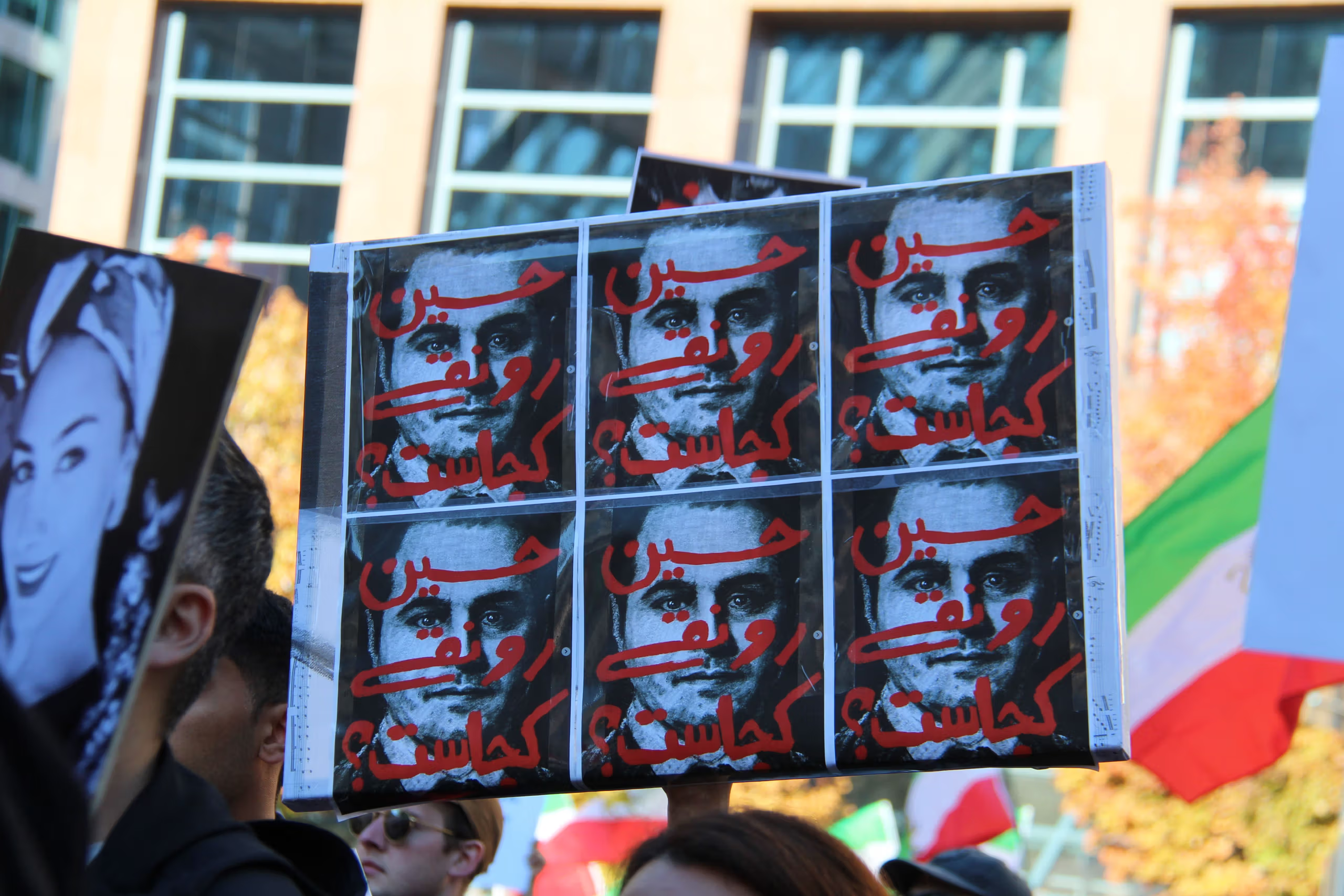
Totalitarian regimes rarely invent new tricks when their survival is on the line; they simply turn existing screws tighter. In Tehran, the Islamic Republic is reinforcing its physical crackdowns with financial strangulation. Iran's judiciary has moved to seize the assets of 240 dissidents, journalists, and public figures, freezing 182 bank accounts in a calculated effort to bankrupt those who dare challenge state authority.
The operation carries all the hallmarks of a systematic purge. According to the judiciary-affiliated Mizan news agency, 143 of these asset seizures were concentrated directly in the capital. The state's legal apparatus has issued over 2,000 inquiries to the Central Bank of Iran to track down the financial footprints of accused individuals, signaling that this initial wave of confiscations is merely a prelude.
Among those stripped of property is Sadegh Saeedi-nia, an entrepreneur who received a custodial sentence in one of the regime's most prominent proceedings against domestic opponents. Others targeted include activists and journalists affiliated with Persian-language opposition broadcasters operating from abroad, such as Iran International and Manoto. The formal charge remains as predictable as it is vague: conducting propaganda activities and acting against the state on behalf of hostile governments.
Financial ruin, however, is only one component of Tehran's enforcement strategy. Police Chief Ahmadreza Radan announced that security forces have detained more than 6,000 people in connection with the widespread protests that erupted between December and January. Radan confirmed the recent arrest of three members of the exiled opposition group Mojahedin-e Khalq, accusing the organization of orchestration behind what the regime persistently frames not as popular discontent, but as an attempted coup. Regarding those involved in the demonstrations, Radan declared, “We will not forget the rioters and coup-plotters, we continue to monitor them and take action against them.”
The state machinery has also taken preemptive steps to squelch symbolic gatherings. Security forces successfully prevented potential protests surrounding Chaharshanbe Suri, the traditional Persian fire festival marking the final Wednesday of the calendar year. Radan noted that “one of the enemy's extensive plans was to use the last Wednesday of the year to create a scenario similar to the incidents, but that did not happen.”
While security forces patrol the streets and freeze bank accounts, the judicial apparatus continues to hand down final verdicts at a grim pace. Monitoring groups based in Oslo report that Iran has executed at least 532 people since January, a figure that includes 29 individuals tied directly to the winter protests. The pace of capital punishment has accelerated since late February following the outbreak of war with the United States—a conflict initiated by a US strike that killed Ayatollah Ali Khamenei. Before his death, Khamenei had insisted that the street demonstrations were nothing more than a foreign-backed coup. In Tehran's political calculations, external conflict does not pause internal purges; it merely provides convenient cover to finish them.
Written by Freya Stensrud freya.stensrud@alpineweekly.com