
Oct 10, 2:01 PM
A Vulnerable Hub: Houthi Missiles Reach Riyadh's Front Door
A lethal strike on the kingdom's main airport undermines claims of regional control as energy markets watch nervously.
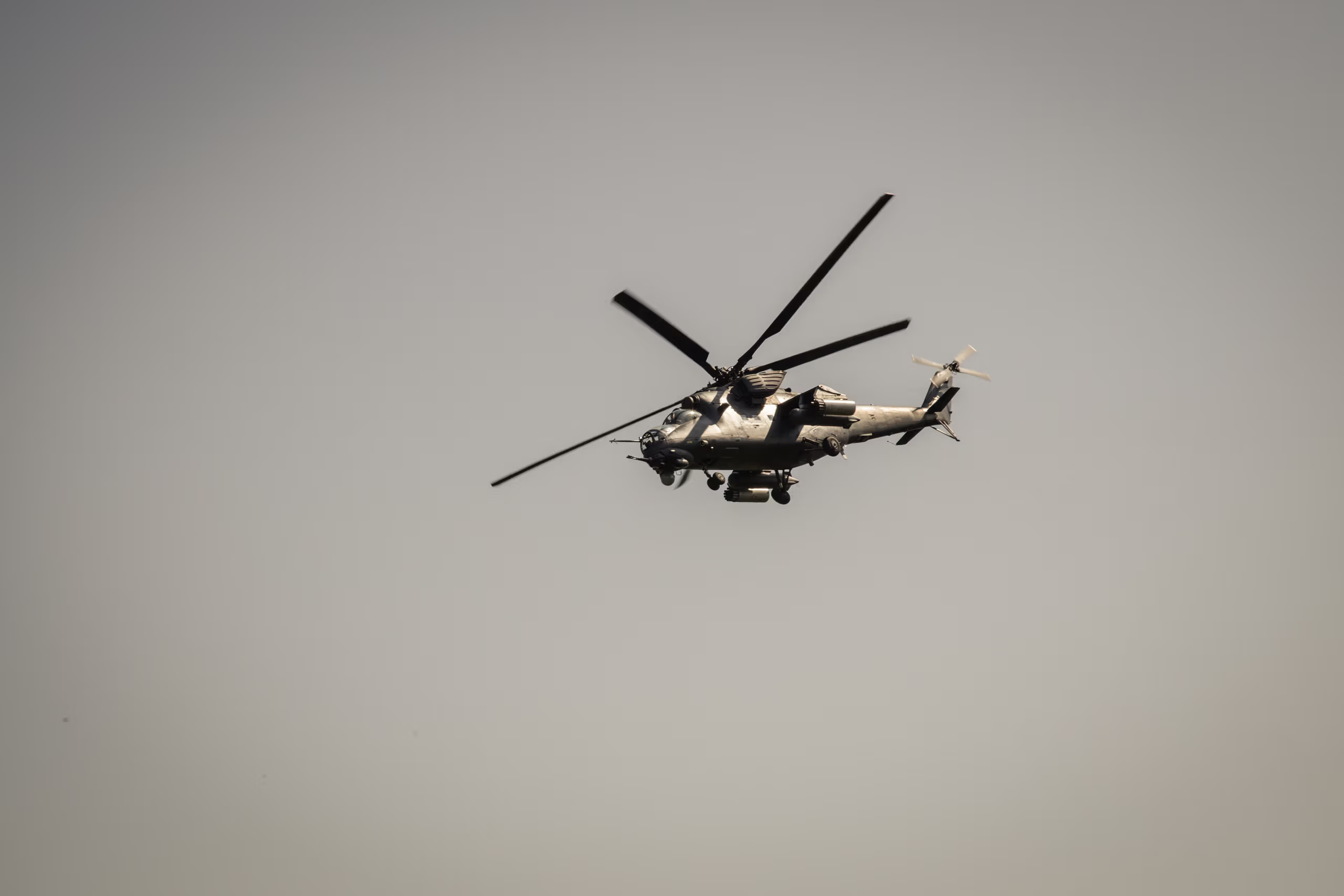
When ballistic missiles start landing on the tarmac of a capital city's primary aviation hub, military optimism usually faces a swift reckoning. Late on Thursday, three Saudi citizens were killed and several others injured when Yemen’s Houthi rebels launched a targeted missile strike against Riyadh’s international airport. The attack not only exposed the lingering vulnerabilities of Gulf infrastructure but also served notice that Riyadh’s recent military push in Yemen will carry direct domestic costs.
The strike unfolded in two waves during Thursday afternoon, hitting both terminal infrastructure and commercial aircraft on the ground. Among the casualties was Captain Hamoud Ali Alkalthami, marking the first confirmed loss for the national carrier, Saudia Group, since the latest coalition campaign began. While one of the airline's jets sustained ground damage, operational authorities managed to restore flight schedules by six o'clock that evening, attempting to convey business as usual.
The official response from the Saudi-led coalition followed a familiar script, announcing the destruction of three rebel rocket launch platforms shortly after the incident. Yet tactical retaliation does little to offset the political timing. Riyadh is preparing to host international energy leaders at the WPC Energy Congress this week, an event designed to project stability and economic leadership. Instead, delegate arrivals now coincide with volatile oil markets and visible vulnerabilities in regional air space.
This escalation is the direct byproduct of a renewed coalition offensive launched last weekend in support of Yemen's UN-recognised government. Rather than retreating under pressure, Houthi forces have demonstrated a frustrating resilience, making rapid advances along Yemen's coastal plains and closing in on the strategic city of Taiz. Reports from independent observers suggest that government-backed forces have even pulled back toward the port city of Aden to secure their positions, leaving the northern campaign increasingly exposed.
For a kingdom seeking to pivot its economy toward global tourism and commerce, asymmetric warfare remains an unrelenting tax. High-altitude defense systems can intercept many threats, but as long as rebel launchpads remain operational across the border, the illusion of total domestic tranquility remains fragile.
Written by Christiane Hofreiter christiane.hofreiter@alpineweekly.com


