
Aug 10, 4:02 PM
A Tactical Retreat in Bamako's War of Narratives
The Malian junta claims a decisive victory in San, but a sophisticated jihadist assault exposes the regime's crumbling grip on security.
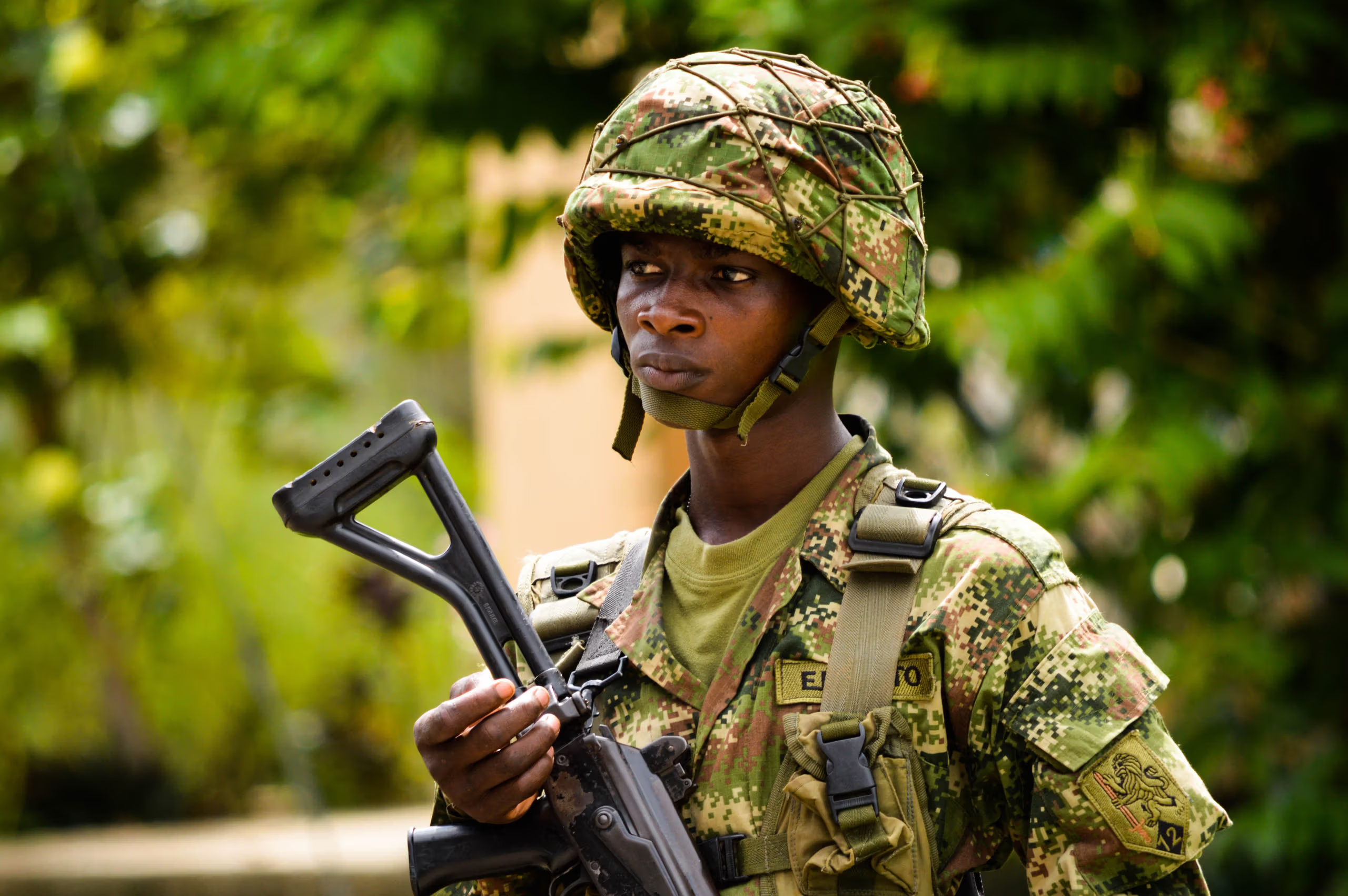
The military leadership in Bamako is keen to project an image of absolute authority. Yet, the recent assault on a garrison in the central town of San suggests a rather different reality on the ground. Jama'at Nusrat al-Islam wal-Muslimin (JNIM), an al-Qaeda affiliate, managed to breach the perimeter of the 23rd regiment's base, prompting what the Malian armed forces euphemistically described as a temporary tactical retreat.
The attack commenced before dawn on Sunday, lasting approximately two hours. Militants arrived on motorcycles and on foot, with some fighters reportedly disguised in Malian army uniforms to facilitate their infiltration. According to the national broadcaster ORTM, the assailants did not rely solely on small arms; they deployed drones, heavy machine guns, and armoured vehicles to overwhelm the defences.
JNIM swiftly claimed to have taken full control of the installation. The Malian military disputed this narrative. In a video address, Lieutenant Colonel El Oumrani, commander of the San garrison, insisted that his troops had eliminated the enemy and successfully repelled the assault. He claimed that approximately 40 militants were killed and assured residents that the camp of the 23rd regiment remained firmly under army custody. However, security sources indicated that at least ten soldiers perished in the firefight, and witnesses observed militants holding the compound for a considerable period before dispersing into nearby houses and forests.
This skirmish in San is indicative of a broader, deteriorating security environment. Over a decade since the jihadist insurgency first took root in the country's north, the violence has steadily migrated southwards. JNIM has demonstrated a persistent capacity to penetrate deeper into central and southern territories, bypassing numerous military operations designed to curtail their reach. The use of drones and armoured vehicles by insurgents points to an evolving tactical sophistication that the state apparatus is struggling to counter.
General Assimi Goïta, who seized power in a 2020 coup, justified his takeover largely on the premise of restoring security. That promise looks increasingly hollow. In April, a coordinated offensive by an alliance of jihadists and the Azawad Liberation Front—a separatist rebel coalition—shook the military regime. That campaign culminated in the death of Defence Minister Sadio Camara in an apparent suicide truck bombing at his residence near the capital.
Desperate for stability, the Malian junta made a decisive geopolitical pivot. Following the coup, Bamako expelled French military forces, rejecting their continued assistance, and instead turned to Russia for security cooperation. Despite this realignment, large swathes of the northern and eastern regions remain entirely outside government control. The assault on the San garrison demonstrates that altering international alliances has not yet translated into domestic territorial integrity.
Written by Thorben Thiede thorben.thiede@alpineweekly.com


