
Aug 7, 12:01 PM
A New Sunni Axis: Riyadh, Islamabad, and Ankara Draw a Red Line
As the conflict with Iran grinds on, a trilateral mutual defense pact signals a fundamental shift in Middle Eastern security architecture.
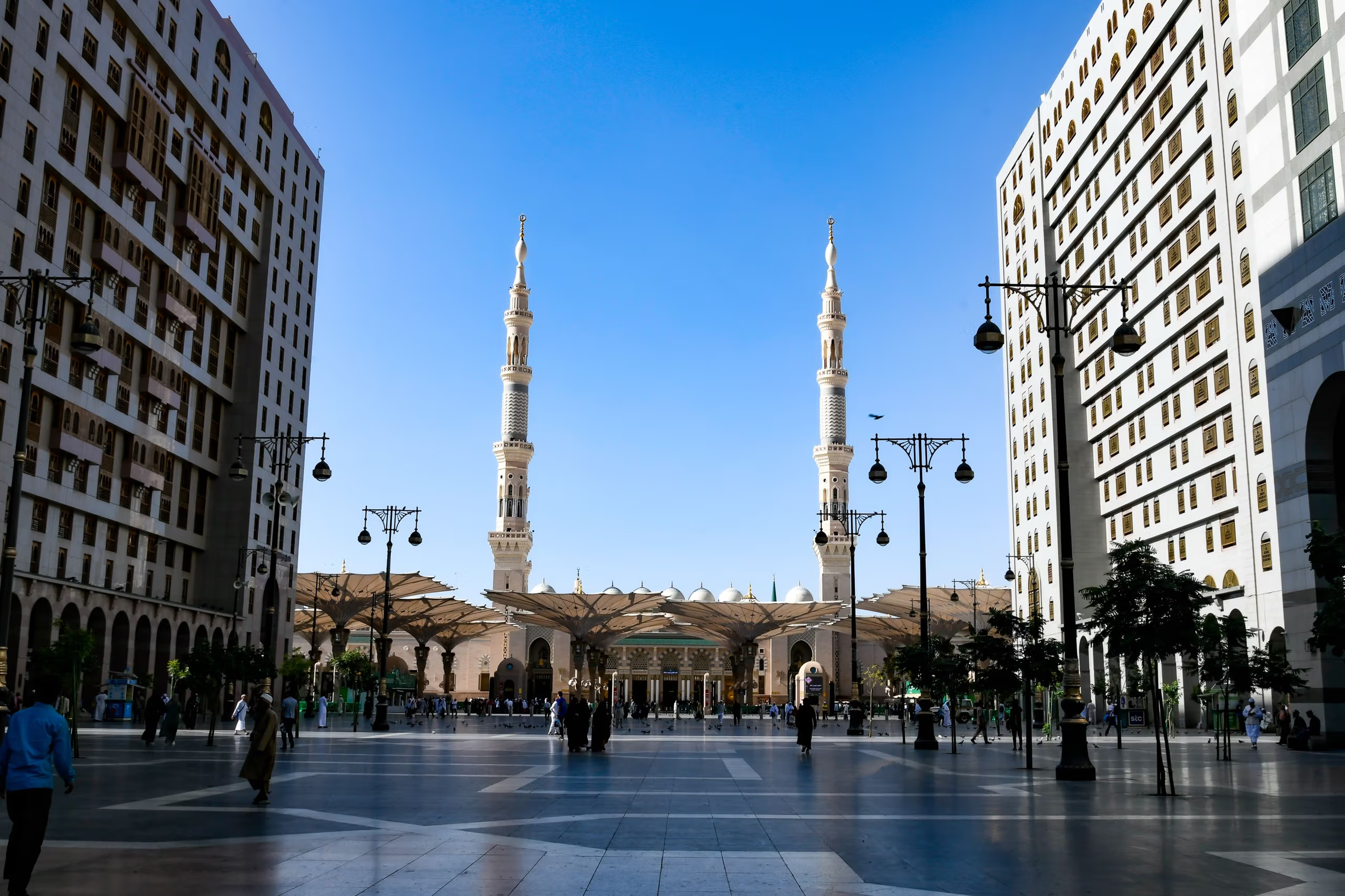
The Middle East has never been a region for the faint of heart, but the latest diplomatic maneuver out of Riyadh, Islamabad, and Ankara suggests a bracing new reality. A formal mutual defense pact between these three Sunni heavyweights effectively draws a massive red line across the geopolitical map. While European institutions watch from the sidelines, predictably paralyzed by their own bureaucratic inertia and lack of geopolitical relevance, the actual players in the Middle East are actively drawing the boundaries of the next era.
On Friday, Saudi Arabia, Pakistan, and Turkey cemented a military alliance that fundamentally alters the strategic calculus of the ongoing Iran war. According to the Pakistani foreign ministry, the agreement contains a stark stipulation: any armed attack against any one of the three States shall be regarded as an attack against them all. This is not merely a symbolic handshake between allies. It is a calculated consolidation of Sunni military might, aimed squarely at deterring further aggression in an increasingly volatile neighborhood where self-reliance is the only credible currency.
The timing of this trilateral agreement is hardly coincidental. Regional powers are scrambling to secure their borders and interests as the conflict with Iran continues to rage. From Washington, US President Donald Trump recently offered a characteristically optimistic assessment, telling reporters that he anticipates the war with Tehran will conclude shortly. Yet, the facts on the ground tell a rather different story, one written in artillery fire and stalled negotiations rather than swift diplomatic victories.
Consider the situation in Yemen, where the proxy battles of the broader regional conflict remain brutally active. Iran-backed Houthi militants recently executed missile and drone strikes that killed a minimum of 58 government troops. A military source confirmed this barrage marked one of the deadliest single days the Yemeni civil war has seen in four years. Such severe escalations make a mockery of any predictions regarding an imminent, peaceful resolution to the Iranian crisis.
Further north, the diplomatic gears are similarly jammed. Negotiations regarding southern Lebanon have hit a predictable wall. A Lebanese presidential source indicates that Israel has flatly refused to withdraw its forces from additional territories. The Israeli condition for any further pullback requires the Lebanese army to establish absolute control over two designated pilot zones.
Everywhere one looks, from the Levant to the Gulf, military entrenchment is the order of the day. The new Sunni defense triad is simply the most formalized expression of a region that has abandoned the illusion of external rescue and is instead arming itself for a protracted struggle. The old order is dead, and the new one is being forged in the fires of necessity.
Written by Sandy van Dongen sandy.vandongen@alpineweekly.com


