Mar 17, 9:52 AM
World Cup 2026 faces growing fan skepticism months before kickoff
Political tensions, travel restrictions and soaring costs are dampening enthusiasm among supporters ahead of the tournament in the United States, Mexico and Canada.
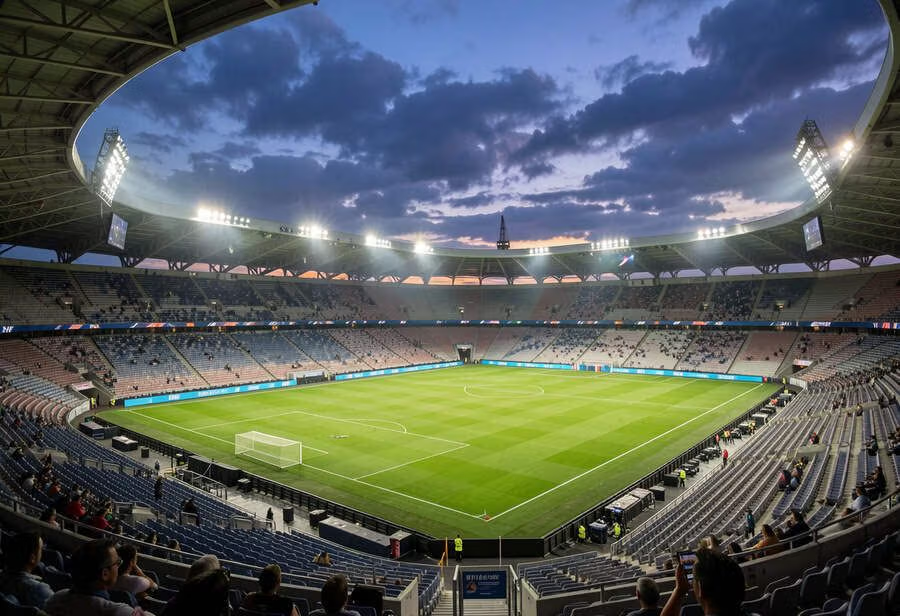
With just three months to go before the kickoff of the 2026 FIFA World Cup, the buzz among football fans seems surprisingly muted—less raucous than what organizers probably hoped for.
Instead of that familiar wave of excitement washing over global supporters, a tangle of political drama, travel headaches, and soaring expenses is casting a bit of a cloud over the event.
This tournament, co-hosted by the United States, Mexico, and Canada, was originally hailed as a homecoming for football’s traditional powerhouses in the West. Back in 2018, when the hosts were announced, many in the football community saw this as a chance to move past the controversies shadowing recent editions in Russia and Qatar.
Yet, here we are—politics has steadily complicated the picture.
The escalating conflict in the Middle East has ratcheted up international tensions, triggering security worries in several nations. At the same time, the U.S. has tightened immigration policies and travel rules, leaving some fans unsure about making the journey.
Fan groups say this cocktail of issues is weighing on supporters’ spirits, especially across Europe.
Ronan Evain, who leads the Football Supporters Europe (FSE) network, voices that the dominant mood among fans is one of uncertainty rather than anticipation. The geopolitical mess has created, as he puts it, an emotional distance from a tournament that’s usually hyped months ahead.
One hot-button topic for fans: travel and entry barriers. Proposed measures in the U.S. include tougher visa protocols and, in some instances, even scrutiny of visitors’ online footprints. Fan organizations warn such policies could deter foreign fans, who traditionally form a vital chunk of the World Cup’s crowd.
Then there’s the issue of ticket pricing.
For many matches, tickets run into the hundreds or even thousands of dollars. FIFA responded to the backlash by releasing some lower-priced options, around $60 a pop, but those make up only a tiny fraction of seats.
Unsurprisingly, demand in some countries is feeling the pinch.
Similar trends pop up elsewhere in Europe, even though many national federations are tight-lipped about specifics.
In England, the Football Association claims ticket allotments mostly sold out, but admits the overall appetite is less robust than expected for such a massive event.
Meanwhile, FIFA paints a rosier scene.
Earlier this year, the organization announced around 500 million ticket applications rolled in during their initial lottery phase. FIFA’s president, Gianni Infantino, highlighted that over a million requests were made for 77 of the 104 matches on offer.
Still, sceptics aren’t convinced those figures mirror genuine fan passion.
Kieran Maguire, a football finance guru at the University of Liverpool, points out that a chunk of requests could be from middlemen hoping to flip tickets on the resale market. FIFA has launched its own official resale platform, noting such systems are a staple in North American sports.
Critics worry this setup might artificially pump up demand and drive prices beyond reach for regular supporters.
Despite all the back-and-forth, most agree stadiums will be packed when the tournament kicks off. The global allure of football is massive, and major international events tend to pull crowds regardless of political or economic headwinds.
Still, the vibe around the 2026 World Cup is undeniably different.
For many, it’s a tournament that's as enticing as it is tangled up in complications. With geopolitics, travel fuzziness, and ballooning costs all in the mix, excitement comes with a fair dose of hesitation—something you don’t see often in football’s biggest show on earth.