mai 13, 7:35 AM
Trois aéroports européens figurent dans le top 10 des hubs les plus polluants du monde
De nouvelles données suggèrent que le secteur de l'aviation réchauffe discrètement la planète tout en affichant de grandes ambitions en matière de zéro émission nette.
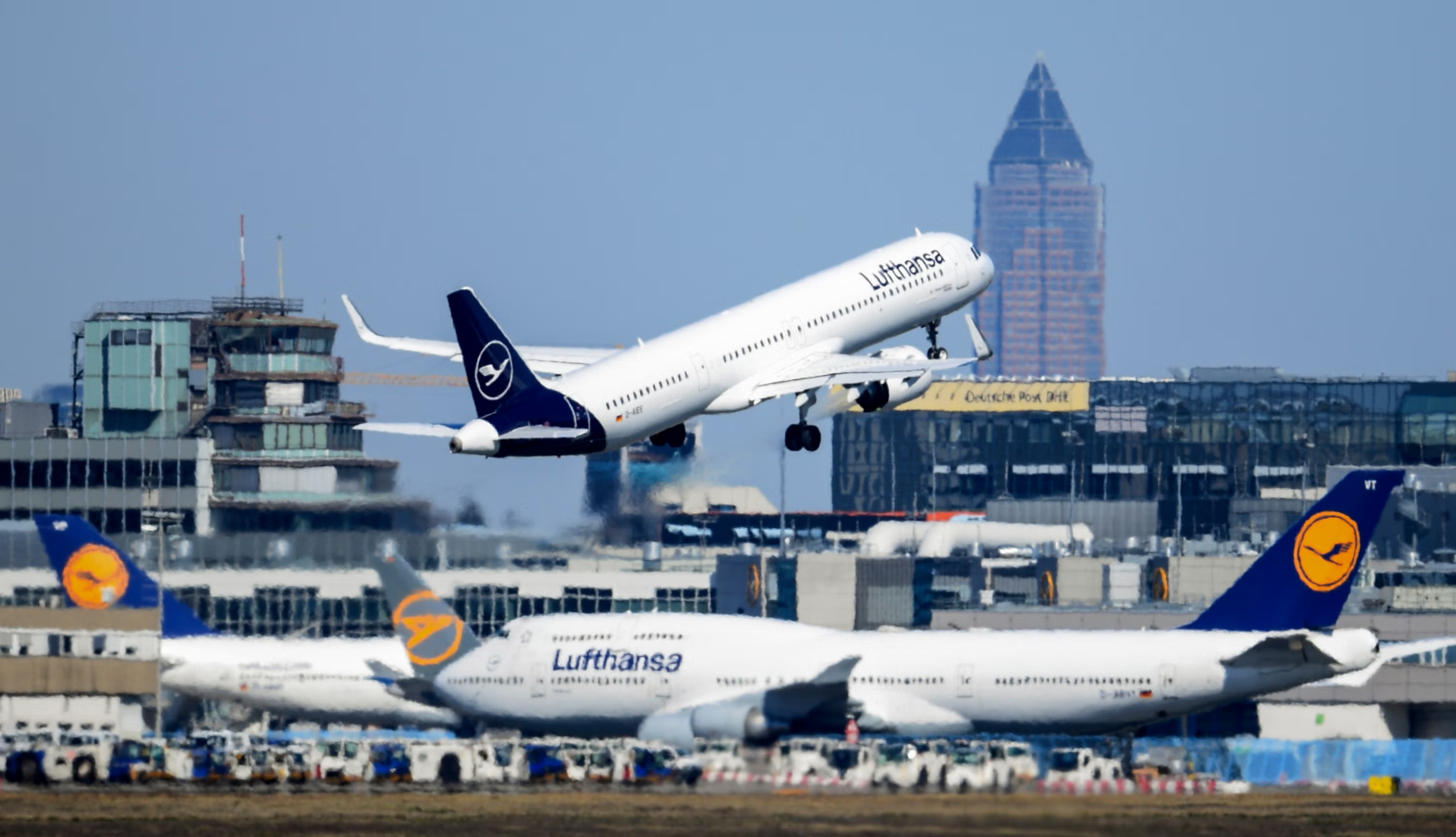
Il y a une certaine ironie à voir un aéroport promettre de sauver le climat tout en brûlant suffisamment de kérosène pour alimenter une petite nation. De nouvelles données viennent de désigner trois hubs européens parmi les dix aéroports les plus polluants du monde, et aucun d'entre eux n'est une petite piste régionale.
Cette recherche provient d'ODI Global, un think tank spécialisé dans les affaires mondiales, en partenariat avec Transport et Environnement (T&E). Ils ont analysé les impacts climatiques et sur la qualité de l'air de 1 300 aéroports internationaux en utilisant les données de 2023 — les plus récentes disponibles — fournies par le Conseil international sur le transport propre. Leur conclusion ? Si le secteur de l'aviation était un pays, il serait le cinquième plus grand émetteur de la planète. Ce n'est pas un compliment.
Alors, qui est en tête de cette liste peu glorieuse ? La palme revient à l'aéroport de Dubaï aux Émirats arabes unis, un hub de transfert majeur qui a émis 23,2 millions de tonnes de CO2. Ce n'est pas une faute de frappe. Londres Heathrow arrive en deuxième position, avec 21 millions de tonnes. Los Angeles complète le top trois avec 18,8 millions de tonnes. Voici un chiffre à méditer : ces trois aéroports sont à eux seuls responsables de trois fois plus d'émissions de CO2 que l'ensemble de la ville de Paris. Et ce calcul exclut les émissions de l'aviation de Paris même.
L'aéroport d'Incheon à Séoul se classe quatrième, suivi par celui de New York John F. Kennedy en cinquième position. Viennent ensuite Hong Kong, puis Paris Charles de Gaulle et Francfort en Allemagne — deux autres entrées européennes portant le total du continent à trois dans le top dix. Les conclusions indiquent également qu'à l'échelle mondiale, seuls 100 aéroports représentent environ les deux tiers de toutes les émissions de CO2 des vols passagers. Les aéroports européens, en tant que groupe, produisent plus d'émissions que les hubs d'Amérique latine, du Moyen-Orient et d'Afrique combinés. Combinés.
Passons maintenant à la partie où les promesses de l'industrie commencent à vaciller. Selon T&E, la nouvelle étude montre que l'aviation reste « hors de la bonne voie » pour atteindre ses objectifs de zéro émission nette. Denise Auclair de T&E soutient que permettre à un secteur dépendant des fossiles de continuer à se développer en augmentant la capacité aéroportuaire ne fait que renforcer la plus grande vulnérabilité de l'aviation. Elle a ajouté que dans la plupart des capitales et régions européennes, le bien-fondé économique de l'expansion aéroportuaire n'est plus étayé par les dernières preuves, et qu'il est grand temps de prioriser l'indépendance énergétique et la santé des citoyens.
Sam Pickard, associé de recherche chez ODI Global, a noté que si de nombreux secteurs ont progressivement réduit leurs émissions depuis l'Accord de Paris en 2015, l'empreinte de l'aviation a augmenté de manière constante. Il a averti que l'on entend encore régulièrement parler de plans d'expansion aéroportuaire qui ignorent le statut atypique du secteur en matière d'émissions. Pickard a ajouté que cela ne devrait plus être mis sous le tapis avec des promesses à moitié abouties de développement de coûteux carburants d'aviation durables ou de mécanismes de compensation faibles. Ses mots, pas les miens. Il a appelé à une stratégie et une feuille de route authentiques incluant la gestion de la demande.
Londres Heathrow, qui détient le titre peu enviable de plus grand pollueur d'Europe, a répondu en affirmant qu'il avait un plan clair pour atteindre le zéro émission nette. L'aéroport a également déclaré que ses plans d'expansion devaient respecter les objectifs juridiquement contraignants du Royaume-Uni en matière de carbone, de qualité de l'air et de bruit, tels que définis par le gouvernement.
L'aéroport de Dubaï et LAX ont été sollicités pour un commentaire. Reste à savoir s'ils répondront entre deux décollages et atterrissages.
Écrit par Thorben Thiede
Dernières nouvelles