
Jan 28, 1:54 PM
Olympics Turn to 1.6 Million Cubic Metres of Artificial Snow as Warming Reshapes Winter Sports
Heavy reliance on snowmaking for the 2026 Games highlights climate pressures, rising costs and limits of technical fixes
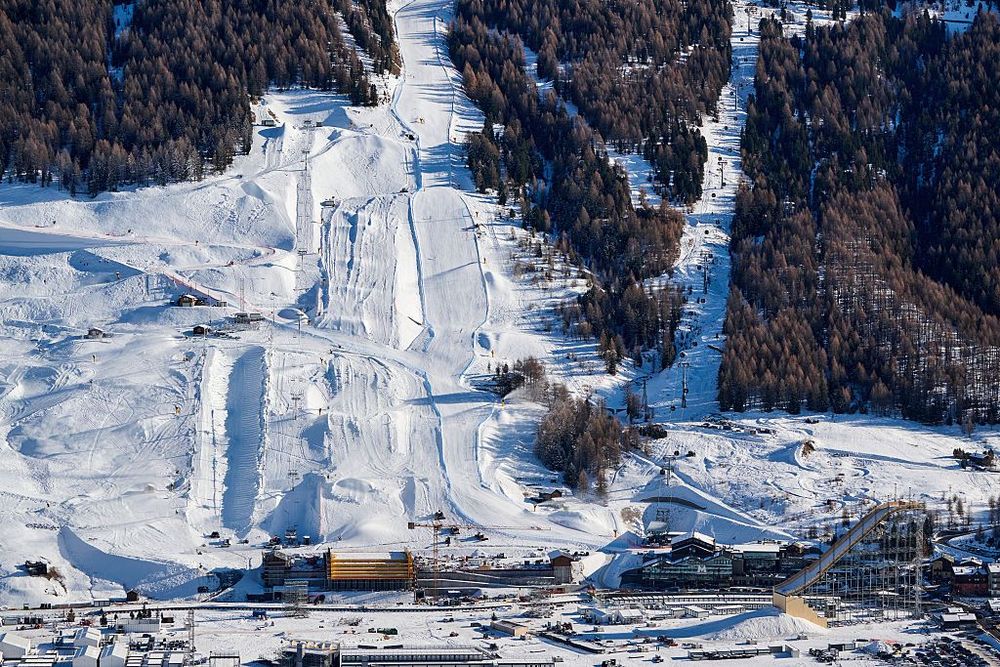
When athletes line up at the start gates of the 2026 Winter Olympics, much of the snow beneath their skis will not have fallen from the sky.
Organisers of the Milano Cortina Winter Games say they have already produced nearly 1.6 million cubic metres of artificial, or “technical,” snow to prepare competition venues across northern Italy. The scale of the operation reflects how climate change is transforming winter sports — and raising new environmental and logistical questions for future Games.
Italian snowmaking specialist Davide Cerato is overseeing preparations at key sites, including Bormio for alpine skiing and ski mountaineering, and Livigno for freestyle skiing and snowboarding. Cerato has worked with the International Ski and Snowboard Federation and the International Olympic Committee for more than a decade and says manufactured snow has become standard at elite competitions.
For athletes, consistency matters more than origin. Technical snow is denser and more durable than natural snowfall, allowing courses to withstand repeated training runs and races without degrading. It also enables organisers to meet strict safety and performance requirements by controlling hardness and stability.
To supply that snow, organisers have expanded infrastructure across the Alps. In Livigno, a new reservoir holding about 200 million litres of water was built, along with more than 50 snow guns capable of producing around 800 million litres of snow in roughly 300 hours. In Bormio, a high-altitude lake was constructed to store 88 million litres of water, complemented by 75 additional snow guns.
The need for such measures is driven by a changing climate. Rising temperatures are accelerating ice loss in the Dolomites, where many Olympic events will take place. Over the past five years, Italy has reportedly lost hundreds of ski resorts as winters have grown warmer and less predictable.
Research suggests the challenge will only intensify. A study by Daniel Scott of the University of Waterloo and Robert Steiger of the University of Innsbruck found that out of 93 mountain locations currently capable of hosting elite winter competitions, only about 52 are likely to have reliable snow and cold temperatures by the 2050s. By the 2080s, that number could fall to as low as 30, depending on global emissions trends.
The outlook is even more constrained for the Paralympic Winter Games, which are typically staged at the same venues shortly after the Olympics. The researchers found that without artificial snowmaking, almost no locations would be reliable hosts by mid-century.
Yet snowmaking itself is not a long-term cure. In a 2024 report, Cour des Comptes warned that artificial snow provides only temporary protection against climate impacts. While its direct emissions may be limited, the process demands large amounts of water, energy and financial investment — resources that could come under increasing strain as warming continues.
For now, artificial snow allows the Olympics to proceed in places where natural winter conditions can no longer be taken for granted. But the growing dependence on it underscores a broader reality: as the planet warms, hosting winter sports at the highest level is becoming more complex, more expensive and increasingly uncertain.