Jul 4, 12:01 PM
The Weight of Hypocrisy: Serena Williams and the Business of Body Image
A lucrative weight-loss endorsement has sparked predictable outrage, but the real scandal lies in the enduring double standards applied to female athletes.
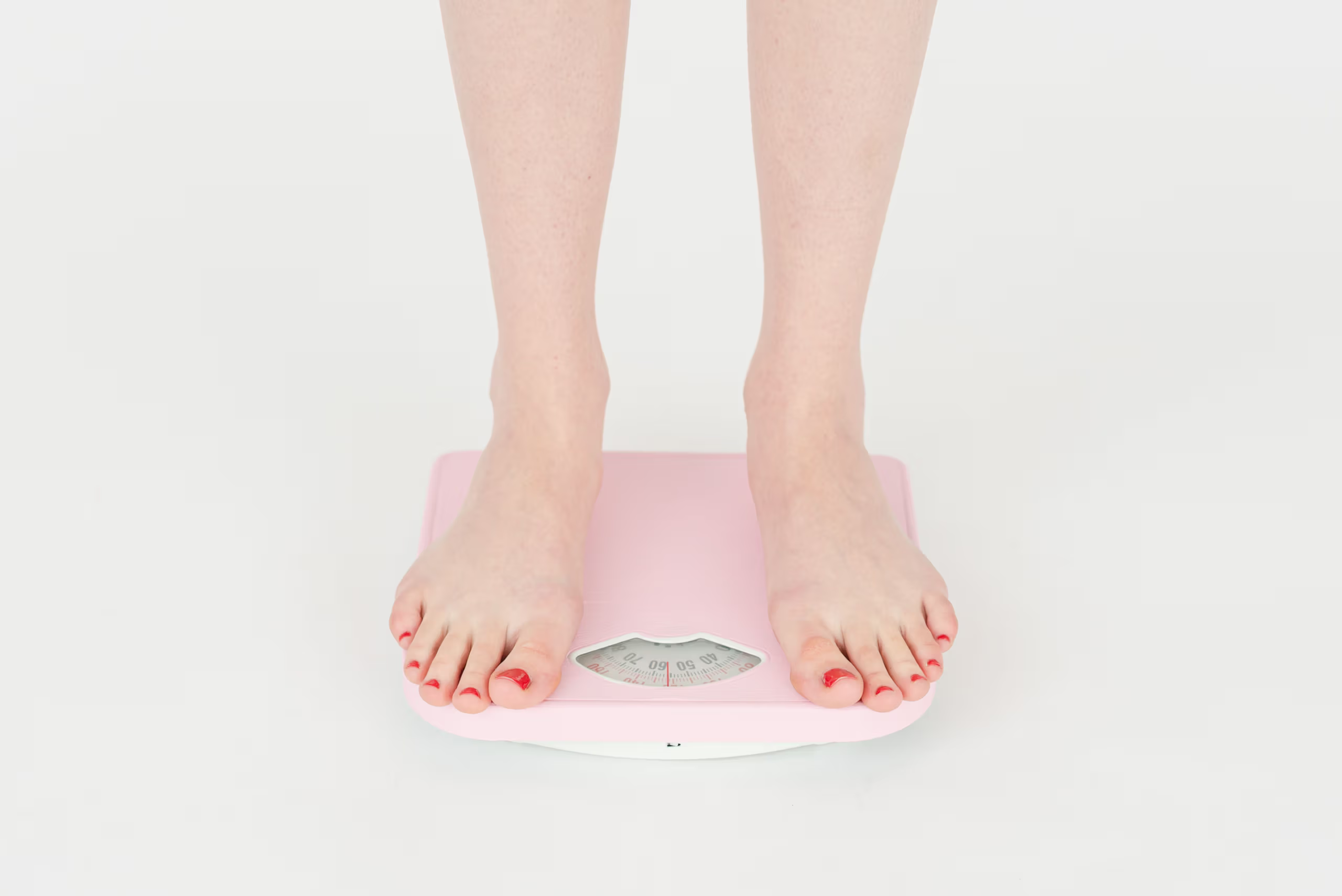
The spectacle of a top-tier athlete monetising their physical form is hardly a modern revelation. Yet, when Serena Williams recently embarked on a promotional tour for a new weight-loss injection, the public reaction was predictably fierce. Across appearances on Oprah Winfrey’s podcast and in the pages of People Magazine, the tennis star cheerfully detailed her fourteen-kilogram weight loss. She spoke of feeling significantly lighter and better ahead of her anticipated Wimbledon comeback.
What the twenty-three-time Grand Slam champion conveniently omitted during these media rounds was a rather pertinent financial detail. Her husband happens to be an investor in the very company manufacturing the drug, complete with a seat on its board of directors. This failure to disclose a glaring conflict of interest is certainly poor practice. However, the subsequent public backlash quickly bypassed corporate ethics to focus on something far more personal.
Critics immediately branded the endorsement as embarrassing and irresponsible. The medication is expensive, and fans lamented that not everyone enjoys the financial resources of a wealthy athlete. The core of the grievance, however, seemed to be a perceived betrayal. For years, Williams was celebrated as a role model specifically because she defied the ultra-thin aesthetic typical of women's tennis.
This sudden demand for her to remain a permanent symbol of body positivity is steeped in historical irony. During the early days of her career, the press was relentlessly cruel about her physique. She was routinely described as too heavy, excessively muscular, and unfairly large. Detractors even attributed her dominance on the court to her supposedly masculine appearance. It is entirely understandable that she eventually stopped reading press coverage altogether, choosing to simply dominate the sport for two decades instead.
The hypocrisy extends well beyond body image and bleeds into the fundamental way male and female champions are treated. When Roger Federer promotes yet another wildly expensive shoe, nobody questions his morals. Despite Williams holding three more Grand Slam titles than Federer, the two forty-four-year-olds are framed entirely differently. While Federer’s longevity at forty was revered as almost biblical, Williams was recently dismissed by a major newspaper as a spry mid-forty-year-old. Her return to the court was cynically framed as a mere desire for attention, accompanied by suggestions that she would be better off dedicating her time to her family.
Compare this to the reception of Andy Murray. When the British player announced his own sporting continuation, his motivation was celebrated. The press warmly reported his desire to keep playing so that his two-year-old and seven-month-old babies might consciously remember him as a top athlete, a rather optimistic view of infant memory retention.
The sheer absurdity of the expectations placed upon Williams is perhaps best quantified by a single polling metric. A staggering twelve percent of men genuinely believe they could score at least one point against her in a professional match. If a pharmaceutical company ever manages to develop an injection capable of dissolving that specific brand of delusion, the resulting profits would surely dwarf whatever Williams and her husband are currently making.
Written by Freya Stensrud freya.stensrud@alpineweekly.com