Sep 22, 4:01 PM
Normalcy on Borrowed Time: Palestinian Football Restarts Amid Ruin
With ruined grounds, dead athletes, and unpaid squads, the resumption of league play is a masterclass in bureaucratic survival.
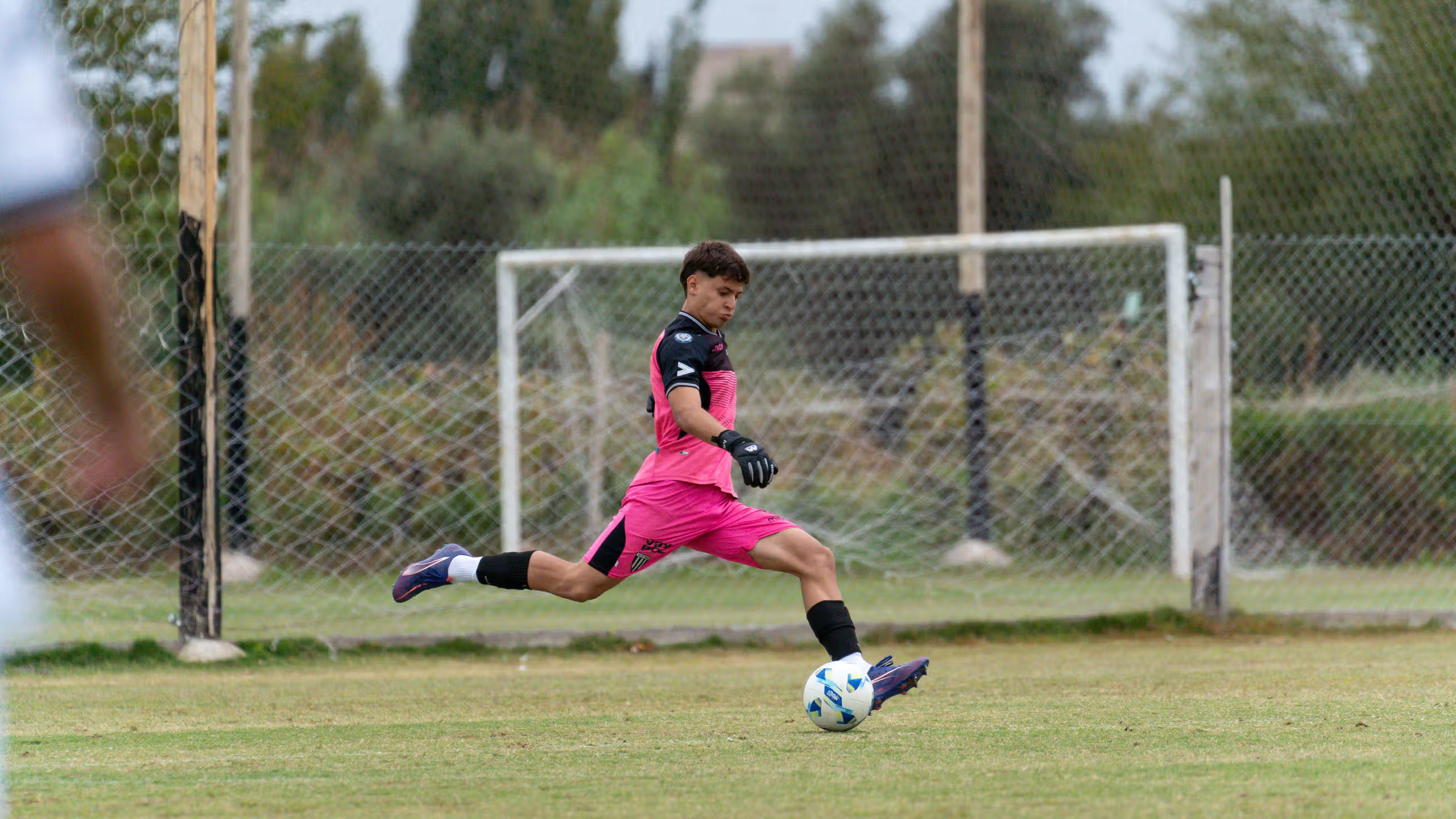
After nearly three years of forced silence, official football has returned to the Palestinian territories. On the pitch at al-Khader Stadium near Bethlehem, players from Arab Orthodox Beit Jala and Dheisheh Youth traded passes while spectators in the stands cheered and briefly mistook a crowd commotion for an incoming military raid. For a single evening, the illusion of routine was restored, even as the realities of military control and financial ruin framed the perimeter.
The tournament, titled the Thousand Martyrs Cup, serves as the Palestinian Football Association's vehicle to reactivate competitive play across more than 200 clubs in the West Bank, Gaza, and refugee camps in Lebanon. Named in memory of 1,014 athletes killed since October 2023, the event represents an attempt to salvage what remains of a shattered athletic sector. In Gaza, ninety percent of stadiums lie destroyed or converted into tent encampments for displaced families, while across the territories, 265 sports facilities have sustained severe damage.
Executing a multi-club tournament under such conditions requires administrative gymnastics. To bypass Israeli checkpoints and unpredictable iron gate closures at village entrances, the Palestinian Football Association was forced to abandon standard league logistics. Teams are now strictly clustered by geographic proximity to minimize travel, though even local fixtures remain subject to sudden military postponements.
Beyond physical barriers, the economic backbone of Palestinian athletics has effectively collapsed. Unable to maintain payrolls, clubs have stripped players of their professional salaries, forcing seasoned athletes back into amateur status. For many young players who spent three crucial years without organized competition, the hiatus caused irreversible career stagnation. Others, including national team forward Suleiman al-Obeid and Olympic coach Hani al-Masdar, did not survive to see the restart.
Institutional survival often depends on international leverage rather than local administrative authority. At the Aod Sports Academy in the Aida refugee camp near Bethlehem, young athletes train beside the separation wall on a field that faced an Israeli demolition order in late 2025. The demolition was only frozen after governing bodies FIFA and UEFA intervened, leaving the venue operating under a fragile reprieve.
Despite ongoing friction, ruined grounds, and the loss of entire player cohorts, the Palestinian Football Association insists the tournament will become an annual fixture. Returning to the pitch offers no structural solution to systemic instability, yet it enforces an operational reality where matches are rescheduled rather than cancelled, and routine is carved out from persistent chaos.
Written by Thorben Thiede thorben.thiede@alpineweekly.com