
Jul 10, 12:20 PM
Uitikon’s security problem is not just violence — it is judgment
A promoted deputy who had falsified his working hours, plus Rambo-style AI images in a staff chat, have put the Massnahmenzentrum Uitikon under fresh scrutiny.
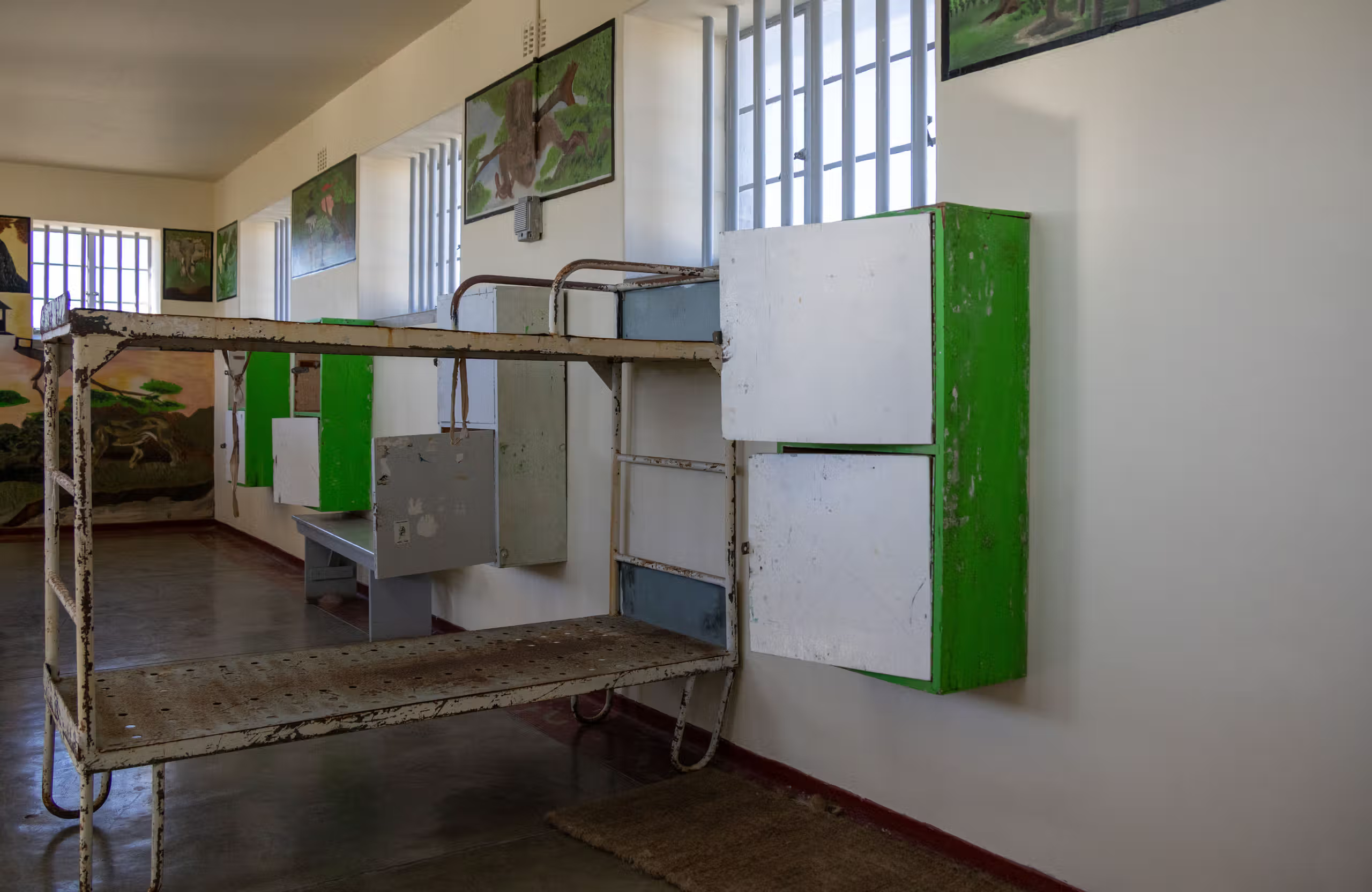
The trouble at the Massnahmenzentrum Uitikon goes beyond one violent incident. It reveals a wider failure of judgment in staffing, discipline, and a workplace culture that thinks machine guns and a juvenile detention centre belong together. One wonders how much more evidence this Swiss institution needs before it stops congratulating itself for stability.
At the end of 2024, a 16-year-old offender attacked the head of the security service, leaving him severely injured. By May, the 64-year-old had to leave the MZU due to disability. That attack exposed security weaknesses in a crucial facility for young offenders in German-speaking Switzerland, arriving alongside numerous resignations.
The personnel response was hardly reassuring. Director Carmelo Campanello promoted the injured chief’s deputy, even though the man had systematically falsified his working hours. According to SRF Investigativ, human resources and Campanello knew about this misconduct during the selection process. The director announced his decision in October 2025, conveniently omitting the false time recording.
A month later, Campanello admitted via email that the new chief had failed to deduct lunch breaks over months of office duty. He claimed to have learned this shortly after the candidate succeeded in the application process. While describing the omissions as serious, the appointment stood. In Switzerland's comfortable public administration, modest corruption is easily forgiven.
The Amt für Justizvollzug und Wiedereingliederung refused to discuss the specific case, though it confirmed that incorrect time recording breaches the duty of loyalty. It insisted the post was openly advertised and the current holder prevailed against internal and external competition. That sounds tidy on paper, but the reality is far less pristine.
In spring 2026, security staff shared dubious Rambo-style content in a team chat. This included an AI-generated montage of two employees holding machine guns in front of an American school and the MZU. The new security chief did not intervene. Instead, according to SRF Investigativ, he merely commented that the version with children did not really work.
The authority later explained the chat originated from a private photo of employees holding firearms in a shooting cellar, stressing the exchange occurred on private devices. Nevertheless, officials admitted such depictions are inappropriate for an environment tasked with managing violence, claiming the matter has been discussed with the involved staff.
The question is whether an institution supervising young offenders can afford this mixture of laxity, poor judgment, and after-the-fact discipline. In a wealthy state system that rarely faces real consequences, basic accountability is often the hardest standard to enforce.
Written by Martina Kirchner martina.kirchner@alpineweekly.com


