
Jul 29, 4:02 AM
Engineering Against the Earth: Kumamoto's Latest Seismic Test
Japan’s rigorous building codes mitigated the worst of a 6.8-magnitude earthquake, but the economic and human costs of living on the Ring of Fire remain inescapable.
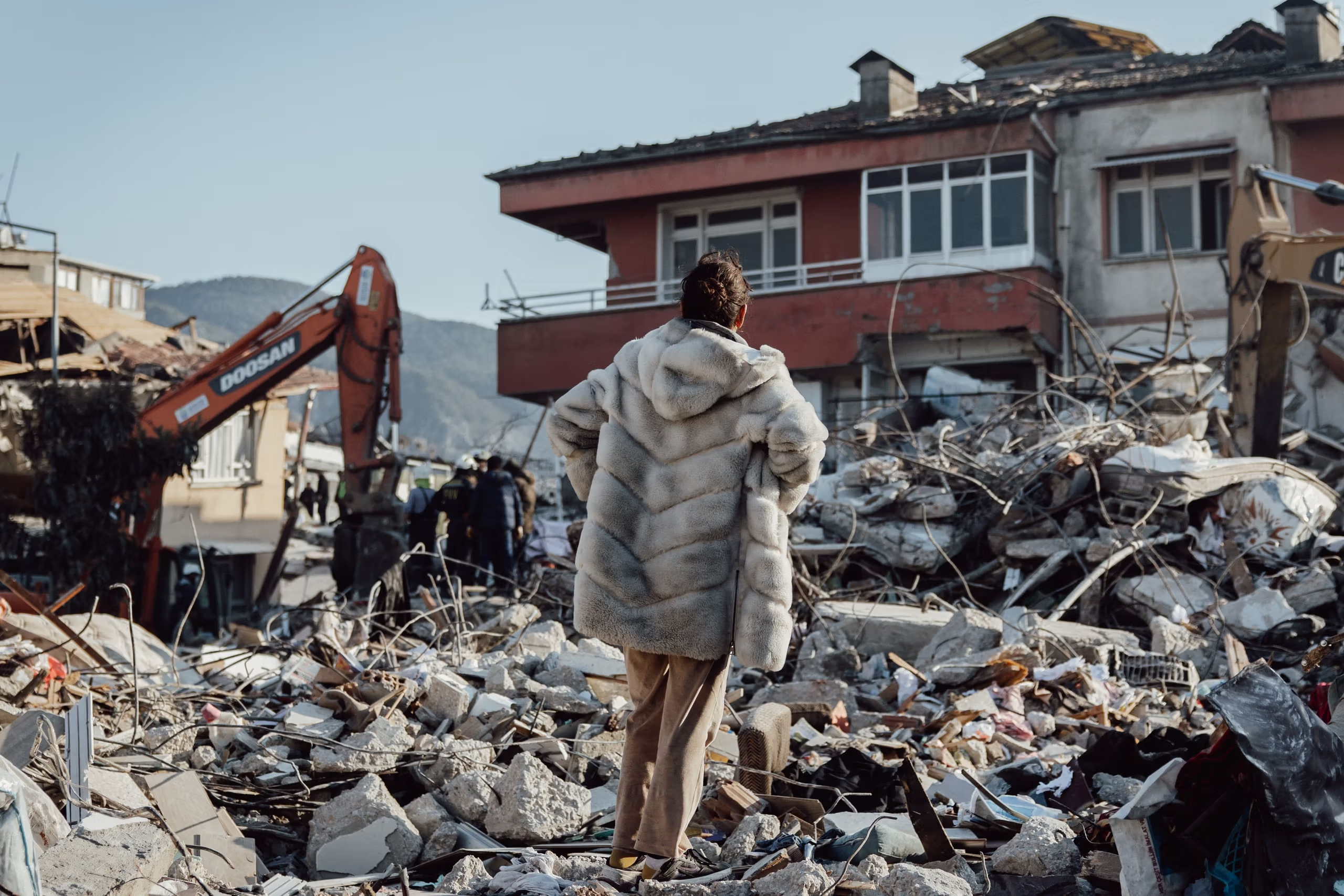
The earth beneath Kumamoto Prefecture did not merely shake; it fundamentally relocated. When a 6.8-magnitude earthquake struck Japan’s southern island of Kyushu, the terrestrial crust in the city of Yatsushiro shifted by a staggering 84 centimetres. This violent geological reconfiguration registered a maximum seven on Japan’s shindo intensity scale, instantly testing the structural integrity of a region home to hundreds of thousands. While the nation’s famously stringent construction standards prevented widespread urban leveling, the brute force of the tremor still extracted a grim toll, leaving at least 13 people dead and injuring hundreds more.
Despite decades of investment in seismic isolation technologies, including foundations laid on rollers to absorb shockwaves, localized devastation proved unavoidable. At a paper mill in Yatsushiro, a collapsed chimney left two workers in cardiac arrest and nine others missing. Nearby, a suspected gas leak triggered an explosion at a massive Aeon shopping mall, tearing away the upper section of the building and killing two young women. The contrast between intact high-rise apartment blocks and these pockets of acute destruction highlights the unpredictable nature of seismic events, where a single structural vulnerability can prove fatal.
The state apparatus responded with characteristic efficiency, mobilizing 3,600 military personnel and deploying dozens of aircraft to survey the damage. Prime Minister Sanae Takaichi characterized the rescue operations as a race against the clock, assuring the public that the government would deploy every available resource to find those trapped in the rubble. Meanwhile, government spokesman Minoru Kihara confirmed that thousands had already sought refuge in hundreds of evacuation centres across five prefectures, a number expected to swell as authorities instructed up to 300,000 residents to abandon their homes.
Beyond the immediate human tragedy, the economic and infrastructural disruption is severe. Nearly 50,000 households were plunged into darkness, and 140,000 lost access to running water. With temperatures forecast to exceed 35 degrees Celsius, the lack of air conditioning elevates the risk of heatstroke for those sleeping in their vehicles out of fear of aftershocks. The industrial sector, a crucial node in global supply chains, also absorbed a direct hit. Tech giants TSMC, Sony, and Fujifilm were forced to evacuate their regional factories, while regional railway operator JR Kyushu grounded its high-speed bullet trains.
Japan occupies a precarious position on the Pacific basin’s volatile perimeter, absorbing roughly a fifth of the world’s major earthquakes. Kumamoto itself was ravaged by a deadly tremor just a decade ago, an event that claimed 275 lives. The relatively low fatality count of this latest seismic shock is a triumph of market-driven engineering and strict regulatory foresight. Yet, as emergency crews continue to sift through the wreckage of collapsed houses and fractured highways, the reality remains stark. No amount of technological sophistication can entirely insulate an economy built atop a restless tectonic fault line.
Written by Martina Kirchner martina.kirchner@alpineweekly.com


