
Jul 26, 12:01 PM
The Retreat of the Fourth Estate: Why Britain's Journalists Are Censoring Themselves
A new government-commissioned report reveals that intimidation and online mobs are successfully dictating what the UK press dares to cover.
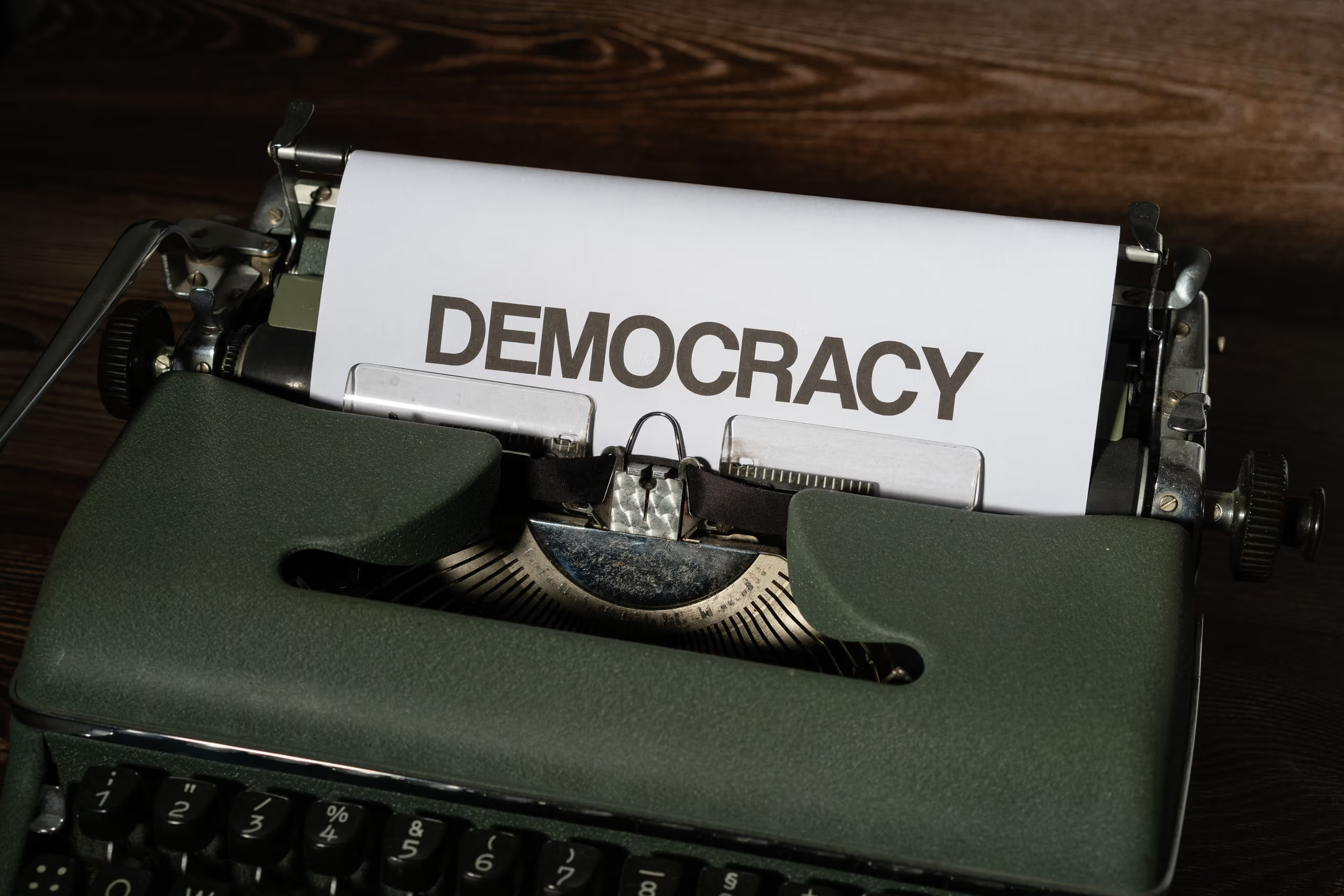
The image of the intrepid reporter, willing to brave any storm for a scoop, is quietly fading from British newsrooms. In its place emerges a far more cautious figure, one who routinely calculates whether a story is worth the inevitable barrage of digital and physical hostility. A comprehensive investigation commissioned by the UK government lays bare a troubling reality: intimidation is working, and the public conversation is shrinking as a result.
Conducted by Alma Economics, the research surveyed 531 media professionals and carried out 55 in-depth interviews. The findings paint a picture of an industry in retreat. Nearly half of the respondents admitted that fears for their personal safety dictate their willingness to pursue certain stories. Even more tellingly, roughly a third have actively altered what or how they cover the news to avoid becoming a target.
The flashpoints for this harassment are entirely predictable to anyone observing modern political tribalism. Reporters cite right-wing anti-immigration protests, debates surrounding transgender issues, and the political orbit of Donald Trump as the most hazardous terrain. Covering these subjects frequently invites a swift and vicious backlash. Female journalists bear a disproportionate share of this hostility, routinely facing misogynistic abuse, explicit threats, and endless commentary on their physical appearance rather than their prose.
Physical intimidation is also bleeding out of the digital realm. In Northern Ireland, reporters covering anti-immigration riots have faced masked men, while others have found their locations crowdsourced by hostile Facebook groups during public protests. Yet, the institutional response to this escalating threat has been remarkably passive. The report indicates a pervasive newsroom culture that treats abuse as an occupational hazard, expecting staff to simply develop a thicker skin in a polarized political environment.
Part of the vulnerability stems from the industry’s own pivot toward personality-driven, visual media. The relentless push for digital relevance requires journalists to broadcast constantly on platforms like TikTok, stripping away the anonymity that once shielded print reporters. Coupled with declining public trust and the proliferation of self-styled citizen journalists who lack professional training but command massive audiences, the boundary between the observer and the mob has effectively dissolved.
The National Union of Journalists has condemned the situation, with general secretary Laura Davison stating that abuse should never be viewed as part of a journalist’s job and warning of a severe chilling effect on press freedom. Meanwhile, the Department for Culture, Media and Sport offered a predictable assurance that it is working to create conditions where reporters feel supported.
However, bureaucratic platitudes offer little comfort to a reporter weighing the public interest against the prospect of being stalked online. When the press decides that certain facts are simply too dangerous to publish, the resulting vacuum is eagerly filled by the very extremists driving the intimidation. A democracy relies on a media willing to report uncomfortable truths, but right now, the loudest voices are successfully bullying the professionals into silence.
Written by Freya Stensrud freya.stensrud@alpineweekly.com


