
Sep 20, 2:01 PM
Tehran Shuts French Cultural Centre in Latest Diplomatic Spat
Iranian authorities target Paris's diplomatic footprint, accusing its Tehran language institute of recruiting elites.
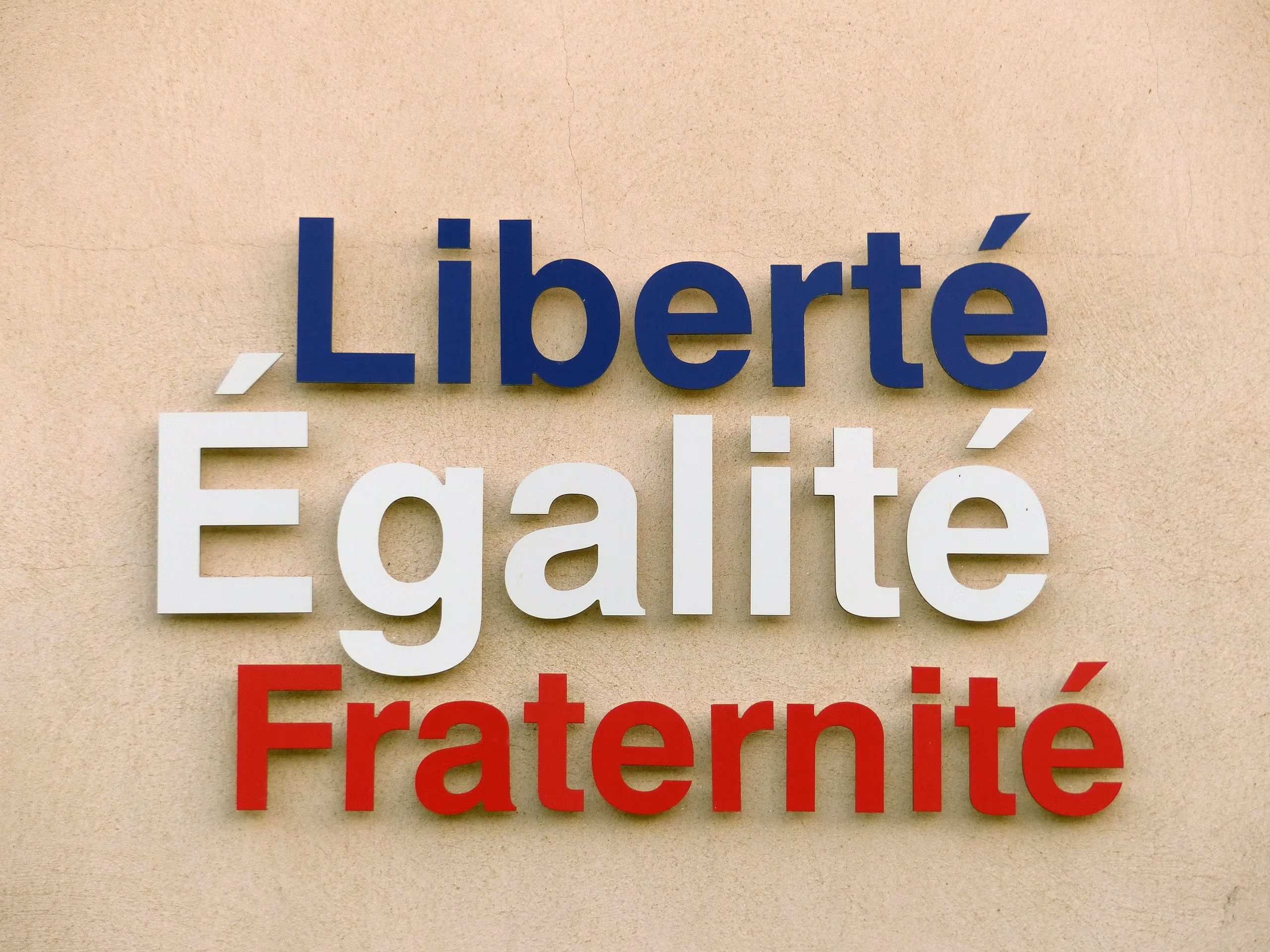
When a regime starts viewing French grammar lessons as a national security threat, bilateral relations have clearly reached a nadir. In Tehran, the Iranian judiciary has officially shuttered the French Language Centre, an educational facility tied directly to the French embassy that had operated in the capital for years under the banner of cultural outreach.
According to reports from the judiciary's news outlet, Mizan, the Tehran prosecutor's office ordered the closure after alleging that the establishment was engaging in activities far beyond teaching vocabulary. The official stance from Iranian authorities accuses the centre of violating diplomatic conventions by utilizing its institutional cover to build networks among Iran's educated elite and facilitate their exit from the country.
The initial silence from the French embassy following the shutdown illustrates the limited options remaining for European diplomacy in the region. Soft power, long the favored instrument of continental foreign policy, relies on the assumption that cultural institutions can operate unmolested. Yet when an authoritarian state decides to dismantle these bridges, such soft leverage vanishes overnight.
This latest move does not exist in isolation. Relations between Paris and Tehran have degraded steadily over recent months, devolving into a sequence of predictable diplomatic retaliations. Only last month, Paris ordered the expulsion of two Iranian diplomats—a direct response to Tehran briefly detaining and subsequently banning two French envoys on allegations of domestic interference.
By framing a language institute as an elite poaching network, Tehran effectively eliminates one of the few remaining institutional conduits between the two nations. Whether the shutdown stems from paranoid anxieties over brain drain or serves as a tactical maneuver in a broader geopolitical dispute, the result is identical: European diplomatic presence in the region continues to contract, rendered helpless against hardline state coercion.
Written by Sandy van Dongen sandy.vandongen@alpineweekly.com


