
Jun 27, 8:02 PM
Musical Chairs in Belgrade: The Illusion of Change in Serbia
President Vučić's sudden resignation may just be another calculated maneuver in a stagnant political landscape.
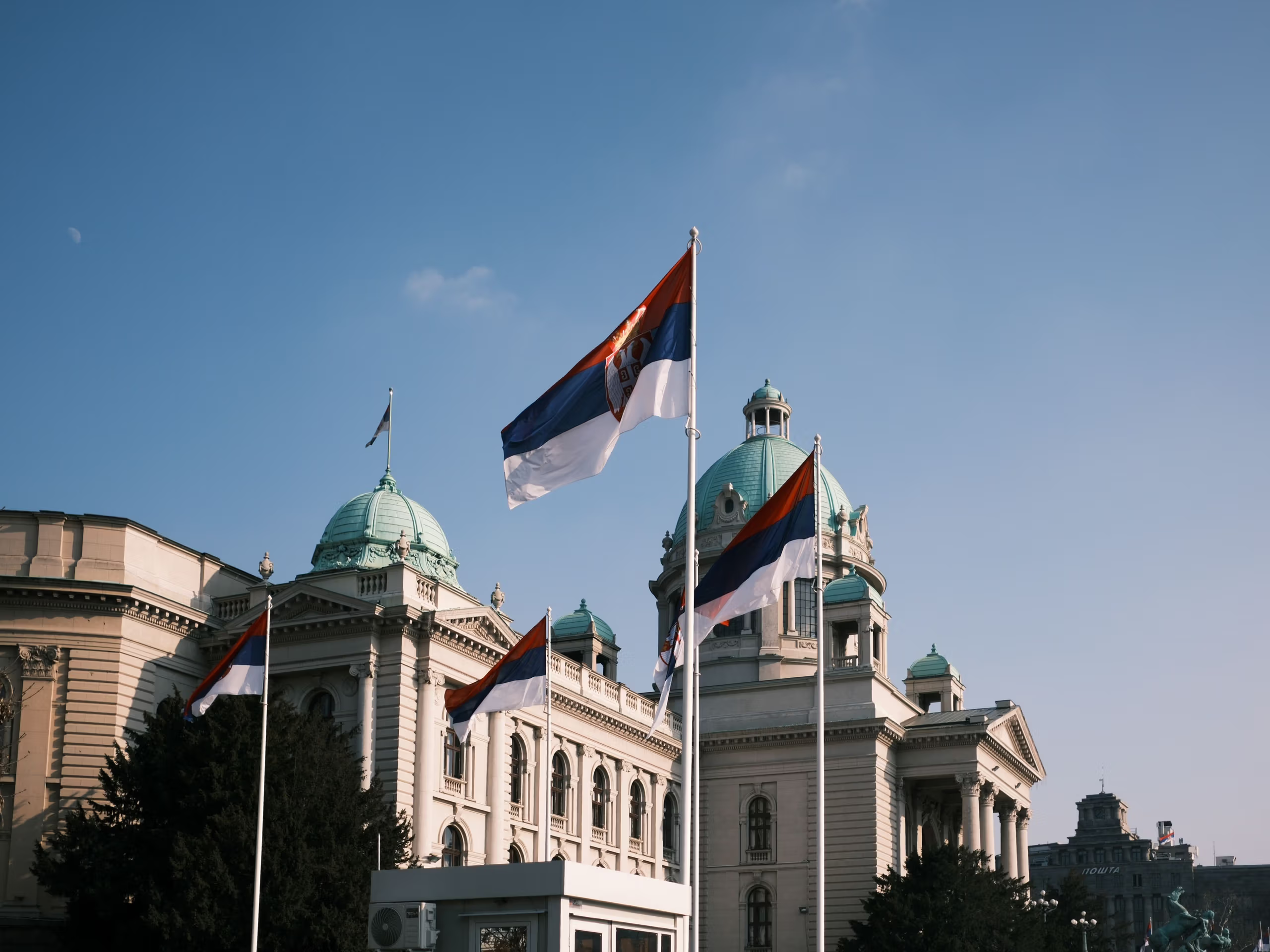
For a country that has spent the better part of a decade trapped in geopolitical limbo, a sudden shakeup at the top is long overdue. Serbian President Aleksandar Vučić has abruptly announced his intention to resign within weeks, voluntarily cutting short a second and final term that was originally slated to end in mid-2027. Speaking to supporters at a rally in Belgrade, the president confirmed his imminent departure and called for early elections across both presidential and parliamentary levels. It is a dramatic gesture from a leader who has perfected the art of keeping everyone guessing.
The decision does not come from a position of unassailable strength. For the past eighteen months, Serbia has been gripped by student-led anti-corruption protests. The catalyst for this sustained unrest was a grim tragedy in Novi Sad, where the collapse of a railway station canopy claimed the lives of 16 people. Demonstrators have consistently demanded early elections, pointing to the disaster as a fatal symptom of systemic mismanagement. They have laid bare the reality of an overrated political state struggling to maintain basic infrastructure atop a fundamentally weak economy.
Yet, in Serbian politics, a resignation is rarely a straightforward exit. Vučić has offered no concrete timeline for the dissolution of parliament, a necessary procedural step before any legislative voting can occur. Instead, he has made it clear that he will actively support his Serbian Progressive Party in the forthcoming snap parliamentary polls, which had originally been scheduled for next year. Speculation is already mounting that the outgoing president is simply preparing to pivot back to the prime minister's office, a role he comfortably occupied between 2014 and 2017.
If this maneuver is merely a game of executive musical chairs, Belgrade will miss a crucial opportunity for genuine reform. Serbia has spent entirely too long attempting to be everybody’s friend, awkwardly straddling the divide between Eastern autocracies and Western democracies. This perpetual hedging has yielded little more than economic stagnation and diplomatic exhaustion. A change in leadership should force the nation to finally pick a definitive geopolitical direction. If the upcoming electoral contest merely recycles the same figures into different offices, the country will remain stuck in its familiar, frustrating holding pattern.
Written by Thomas Nussbaumer thomas.nussbaumer@alpineweekly.com


