Mar 18, 1:42 PM
US Counterterrorism Chief Joe Kent Resigns Over Iran War Dispute
Departure exposes divisions inside Trump administration as security concerns rise at home
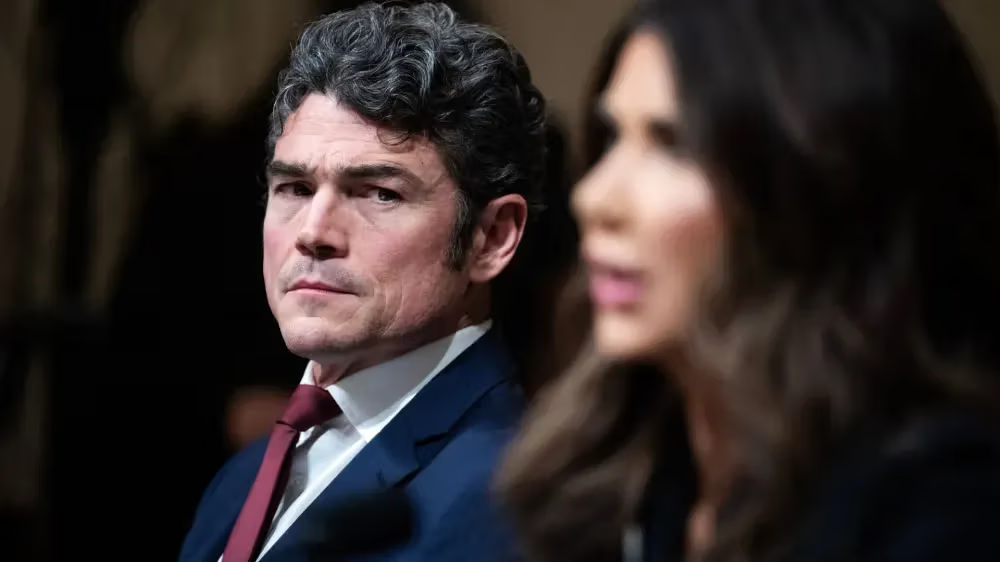
Joe Kent, the head of the US National Counterterrorism Center, has stepped down from his position, citing objections to the rationale behind American military strikes on Iran.
In his resignation letter, Kent said he could not support the war, arguing that the justification for the use of force was insufficient. His departure marks a rare public break from within the administration of President Donald Trump, particularly on a major national security issue.
Kent had been in the role since July, when he was confirmed by the Senate. As director of the National Counterterrorism Center, he oversaw efforts to analyze and monitor terrorist threats to the United States. His resignation highlights broader unease over the conflict, including within political circles aligned with Trump. It also comes at a time when questions surrounding the decision to carry out strikes on Iran remain contested.
The president responded sharply to Kent’s exit, telling reporters that he viewed the former official as weak on security. Trump reiterated his position that Iran posed a significant threat, dismissing criticism from those who disagreed with the administration’s assessment.
Debate over the justification for the strikes has also played out in Congress. Senator Mark Warner, a senior Democrat on the Senate Intelligence Committee, said Kent’s concerns about the absence of clear evidence of an imminent threat were valid. At the same time, he reiterated broader disagreements with Kent’s past positions.
Republican leaders have defended the administration’s actions. House Speaker Mike Johnson said intelligence briefings indicated that Iran was nearing advanced nuclear capabilities and rapidly developing missile systems, arguing that delaying action could have resulted in significant casualties and damage.
Kent’s departure comes amid heightened concerns about domestic security following several recent incidents across the United States. Authorities have responded to attacks in New York, Michigan and Virginia, each raising alarms about potential threats within the country.
In New York City, federal officials said two men inspired by the Islamic State group brought explosive devices to a protest. In Michigan, a man drove a vehicle into a synagogue before taking his own life after being confronted. In Virginia, a gunman opened fire in a university classroom before being stopped.
The timing of these events adds another layer of complexity to Kent’s resignation, as the country faces both external conflict and internal security challenges.
Kent, a military veteran and former congressional candidate, had built a reputation among Trump supporters as a prominent voice on national security. Before joining the administration, he served multiple combat deployments as a Green Beret and later worked for the CIA.
He also drew attention during his political campaigns, which were unsuccessful, and faced criticism from Democrats over past associations with far-right figures and groups. These concerns were raised during his Senate confirmation process.
Despite those controversies, his resignation has shifted the focus back to the central issue he cited: disagreement over the basis for military action in Iran.
With senior intelligence officials set to testify before lawmakers in the coming days, the debate over the conflict — and the evidence behind it — is likely to intensify.