Mar 16, 2:28 PM
Iran’s women footballers head home amid fears of pressure and propaganda
Members of the national team returning from the Asia Cup face an uncertain future as debate grows over whether they will be punished or celebrated by authorities.
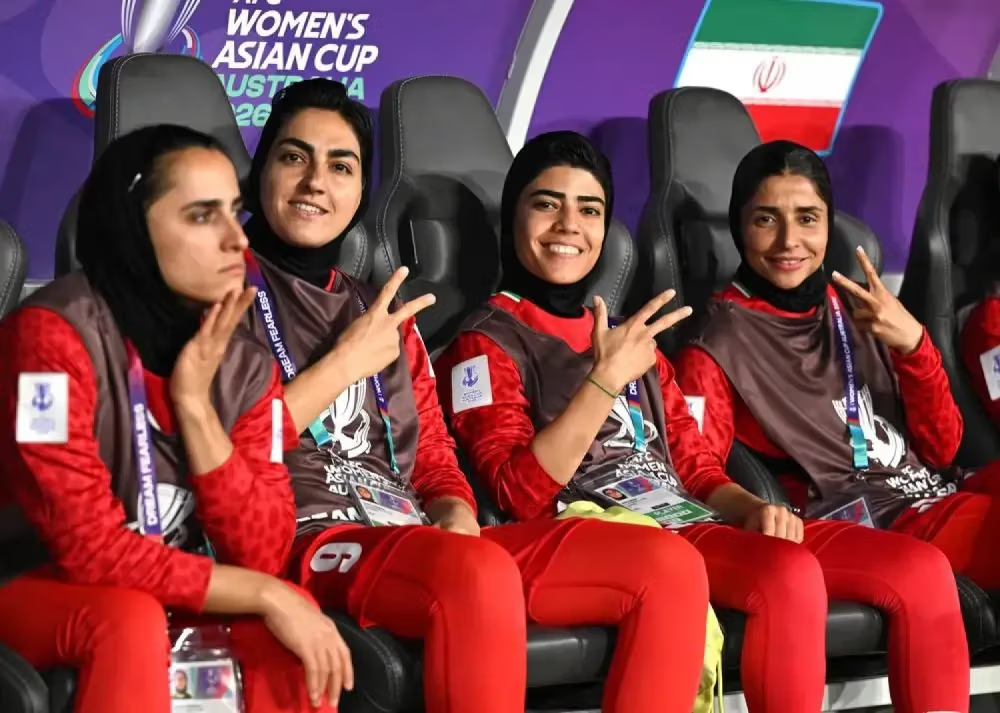
Iran’s women’s national football team is making its way back home after competing in the Asian Cup, but their return has stirred up a storm of concern among activists and members of the Iranian diaspora. The tension is palpable.
Some worry the players could face serious consequences from the authorities after a subtle protest during the tournament. On the flip side, voices from within the government suggest the team might receive rewards and a warm welcome when they land. Which one is it? That question hangs in the air.
Earlier this week, the squad flew from Sydney to Malaysia. From there, it’s widely believed they’ll continue through Türkiye before crossing into Iran by land. Direct flights into Tehran remain tangled in complications, largely due to the ongoing conflict involving Iran, the United States, and Israel, which has severely limited access to Iranian airspace.
Things first became contentious during the tournament in Australia. Before their opening match, the team refused to sing the Iranian national anthem — a move many saw as a clear act of defiance toward the authorities. But then, before their second game, they did sing the anthem and even performed a salute. Such mixed signals—what do they mean?
Meanwhile, not all players chose to return. Reportedly, five stayed behind in Australia and applied for asylum, with another player and a staff member following suit soon after. Iranian state media later claimed that some who initially sought refuge abroad had changed their minds and decided to come back.
Outside the team’s hotel and at various airports, emotional scenes unfolded in recent days. Members of the Iranian exile community tried to convince players not to return, warning them about potential punishments linked to their earlier protest. It’s a tense tug-of-war.
One player, during a brief encounter with supporters, insisted they'd been reassured that their arrival in Iran would be met with respect and kindness. Apparently, officials promised the team a warm welcome and honour. Yet, who's to say what really awaits them?
Observers suspect the players are likely under enormous pressure. Reports indicate they’re being closely watched during their travels. There’s even concern families back in Iran could face repercussions should any of the athletes choose not to return.
Video clips circulating online show players moving through airport terminals surrounded by security guards as supporters urge them to stay abroad. Other footage captures team staff shepherding players onto buses while demonstrators try to speak with them. Some have read certain gestures inside those vehicles as signs of distress, though none of that has been confirmed.
This whole episode shines a harsh light on the precarious position many female athletes face in Iran. Unlike some neighboring countries where women’s public activities are severely restricted, Iranian women can participate in sports. Still, rigid rules persist — including the mandatory hijab during competitions.
There’s also the age-old issue of inequality. Female athletes have long battled disparities compared to male counterparts. Shiva Amini, a former futsal player who has since left Iran, recounted unequal treatment during national team camps — from inferior living conditions to fewer resources for women’s teams. This is far from a new story.
In recent years, Iranian athletes have increasingly used international stages as platforms to challenge restrictions or seek asylum. Ever since the 2022 protests sparked by Mahsa Amini’s death, several sportswomen have chosen exile.
Kimia Alizadeh’s case stands out. She is the only Iranian woman to win an Olympic medal in taekwondo and left Iran in 2020. She later revealed feeling exploited by authorities who celebrated her success publicly but turned a blind eye to the realities women faced at home.
For those who stay abroad, life isn't a breeze either. Defecting athletes often lose their careers, face separation from loved ones, and must navigate the difficult process of starting over in unfamiliar places.
The situation now looming over the national football team captures this wider struggle. As these players continue their journey home, it’s uncertain whether they'll be hailed as representatives of their nation—or become yet another group caught in the messy crossfire between sport, politics, and personal freedom.