May 26, 7:16 AM
Illegal Transplant Tourism Booms in Egypt as Sudanese Refugees Sell Kidneys
Cairo becomes hub for organ trade in Africa and Middle East; father claims 13-year-old son's eyes were removed without consent in public hospital.

llegal organ transplant tourism is flourishing in Egypt. Sudanese refugees who have fled the war and sought shelter in Cairo have become prime targets for an organ-trafficking network. Egypt, according to the report, has become a hub for illegal organ trade in Africa and the Middle East. Approximately 1.2 million Sudanese men and women who escaped the conflict and ended up in Cairo are now the main target of the mafia behind this trade.
One man named Mossad is among the many victims of this system.
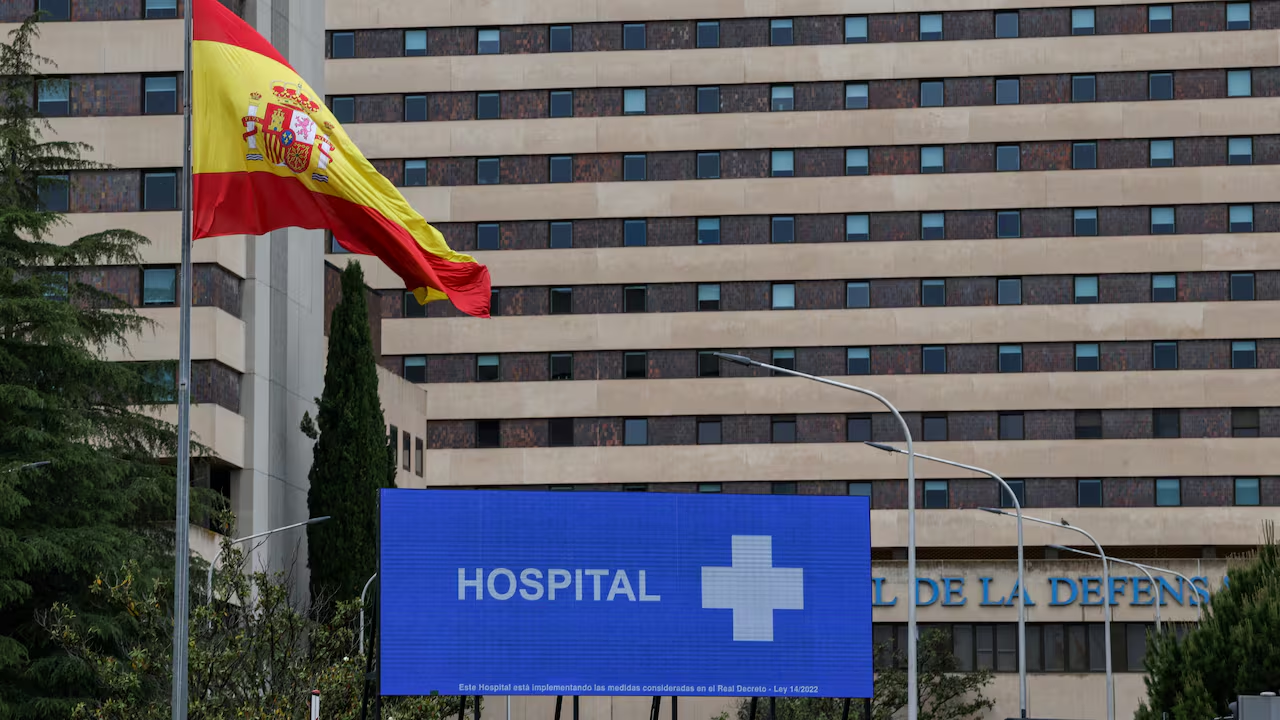
At the end of 2022, he brought his 13-year-old son to a public hospital in Cairo due to high fever and vomiting. The boy was treated in his father's absence, and Mossad received no news for hours. Only when a security guard allowed him to see his son did he learn more. Speaking to Swiss television RTS, Mossad described being led to a tiny room of barely two square meters. His son was tied to a bed with cloth stuffed in his mouth and was barely breathing. Then he noticed his son no longer had any eyes. The boy had never had eye problems.
One hour later, the hospital declared his son dead.
Since that day, Mossad has been unable to retrieve the body or view the medical records, despite filing multiple complaints. The hospital denies any organ removal without consent. This denial aligns with the official position of the Egyptian government, which does not recognize the existence of organ trafficking in the country. Mossad, in turn, says he was intimidated and threatened when he sought justice from the authorities.
For impoverished people in Egypt, selling organs has become a way to make quick money. Approximately 300 kilometers from Cairo, in rural Egypt, Mahmoud Abdallah earns about 45 Swiss francs per month as a shoemaker. His income was not enough to buy a house. So he decided to sell a kidney. With a single phone call, the deal was closed.
These operations are carried out with the support of doctors, analytical laboratories, and authorities. According to the report, these facilities do not even hide their involvement, nor do the traders. Since his operation, Abdallah has had to take daily medication and receive an injection every three months. Despite the costly treatment, he does not regret the procedure. He stated that he had no other choice – if he were to die, at least he would have left his family a place to live.
The clientele consists of wealthy Egyptians as well as foreigners who are tired of waiting for a transplant in their home countries. For them, the price is low. According to a European Parliament report, a kidney can cost up to 130,000 Swiss francs in some countries. In Egypt, the price is approximately 8,000 francs.
A man identified only as Ahmad had been waiting a long time for a kidney transplant in Cairo and decided to use the organ mafia. He found what he was looking for in a Facebook group where some traders do not even bother to hide. Prices for operations, donor origins, and phone numbers are all listed in detail on their profiles. At the same time, the traders' networks are becoming increasingly professionalized. Few countries in the world are as negligent in this area as Egypt, the report suggests.
According to several non-governmental organizations, the annual global turnover from human trafficking for the purpose of organ removal is estimated to be between 720 million and 1.4 billion Swiss francs.
For men like Mahmoud Abdallah, the math is simple: one kidney, a few thousand francs, and maybe a roof for his family. For men like Mossad, the math is impossible to do. His son is dead, his son's eyes are gone, and no one in authority seems willing to explain why.
Written by Thorben Thiede


