Mar 17, 2:12 PM
Drone strike hits UAE’s Fujairah oil hub as Middle East conflict threatens energy routes
Attack sparks major fire at key fuel storage and shipping center, highlighting growing risks to global oil supply chains.
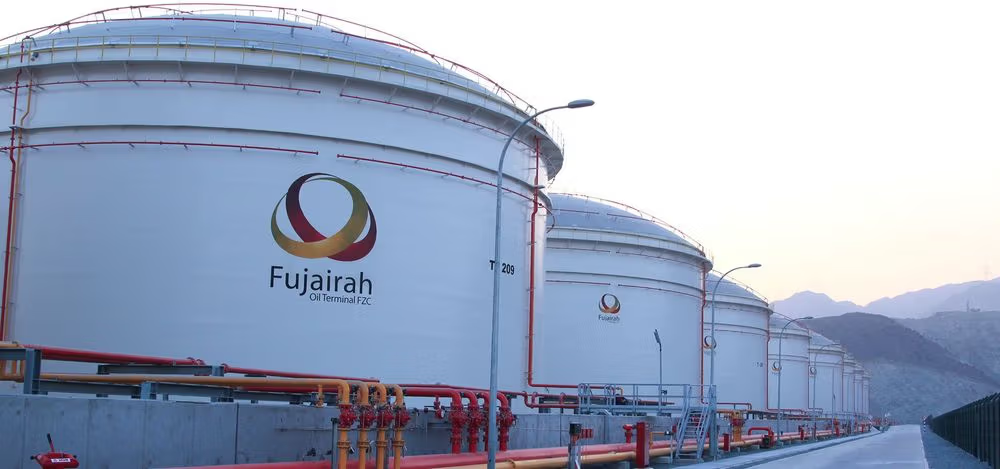
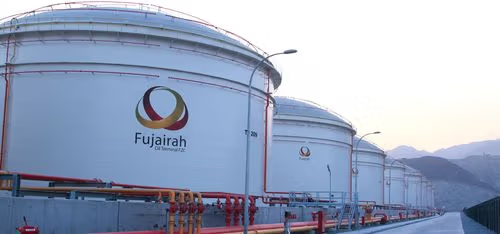
A drone attack has struck the United Arab Emirates’ key oil trading hub in Fujairah, triggering a large fire and forcing a temporary halt to fuel loading operations, according to local authorities and industry sources.
Officials said emergency services responded quickly to the incident and were working to contain the blaze. No injuries were reported.
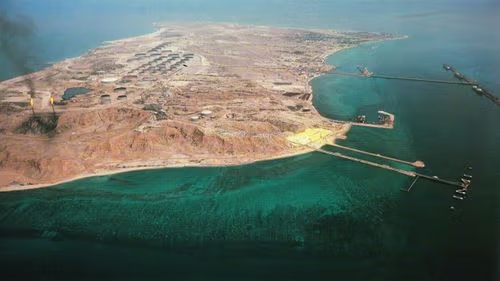
The attack targeted facilities in Fujairah, a major oil storage and bunkering hub on the UAE’s eastern coast. Authorities confirmed that civil defense teams were deployed immediately to manage the fire and secure the area.
Industry sources cited by Reuters said oil loading activities at the port were suspended following the strike. The disruption underlines growing concerns about the vulnerability of energy infrastructure in the Gulf as the regional conflict continues to escalate.
The incident comes just days after another drone strike caused a fire at the same location, suggesting a pattern of repeated attacks on the facility.
Fujairah occupies a particularly strategic position in global energy logistics. The port serves as one of the world’s largest bunkering centers, where ships refuel before continuing their journeys across major international trade routes.
It also plays a critical role in the UAE’s oil export system. The port is the endpoint of the Habshan–Fujairah pipeline, which carries crude oil from inland production facilities in Abu Dhabi directly to the Gulf of Oman.
This pipeline allows the UAE to export oil without relying on the Strait of Hormuz — a narrow maritime corridor that normally handles around a fifth of the world’s oil shipments.
The bypass route has long been considered a strategic safeguard in case traffic through the strait is disrupted.
However, recent developments suggest that even alternative export routes are becoming exposed to the wider conflict.
Shipping activity through the Strait of Hormuz has already been severely disrupted since the United States and Israel launched military strikes against Iran in late February. Iranian forces have reportedly targeted vessels attempting to pass through the waterway in retaliation.
Iran’s Islamic Revolutionary Guard Corps warned over the weekend that American-linked assets in the UAE — including ports and military facilities — could be treated as legitimate targets.
Iranian state media also issued warnings urging workers and residents near major Emirati ports such as Fujairah, Jebel Ali and Khalifa to leave the areas, claiming that US military forces were present at those sites.
The regional escalation has already affected civilian infrastructure.
Dubai International Airport announced that it had resumed only limited operations after a drone strike caused a fire at a fuel depot serving the airport. The facility handles more than 90 million passengers annually and is widely considered the busiest international aviation hub in the world.
Energy markets are reacting rapidly to the mounting instability.
Oil prices have surged sharply in recent weeks as traders factor in the risk of supply disruptions. Brent crude rose to more than $106 per barrel, while US benchmark West Texas Intermediate climbed above $100.
Both contracts have risen by more than 50 percent over the past month, reaching levels not seen since 2022.
Analysts warn that continued attacks on infrastructure in the Gulf could further destabilize energy markets, particularly if export terminals, pipelines or shipping lanes suffer sustained disruptions.
The strike on Fujairah therefore represents more than a local security incident. It highlights how quickly a regional conflict can spill into the global energy system — and how vulnerable even carefully designed alternative supply routes can become in times of geopolitical crisis.