Sep 22, 2:02 PM
The Subsidy Harvest
Madrid faces a farm crisis as socialist economic fixes collide with energy reality.
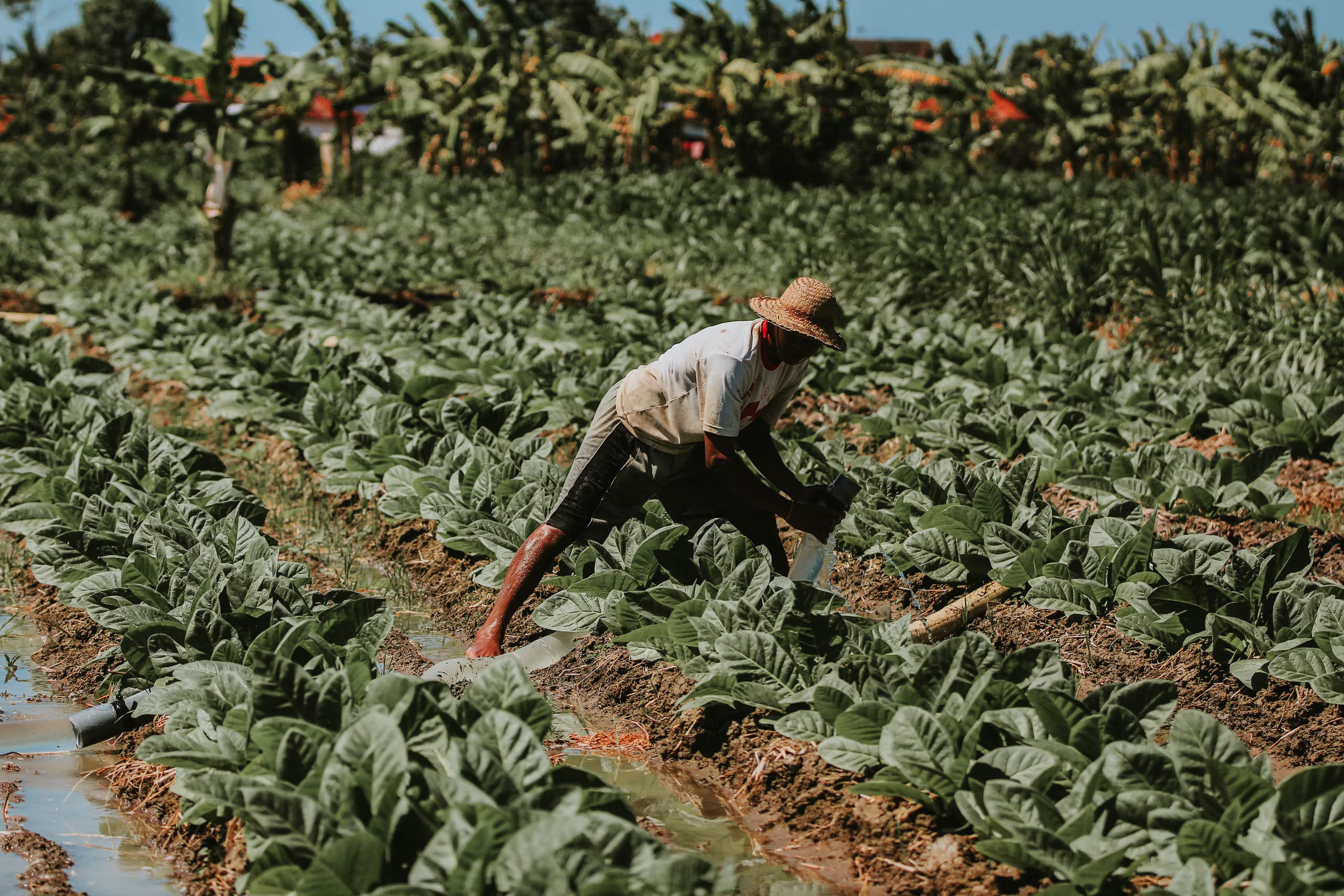
When global commodity markets twitch, Spanish agriculture reflexively turns to the state for shelter. On Tuesday, leaders from the country’s top farming unions—Asaja, COAG, UPA, Unión de Uniones, and Cooperativas Agroalimentarias—met with Agriculture Minister Luis Planas to deliver an unambiguous ultimatum: provide immediate direct aid or prepare for national protests that could paralyze the countryside.
The driver of this distress originates thousands of miles away. Following the military escalation on February 28, when the United States and Israel launched strikes against Iran and Tehran retaliated against American and Israeli installations, crude oil prices swung wildly from under $70 to nearly $120 a barrel before stabilizing around $90. That shock ripple quickly reached European fields. Spanish farmers have seen agricultural diesel jump by roughly 50 percent, while nitrogen fertilizers like urea and ammonia have surged by up to 50 percent. At sea, marine fuel costs spiked over 85 percent, leaving fishing fleets docked in several ports.
The timing is particularly inconvenient. The cost surge hits just as grape harvesting begins and key planting campaigns for olives and winter cereals get underway. Pedro Barato, president of Asaja, warned that without state relief for diesel, as much as 40 percent of arable crops might go unsown—a collapse in output that would inevitably drive food prices higher for consumers. He pointed out that previous compensation schemes for fertilizer inflation have managed to reach only half of their intended recipients.
The remedies offered by trade unions lean heavily on interventionist instincts. UPA advocated funding a relief pool via a special tax on the profits of Spain's major oil firms. Unión de Uniones argued that the state's Food Chain Law has proved useless at letting farmers pass on cost surges, leaving growers and cooperatives to absorb the brunt of the shock.
With Madrid contemplating whether to extend its broad economic support measures beyond September 30, Planas and Finance Minister Carlos Cuerpo have signaled a willingness to assist. But relying on state handouts and punitive taxes to buffer a national sector against global market swings remains a precarious strategy.
Written by Sandy van Dongen sandy.vandongen@alpineweekly.com