Jun 9, 4:03 PM
Ireland's Conveniently Legal Russian Alumina Trade
Dublin faces awkward questions about a key export to Russia's war economy, exposing the porous nature of EU sanctions.
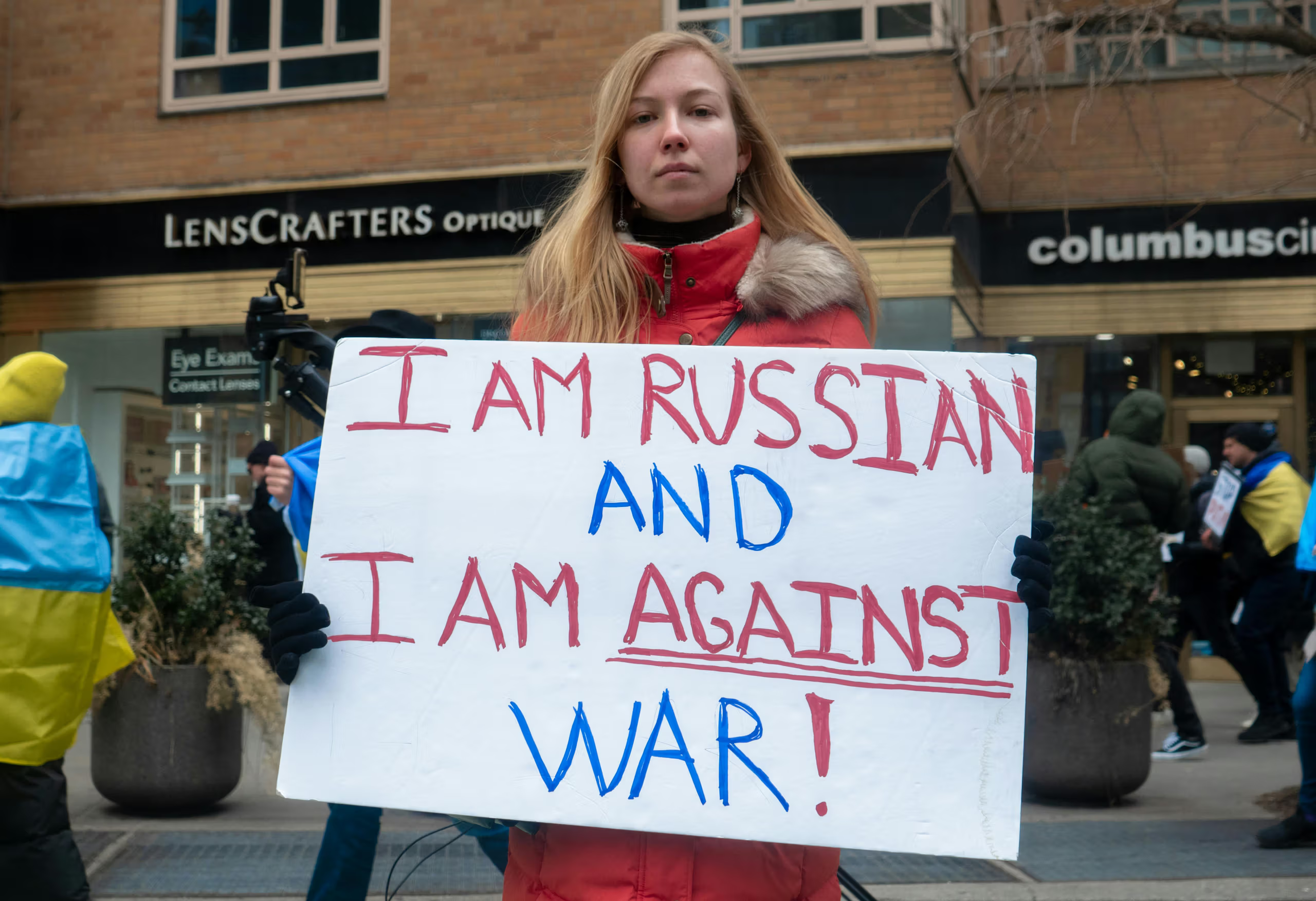
There are few things more inconvenient than a direct question from a concerned ally. When Estonian Prime Minister Kaja Kallas visited Dublin, she brought with her a pointed inquiry about Ireland’s exports of alumina, a key ingredient for the aluminium found in Russian missiles. For a country preparing to take the helm of the EU Council presidency, the timing could hardly be worse.
The core of the issue lies with Aughinish Alumina, Europe’s largest refinery, located in western Ireland. An investigation by the Organised Crime and Corruption Reporting Project traced a supply chain from the plant to its Russian parent company, Rusal. The alumina is processed in Russian smelters, and the resulting metal is then sold to a trader that supplies sanctioned Russian defence manufacturers. While the specific Irish alumina hasn't been found in a specific missile, the industrial logic is difficult to ignore.
The Irish government, through its foreign minister Helen McEntee, has promised an investigation whose findings will be shared with the European Commission. This is the standard playbook for managing a public relations crisis. Yet the defence of the trade is telling. Aughinish insists its activities are perfectly legal, a claim that is, disturbingly, true. The company notes that sales to Russia accounted for about 45% of its business in 2025, a figure it expects to maintain.
Herein lies the central weakness of the European Union's sanctions policy. Brussels has banned the sale of primary and refined aluminium goods to Russia, yet somehow neglected to include alumina, the essential raw material. Kallas herself admitted that while some member states favour an alumina ban, the required unanimity remains elusive. This is the EU machine at its finest: crafting measures that are just porous enough to accommodate the economic interests of a member state, thereby undermining the policy's entire purpose.
Dublin has described the Aughinish plant as a critical actor in a wider supply chain, warning that sanctions could threaten local jobs and fuel inflation. These are valid domestic concerns, but they also expose the transactional nature of the bloc's supposed unity against Russian aggression. While Ukrainian civilians face bombardment from weapons potentially made with European materials, the conversation in some capitals revolves around employment figures and commodity prices. Kallas’s plea to "get the facts straight" seems almost understated. The facts appear quite clear; it is the political and economic will to act upon them that is in question.
Written by Sandy van Dongen sandy.vandongen@alpineweekly.com