Sep 23, 6:01 PM
Brussels Discovers the Cost of Chinese Trade
Threats of tariffs against Beijing mask a deeper vulnerability in Europe's over-regulated industrial base.
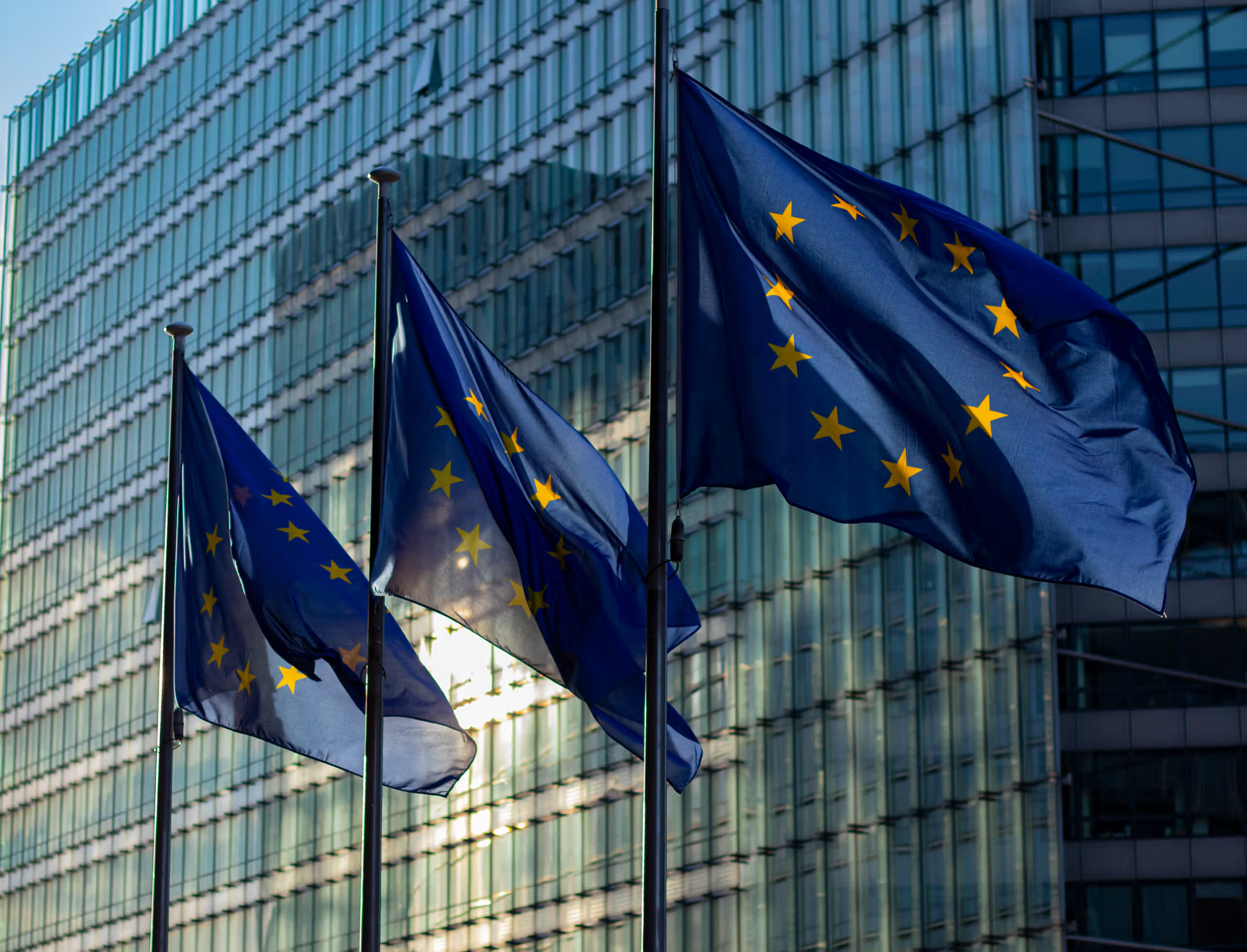
When European Commission officials start invoking existential threats, it usually means reality has finally broken through the bureaucratic bubble in Brussels. The latest awakening comes courtesy of Stéphane Séjourné, Executive Vice-President for Prosperity and Industrial Strategy, who recently observed that Europe’s trade relationship with China is no longer sustainable.
The numbers behind this belated realization are indeed stark. In July, the European Union’s trade deficit with Beijing exceeded €1 billion a day. Last year alone, the bloc lost 250,000 industrial jobs, primarily across energy-intensive industries and the automotive supply chain. For an institution that spent years burdening domestic manufacturers with mountainously complex regulations, blaming foreign competition is an alluring shield. Yet the hemorrhaging of the continent's industrial core is now too severe for standard press releases.
Brussels' response to this structural crisis is characteristically procedural. The Commission has set an October deadline for trade talks, culminating in a diplomatic mission by Trade Commissioner Maroš Šefčovič to Beijing. The strategy relies on asking Beijing to voluntarily curb its exports across specific sectors—a request the Chinese government has thus far politely ignored.
Should persuasive diplomacy predictably falter, the Commission threatens to deploy its trade defense arsenal, including anti-dumping duties and targeted tariffs on items like electric vehicles and solar panels. Yet this tough rhetoric masks a fragile posture. Any aggressive tariff action risks inviting Chinese retaliation, particularly against critical raw materials like rare earth minerals, upon which European industry remains painfully dependent.
To compound the vulnerability, European policymakers are reduced to spectators in the parallel negotiations taking place across the Atlantic. As Chinese President Xi Jinping meets US President Donald Trump for a three-day summit ahead of a November 10 trade truce expiration, Brussels watches nervously. Previous rounds of US-China trade escalation saw American tariffs soar to 145 percent and Chinese counter-tariffs reach 125 percent, effectively diverting massive volumes of underpriced Chinese manufactured goods directly into the European market.
Séjourné expressed hope that Washington and Beijing might reach a constructive agreement to stabilize global trade. But hope is hardly an industrial strategy. As Brussels struggles to balance empty threats with underlying economic weakness, European citizens are left to wonder whether their leaders are capable of defending market competitiveness, or merely competent at measuring its demise.
Written by Thorben Thiede thorben.thiede@alpineweekly.com


