Mar 17, 6:52 AM
Rising oil prices during Iran war could deliver windfall for US energy sector
Analysts say American producers may gain billions if global crude prices remain above $100 a barrel amid Middle East tensions.
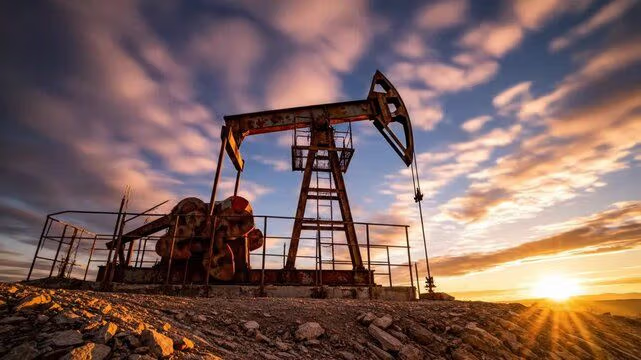
A dramatic jump in global oil prices, sparked by the conflict involving Iran, stands to pour billions more into the coffers of US energy companies, at least if current projections hold up.
According to figures cited by the Financial Times, American producers are poised for a significant windfall should crude stay expensive through year’s end. Digging into the data from Rystad, an energy research group, US oil firms could rake in as much as $63.4 billion extra if average prices hover near that $100-a-barrel mark. That’s no small potatoes. The oil market hasn’t exactly taken this escalation lying down.
Brent crude,the go-to global benchmark, shot up over 30 percent during one recent surge, briefly punching past $119 per barrel as traders braced for possible snags in worldwide supply lines. The trigger. Widespread anxiety about shipping through the Strait of Hormuz,a narrow chokepoint linking the Persian Gulf with international markets and responsible for funneling a hefty chunk of global oil exports.
Iranian officials claim they’ve shut off access to any vessels tied to US or Israeli interests, though so far there’s been no outright physical blockade reported. Still, even partial disruptions have already sent ripples across maritime traffic; reports flagged by analysts say more than a thousand cargo ships, including plenty hauling petroleum and natural gas,have found themselves stuck on either side of that bottleneck.
Here’s where things get really interesting: some experts warn that if this standoff drags out and tankers can’t move freely through Hormuz for much longer, we might see crude prices shooting northward, $150 or even $200 per barrel isn’t out of the question according to certain forecasts. President Donald Trump has weighed in publicly too (as he often does), highlighting on social media that America currently tops the charts as the world’s biggest oil producer,and suggesting these price hikes could be a boon for domestic energy revenues. But let’s not kid ourselves; it’s hardly all upside here. When crude becomes pricier, Americans usually feel it at the pump and beyond, fuel costs start climbing fast, feeding straight into broader inflationary pressures throughout just about every corner of daily life. Gasoline and diesel prices stateside have already begun inching upward right alongside those turbulent global markets.
And higher energy bills don’t just hit drivers,they also squeeze businesses reliant on transport or heavy industry. Even so, some analysts point out that robust domestic output gives the United States a bit of breathing room compared with economies heavily dependent on imports, it won’t shield everyone from sticker shock, but does soften some blows. How this all plays out globally... Well,that hinges almost entirely on how long Middle Eastern supply routes remain dicey territory (so to speak).
Writen by Christiane Hofreiter